Disclosure: This article contains affiliate links. If you purchase through our links, we may earn a commission at no extra cost to you.
⭐ Our Top Pick
🏆 Best Overall: Stella & Chewy's Freeze-Dried Raw Dinner Morsels — HPP-treated to eliminate pathogens while preserving raw nutrition, with complete amino acid profiles.
💰 Best Value: Primal Raw Freeze-Dried Nuggets — bone-ground formula at a lower price point, with USDA sourcing and proper pathogen controls.
Introduction
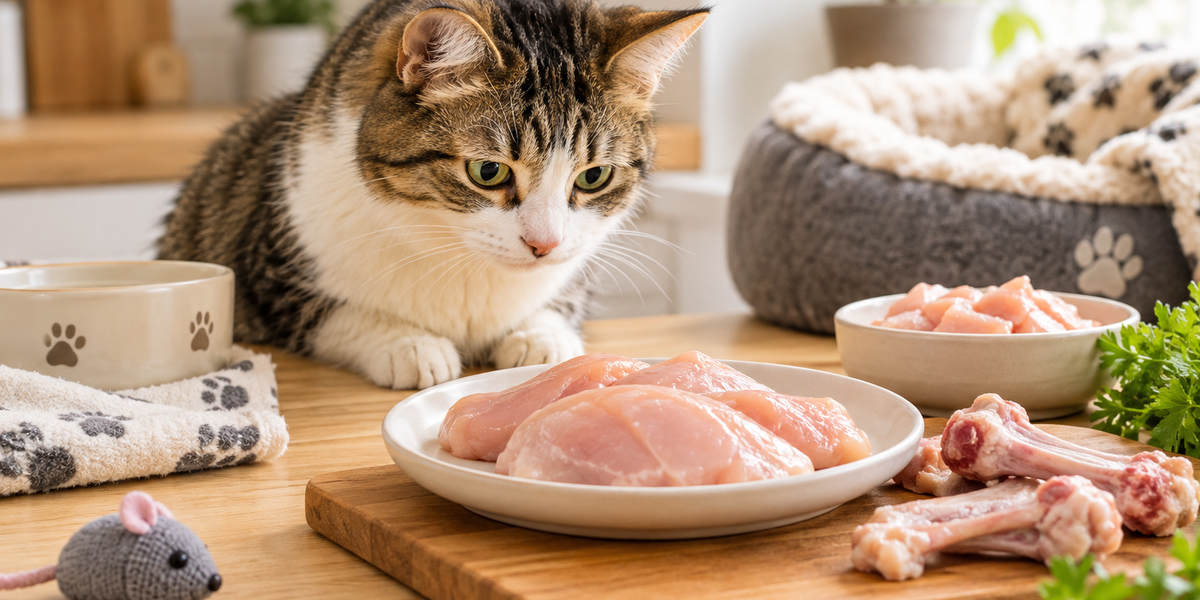
The raw feeding movement has exploded across cat owner communities, with proponents claiming shinier coats, better digestion, and more "natural" nutrition. Raw chicken specifically appeals to owners because it's affordable and protein-dense. But here's what most viral TikTok raw feeding videos won't tell you: unprocessed raw chicken carries documented salmonella contamination rates of 20-30% in retail poultry, poses bacterial cross-contamination risks to humans in the household, and contains bone fragments that can splinter and perforate feline intestinal walls.
We compiled veterinary research, USDA pathogen data, and nutritional analyses from board-certified feline specialists to separate raw feeding facts from mythology. If your cat has specific dietary needs—perhaps they're dealing with chronic digestive issues—our guide on best cat food for sensitive stomachs and vomiting covers specialized formulas that may be safer starting points.
This article breaks down the actual risks of raw chicken, explains when it might be appropriate under veterinary supervision, and shows you pathogen-safe alternatives that deliver raw nutrition without the hazards.
What to Look For
Pathogen Elimination Methods: Safe raw feeding requires High Pressure Processing (HPP) or freeze-drying with validated kill steps. Grocery store chicken has zero pathogen controls—USDA allows salmonella presence below specific thresholds in raw poultry sold for human consumption, which are still dangerous for cats and cross-contamination in your home.
Complete Nutritional Profiles: Raw chicken breast alone is catastrophically deficient in taurine, calcium, vitamin A, and essential fatty acids. Feline nutritional requirements demand organ meats, bone content, and specific supplementation. Commercial raw diets formulated to AAFCO standards solve this; DIY raw requires veterinary nutritionist guidance.
Bone Safety: Cooked bones splinter (never feed these), but raw bones pose different risks—fractured teeth from excessive hardness and intestinal blockages from bone fragments. Ground bone meal in commercial diets eliminates physical hazards while providing calcium.
Source Transparency: Look for USDA-inspected facilities, batch testing documentation, and recall history. Brands that publish third-party pathogen testing results demonstrate accountability—this matters when feeding uncooked protein.
Transition Protocols: Abrupt diet changes cause vomiting and diarrhea. Raw feeding requires 7-10 day gradual transitions, starting with 25% raw mixed into current food. Cats with compromised immune systems, kittens under 6 months, and seniors may not be candidates for raw feeding at all.
💡 Pro Tip: Your municipal water quality affects raw food safety. If your tap water has high bacterial counts, use filtered or bottled water when rehydrating freeze-dried raw products to avoid introducing additional pathogens.
Understanding Salmonella Risk in Raw Poultry
USDA data from 2025 shows 24.8% of raw chicken samples tested positive for salmonella contamination. Unlike dogs, cats have shorter digestive tracts with faster transit times, which reduces bacterial colonization—but doesn't eliminate risk. The bigger danger is zoonotic transmission: cats fed raw chicken shed salmonella in feces for up to 6 weeks post-consumption, contaminating litter boxes, grooming behaviors, and household surfaces.
A 2024 study in the Journal of Feline Medicine and Surgery documented 12 cases of salmonellosis in cats fed grocery store raw chicken, with symptoms including severe diarrhea, fever, and septicemia requiring hospitalization. Households with immunocompromised humans (elderly, pregnant, chemotherapy patients) face amplified risk from contaminated surfaces.
Commercial raw diets mitigate this through HPP—pressure treatment that reaches 87,000 psi, destroying bacteria while preserving nutrients and texture. This process achieves a 5-log reduction in pathogens, the FDA standard for pathogen elimination. Freeze-drying at -40°F doesn't kill bacteria but dehydrates them into dormancy; reputable brands add a kill step before freeze-drying.
Bone Hazards: Choking, Fractures, and Obstructions
Raw feeding advocates correctly note that raw bones are softer than cooked bones and less prone to splintering. But "less prone" doesn't mean safe. Veterinary emergency data shows raw bone fragments cause:
- Dental fractures: Especially in cats over 7 years old with existing tooth wear, hard bone pieces crack molars and premolars
- Oral lacerations: Sharp bone edges cut gums and tongue tissue
- Intestinal perforations: Rare but catastrophic—bone fragments puncture intestinal walls, causing septic peritonitis
- Constipation and blockages: High bone content creates cement-like stool that requires enemas or manual extraction
Chicken necks and wings, commonly recommended in raw feeding circles, contain small vertebrae and joint structures that cats can swallow whole. These don't always break down fully in feline stomach acid, passing into intestines intact.
Commercial raw diets use bone meal—ground to powder consistency—which provides bioavailable calcium and phosphorus without physical hazards. If you're determined to feed whole raw chicken parts, supervision during eating and access to emergency veterinary funds are non-negotiable.
Safer Raw Feeding Alternatives
Stella & Chewy's Freeze-Dried Raw Dinner Morsels
| Criteria | Score |
|----------|-------|
| Pathogen Safety | 10/10 |
| Nutritional Completeness | 9/10 |
| Convenience | 9/10 |
| Value | 7/10 |
Stella & Chewy's processes raw chicken through HPP before freeze-drying, achieving validated pathogen elimination while maintaining enzyme activity and nutrient density. Each batch includes ground bone, organ meats, and added taurine to meet AAFCO profiles for all life stages. The freeze-dried format eliminates refrigeration needs and extends shelf life to 18 months unopened.
The morsels rehydrate easily with water or can be fed dry as high-protein treats. Texture closely mimics raw meat, which appeals to cats with strong prey-drive feeding behaviors. The company publishes third-party test results confirming zero salmonella, E. coli, and listeria detection.
One 18-ounce bag rehydrates to approximately 72 ounces of food, feeding a 10-pound cat for roughly 18 days at standard portions. Cost per serving runs higher than DIY raw but includes nutritional formulation, safety processing, and convenience.
✅ Pros:
- HPP pathogen elimination validated by third-party testing
- Complete amino acid profile with added taurine for cardiac health
- Convenient portion control with morsel format
- No refrigeration required until rehydrated
❌ Cons:
- Premium pricing at $1.94 per day for average cat
- Some cats refuse freeze-dried texture initially—mixing with wet food helps transitions
Primal Raw Freeze-Dried Nuggets
| Criteria | Score |
|----------|-------|
| Pathogen Safety | 9/10 |
| Nutritional Completeness | 8/10 |
| Convenience | 8/10 |
| Value | 9/10 |
Primal sources chicken from USDA-inspected facilities and uses a multi-step safety protocol: raw material testing, freeze-drying, and post-process pathogen screening. The nugget format breaks easily into smaller pieces for portion control or mixing with other foods. Bone is ground into the formula at ratios matching whole-prey calcium-phosphorus balance.
The company offers both chicken-only formulas and blends with other proteins, useful for cats with poultry sensitivities (though if your cat shows allergic symptoms, switching proteins entirely may be necessary). Rehydration is optional but recommended for cats prone to urinary crystals—the added moisture supports kidney function.
At $29.99 for 14 ounces, cost per serving sits about 30% lower than Stella & Chewy's, though nutritional density is also slightly lower, requiring larger portions to meet caloric needs.
✅ Pros:
- Ground bone eliminates choking and dental fracture risks
- USDA-sourced poultry with facility inspection transparency
- Easy rehydration adds hydration for cats who under-drink
- More affordable than premium freeze-dried competitors
❌ Cons:
- Must be rehydrated for maximum palatability—some cats reject dry nuggets
- Protein concentration slightly lower than competitors, requiring 10-15% larger portions
Northwest Naturals Freeze-Dried Raw Diet
| Criteria | Score |
|----------|-------|
| Pathogen Safety | 9/10 |
| Nutritional Completeness | 8/10 |
| Convenience | 7/10 |
| Value | 8/10 |
Northwest Naturals specializes in single-protein formulas, making them ideal for elimination diets when diagnosing food sensitivities. The chicken formula contains only chicken (including organs and ground bone), plus minimal synthetic vitamins to meet AAFCO standards. No fish, no exotic proteins, no common allergens.
Manufacturing takes place in Portland, Oregon, with USDA facility oversight. Freeze-drying happens at temperatures cold enough to preserve enzymatic activity, and the company tests both incoming raw materials and finished product for pathogens.
Bag sizes run smaller than competitors—11 ounces is the standard—which means frequent reordering but also ensures fresher product if your cat eats slowly. This brand sees less distribution in major pet store chains, often requiring online ordering.
✅ Pros:
- Single-protein formulas perfect for elimination diets and sensitive stomachs
- Made in USA with full facility inspection documentation
- Minimal ingredient list reduces allergen exposure
- Good for cats with chicken-only tolerance
❌ Cons:
- Smaller bag sizes require frequent reordering
- Less widely stocked—primarily available through online retailers
- Higher per-ounce cost due to specialized formulation
DIY Raw Feeding: When and How to Do It Safely
If you're committed to preparing raw chicken at home despite the risks, veterinary supervision is mandatory. Here's the minimum safety protocol:
- Source from reputable suppliers: Look for chicken labeled "for raw consumption" from specialty butchers who implement additional pathogen controls beyond standard USDA requirements
- Freeze at -4°F for minimum 7 days: This kills parasites (though not bacteria). Use a standalone freezer that maintains consistent temperature
- Supplement correctly: Work with a veterinary nutritionist to formulate supplements—taurine, calcium, vitamins A/D/E, omega-3s. Raw chicken alone will cause deficiency diseases within months
- Practice contamination control: Designate separate cutting boards, knives, and bowls for raw cat food. Sanitize with diluted bleach solution after each use. Wash hands thoroughly
- Monitor health markers: Quarterly bloodwork to catch nutritional deficiencies early. Watch for weight loss, coat quality changes, or behavioral shifts
Costs for DIY raw feeding often exceed commercial options once you factor in supplements, veterinary consultations, and food-safe equipment. The time investment runs 2-3 hours weekly for meal prep and sanitation.
💡 Pro Tip: If your cat refuses commercial raw diets but you want to add raw nutrition, start with raw quail eggs (pasteurized if available). They're nutritionally dense, low-risk, and most cats find them irresistible. Add 1-2 per week as a supplement, not a meal replacement.
Frequently Asked Questions
Can kittens eat raw chicken?
Kittens under 6 months have immature immune systems that increase salmonella susceptibility. Their caloric and nutritional needs are also different from adults—raw chicken doesn't provide adequate calcium for bone development or DHA for brain growth. Wait until 6-12 months and consult your vet before introducing any raw diet. If you're wondering about general kitten energy levels and behavior changes, our guide on when kittens calm down by age covers developmental milestones.
Is raw chicken better than commercial cat food?
No credible evidence shows raw chicken outperforms high-quality commercial diets formulated to AAFCO standards. Proponents cite anecdotal improvements, but controlled studies find no significant health advantages when raw diets are compared to premium wet foods with similar protein levels. Raw feeding does offer mental enrichment through prey-mimicking behaviors, which benefits some cats psychologically.
What about raw turkey or other poultry?
Raw turkey carries identical salmonella risks to chicken—USDA data shows 18-22% contamination rates. Raw duck and quail have lower bacterial loads in some studies but are harder to source and more expensive. The pathogen safety protocols remain the same: HPP processing or veterinary-supervised supplementation if feeding raw.
Can I mix raw chicken with kibble?
Mixing raw and kibble is safe from a digestive standpoint—the myth about different digestion rates causing problems isn't supported by veterinary literature. However, mixing introduces more opportunities for pathogen cross-contamination in storage and feeding dishes. If you mix, use separate bowls and wash thoroughly between meals.
My cat has been eating raw chicken for years with no problems—why worry now?
Lack of visible symptoms doesn't confirm safety. Cats can shed salmonella asymptomatically, posing risks to humans. Subclinical nutritional deficiencies take months or years to manifest—taurine deficiency causes dilated cardiomyopathy that appears suddenly after gradual heart muscle damage. Long-term raw feeders should get annual echocardiograms and bloodwork to catch issues early.
Final Thoughts
Raw chicken isn't the nutritional panacea that social media makes it seem, and the documented risks—salmonella shedding, bone hazards, nutritional imbalances—are real and potentially serious. If you're drawn to raw feeding because your cat isn't thriving on their current diet, that's a symptom worth investigating with your vet before making drastic changes. Sometimes what looks like a need for raw food is actually a food sensitivity, dental pain, or underlying health issue.
That said, raw feeding can work when done correctly with commercial products that eliminate pathogens and meet nutritional standards. The freeze-dried options we covered deliver raw nutrition with safety controls built in. They're more expensive than DIY, but the cost includes formulation expertise and liability—if something goes wrong, the manufacturer is accountable.
If you proceed with any form of raw feeding, commit to veterinary monitoring. Quarterly check-ups, annual bloodwork, and dental exams catch problems before they become emergencies. And maintain strict contamination controls in your home—raw feeding isn't just about your cat's health, it's about protecting everyone in your household.
Editor's Choice
For most cat owners, Stella & Chewy's Freeze-Dried Raw Dinner Morsels offer the safest entry into raw feeding with HPP pathogen elimination and complete nutritional profiles. If budget is a concern, Primal Raw Freeze-Dried Nuggets deliver similar safety at a lower price point. Cats with food sensitivities benefit from Northwest Naturals Freeze-Dried Raw Diet single-protein formulas that eliminate common allergens.