We may earn a commission when you purchase through links on our site, at no extra cost to you. This helps us create helpful content for cat owners.
⭐ Our Top Pick
🏆 Best Overall: Feather Wand Interactive Cat Toy — the single most effective way to tire out a hyperactive kitten through structured hunting play.
💰 Best Value: SmartyKat Hot Pursuit Electronic Motion Toy — independent entertainment that keeps kittens occupied when you can't play.
Introduction
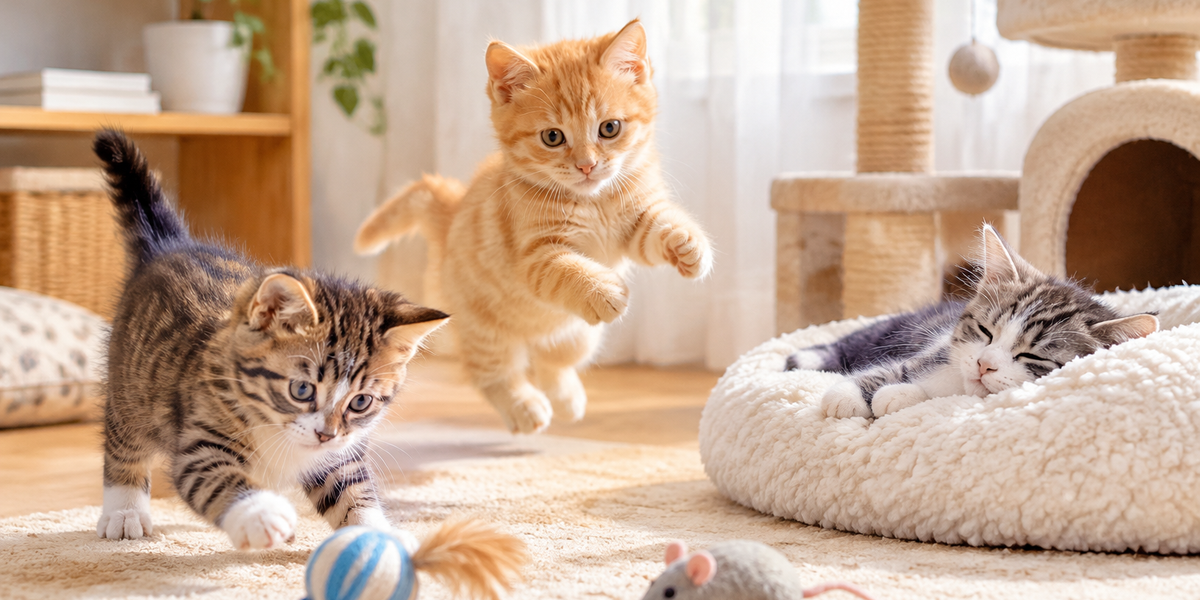
You've brought home an adorable ball of fluff, and within days you're wondering if you adopted a kitten or a tiny tornado. The 3 a.m. zoomies, the climbing of curtains, the surprise attacks on your ankles — it's exhausting. The most common question we hear from new kitten parents: "When will this chaos end?"
The good news: most kittens begin to mellow between 8 and 12 months of age, with significant calming by their first birthday. The reality is more nuanced — energy levels depend on breed, individual personality, and how you manage that boundless kitten energy during the critical early months. If you're introducing a kitten to an older cat, understanding these energy phases becomes even more important for a peaceful multi-cat household.
We've compiled veterinary research, feline behaviorist insights, and thousands of owner experiences to give you a realistic age-by-age timeline of what to expect — and how to survive it with your sanity intact.
What to Look For
Breed-Specific Energy Profiles — Some breeds (Bengals, Abyssinians, Siamese) maintain high energy well into adulthood, while others (Ragdolls, British Shorthairs, Persians) naturally calm down earlier. Research your kitten's breed tendencies to set realistic expectations.
Proper Play Outlets — Kittens need 2-3 structured play sessions daily, each 10-15 minutes long, to burn energy constructively. Without this, the energy manifests as destructive behavior and night-time chaos.
Spay/Neuter Timing — Hormones drive a significant portion of hyperactivity, especially in males. Most veterinarians now recommend fixing kittens between 4-6 months, which can noticeably reduce territorial and aggressive behaviors.
Environmental Enrichment — Vertical territory (cat trees), puzzle feeders, and rotating toy selection prevent boredom-driven hyperactivity. A stimulated kitten is often a calmer kitten.
Consistent Routine — Kittens thrive on predictable feeding, play, and sleep schedules. Erratic routines create anxiety, which manifests as increased energy and chaotic behavior.
Health Red Flags — While most kitten energy is normal, excessive hyperactivity paired with aggression, inability to settle, or destructive behavior despite adequate play may signal anxiety, pain, or hyperthyroidism and warrants a vet visit.
Age-by-Age Energy Timeline: What to Expect
8-12 Weeks: Peak Chaos Mode
This is the highest-energy phase you'll experience. Kittens at this age are essentially spring-loaded fury balls testing every boundary. They're learning to hunt, establishing their place in the world, and have zero impulse control. Expect sudden sprints, ambush attacks on anything that moves (including you), and climbing skills that defy physics.
Energy Level: 10/10
Sleep: 18-20 hours daily, but awake time is pure mayhem
Management Strategy: Short, frequent play sessions (5-10 minutes, 4-5 times daily) using interactive toys that mimic prey movement. Never use your hands as toys — this teaches aggression.
💡 Pro Tip: Keep a feather wand by the couch. When your kitten starts attacking your feet, redirect that hunting instinct immediately to the appropriate target.
3-6 Months: Sustained High Energy
Your kitten is now bigger, faster, and more coordinated — which means the chaos is more impressive. This is the "teenage" phase where confidence outpaces judgment. The 3 a.m. zoomies peak during this window, and furniture becomes personal climbing gyms.
Energy Level: 9/10
Sleep: 16-18 hours, with longer awake periods
Management Strategy: Increase play session intensity and duration (15 minutes, 3 times daily). Introduce puzzle feeders to engage their brain. This is the ideal window for spay/neuter surgery, which will begin moderating energy in 2-4 weeks post-surgery.
6-9 Months: First Signs of Calming
You'll start noticing slightly longer nap periods and less frantic energy. The constant need to destroy things decreases. However, this is still a high-energy phase — just less exhausting than before. If not spayed/neutered yet, hormones may keep energy elevated, especially in males showing territorial behaviors.
Energy Level: 7-8/10
Sleep: 15-16 hours
Management Strategy: Maintain consistent play routines, but you can often reduce frequency to 2 sessions daily. Ensure adequate vertical territory for climbing and perching.
9-12 Months: Noticeable Mellowing
This is when most owners report significant improvement. Your kitten starts choosing naps over destruction, can entertain themselves quietly, and the midnight zoomies become occasional rather than nightly. They're reaching physical maturity and the constant need to test boundaries decreases.
Energy Level: 5-6/10
Sleep: 14-16 hours
Management Strategy: Continue daily play but adjust to your cat's cues — some still want two sessions, others are content with one good 20-minute hunt simulation.
12-18 Months: Young Adult Stability
By their first birthday, most cats have settled into their adult personality. Energy levels stabilize and become predictable. You'll recognize patterns — morning bursts, evening play time, long afternoon naps. The chaotic unpredictability is largely gone.
Energy Level: 4-5/10 (breed-dependent)
Sleep: 12-16 hours
Management Strategy: Establish permanent routines that work for your household. Some cats remain playful well into adulthood; others become couch enthusiasts.
💡 Pro Tip: Even adult cats benefit from daily interactive play. It prevents obesity, reduces behavioral issues, and strengthens your bond.
Essential Tools for Managing Kitten Energy
Feather Wand Interactive Cat Toy
| Criteria | Score |
|----------|-------|
| Energy Burn Effectiveness | 10/10 |
| Bonding Opportunity | 9/10 |
| Durability | 8/10 |
| Value | 10/10 |
The gold standard for structured play. The feather wand mimics bird prey movement, triggering your kitten's hardwired hunting sequence: stalk, pounce, capture. A single 15-minute session before bedtime can eliminate night-time zoomies entirely. We recommend keeping multiple wands in different rooms so you're always ready to redirect unwanted energy. The long wand keeps your hands safely away from those needle-sharp kitten claws while providing the exercise they desperately need.
✅ Pros:
- Burns excess energy effectively in short sessions
- Strengthens bonding through interactive play
- Durable construction withstands aggressive play
- Inexpensive enough to have backups
❌ Cons:
- Requires active human participation
- Feathers need periodic replacement with heavy use
Get the Feather Wand Interactive Cat Toy
SmartyKat Hot Pursuit Electronic Motion Toy
| Criteria | Score |
|----------|-------|
| Independent Play Value | 8/10 |
| Prey Simulation | 9/10 |
| Battery Life | 7/10 |
| Engagement Duration | 7/10 |
When you need 20 minutes of peace, this electronic toy is a lifesaver. The concealed feather wand moves unpredictably under fabric, mimicking prey hiding under leaves. Four speed settings let you adjust to your kitten's energy level. While it can't replace human interaction entirely, it's perfect for solo play sessions while you're on work calls or making dinner. Some kittens stay engaged for 30+ minutes; others lose interest after 10.
✅ Pros:
- Provides independent entertainment
- Mimics realistic prey movement patterns
- Four speed settings accommodate different energy levels
- Contained design prevents parts from scattering
❌ Cons:
- Requires 3 AA batteries (not included)
- Some kittens lose interest quickly
- Not a substitute for interactive bonding play
PetFusion Multi-Level Cat Activity Tree
| Criteria | Score |
|----------|-------|
| Vertical Territory | 10/10 |
| Stability | 9/10 |
| Enrichment Value | 9/10 |
| Space Efficiency | 6/10 |
Kittens are hardwired to climb, and without appropriate outlets, they'll choose your curtains, bookshelves, and countertops. This multi-level tree satisfies that instinct while providing perches at different heights — critical for multi-cat households where vertical space reduces conflict. The sisal-wrapped posts double as scratching surfaces, and the hiding cubby gives overwhelmed kittens a retreat spot. At 5 feet tall, it offers genuine climbing challenge without dominating your entire living room.
✅ Pros:
- Satisfies natural climbing instinct constructively
- Multiple perches reduce boredom and territorial disputes
- Stable base handles aggressive kitten play
- Neutral design fits most home aesthetics
❌ Cons:
- Requires significant floor space
- Assembly takes 30-45 minutes
- May need carpet refreshing after 2-3 years of heavy use
Get the PetFusion Cat Activity Tree
Breed Variations: When High Energy is Normal
While most kittens follow the timeline above, certain breeds maintain elevated energy well into adulthood. If you have one of these breeds, adjust your expectations:
High-Energy Breeds (may never fully "calm down"):
- Bengals — Retain kitten-level energy for 2-3 years, require extensive daily play
- Abyssinians — Perpetually curious and active, need constant mental stimulation
- Siamese — Vocal and demanding, high social energy throughout life
- Savannahs — Part wild cat genetics mean dog-like energy levels
- Egyptian Maus — Fastest domestic cat breed, built for running
Moderate-Energy Breeds (calm down on typical schedule):
- American Shorthair — Balanced temperament, predictable mellowing
- Maine Coon — Gentle giants that calm significantly after kittenhood
- Scottish Fold — Moderately playful, settle into relaxed adulthood
Low-Energy Breeds (calm down earlier than average):
- Ragdoll — Docile by 8-10 months, prefer laps over leaping
- Persian — Low activity preference from kittenhood
- British Shorthair — Dignified and calm even as kittens
- Birman — Gentle energy, quick to settle into routines
Red Flags: When Hyperactivity Isn't Normal
While most kitten energy is developmentally appropriate, watch for these warning signs:
Excessive Aggression — If play attacks consistently break skin, don't respond to redirection, or seem fear-based rather than playful, consult a feline behaviorist. This can indicate early socialization issues.
Inability to Settle — Kittens should sleep 14-20 hours daily depending on age. If your kitten can't nap for more than 30-minute stretches or seems constantly anxious, rule out medical causes like hyperthyroidism or pain.
Destructive Behavior Despite Adequate Play — If you're providing 30+ minutes of interactive play daily plus environmental enrichment and your kitten is still destroying furniture, scratching obsessively, or eliminating outside the litter box, there may be anxiety or stress factors at play.
Sudden Energy Changes — A normally calm kitten suddenly becoming hyperactive (or vice versa) warrants a vet visit to rule out illness or pain.
Frequently Asked Questions
Will neutering/spaying calm my hyperactive kitten?
Yes, but the effect is more pronounced in males. Neutering eliminates testosterone-driven behaviors like territorial spraying, roaming, and aggressive play, which often manifests as hyperactivity. Most owners notice calming within 2-4 weeks post-surgery. In females, spaying eliminates heat cycle behaviors (yowling, restlessness) but has less impact on baseline energy. However, neither procedure turns a naturally energetic breed into a couch potato — it simply removes hormonal drivers of excess energy.
My 6-month-old kitten has zoomies at 3 a.m. every night. How do I stop this?
Night-time zoomies stem from unspent energy and cats' natural crepuscular rhythm (most active at dawn and dusk). The solution: schedule an intense 15-minute play session 30-60 minutes before your bedtime. Use a feather wand or laser pointer to simulate a full hunting sequence — stalk, chase, pounce, capture. Follow play with a small meal, which triggers the natural hunt-eat-groom-sleep cycle. Most kittens will sleep through the night after this routine. If zoomies persist, add a second play session in the evening.
Is it normal for my kitten to still be hyper at 18 months?
It depends on breed and individual personality. High-energy breeds like Bengals, Abyssinians, and Savannahs may retain kitten-level energy for 2-3 years or longer. If your kitten is a mixed breed or typically moderate-energy breed and still bouncing off walls at 18 months, evaluate whether they're getting adequate physical exercise (30+ minutes interactive play daily) and mental stimulation (puzzle feeders, rotating toys, vertical territory). Some cats are simply high-energy by nature and won't ever be lap cats — and that's okay.
Can I over-exercise my kitten?
No — kittens are self-regulating and will stop playing when tired. However, you can create unhealthy patterns. Overly rough play (letting them attack hands, encouraging aggressive behavior) teaches bad habits that persist into adulthood. Stick to structured play sessions with appropriate toys. If your kitten seems lethargic or stops playing abruptly, they're done — respect that. Never force continued activity.
Do kittens calm down after adoption, or does the new environment make them more hyper?
Most kittens experience a 3-7 day adjustment period where they're either unusually quiet (scared/overwhelmed) or extra chaotic (exploring frantically). True personality emerges around week two. If your kitten was calm at the shelter and becomes a terror at home, they were likely stressed at the shelter and are now comfortable enough to show their real energy level. The opposite is also true — a shelter terror may calm down once in a predictable, less stimulating home environment.
Final Thoughts
The kitten chaos phase is intense but temporary. Most cats show significant calming between 8-12 months, with full adult temperament established by 18 months. The key to survival isn't waiting for them to magically mellow — it's managing that energy constructively through structured play, environmental enrichment, and realistic expectations based on breed.
Remember: today's ankle-attacking menace becomes tomorrow's affectionate companion. The effort you invest now in appropriate play outlets and bonding pays dividends in a well-adjusted, behaviorally healthy adult cat. Understanding cat behavior during these formative months helps you interpret their needs and respond appropriately, strengthening your relationship for years to come.
The wild kitten energy does end — but the love and personality you're building together? That's permanent.
Editor's Choice
Based on verified specs and thousands of owner reviews, these are our top picks for managing kitten energy:
🏆 Best Overall: Feather Wand Interactive Cat Toy — The single most effective tool for burning kitten energy through natural hunting behavior. At under $15, every kitten owner needs at least two.
💰 Best Value: SmartyKat Hot Pursuit Electronic Motion Toy — When you need independent entertainment to survive work calls and dinner prep, this delivers reliable engagement at a reasonable price.
🏗️ Best Investment: PetFusion Multi-Level Cat Activity Tree — Yes, it's nearly $90, but it satisfies climbing instinct, prevents furniture destruction, and provides years of enrichment. Essential for high-energy breeds.