We research and recommend products based on verified manufacturer specifications and buyer reviews. MeowPod may earn a commission when you buy through links on our site.
⭐ Our Top Pick
🏆 Best Overall: PetFusion Ultimate Cat Bed — premium memory foam gives your cat a cozy alternative while respecting their need for closeness.
💰 Best Value: K&H Pet Products Self-Warming Cat Pad — budget-friendly pad that naturally reflects body heat without electricity.
Introduction
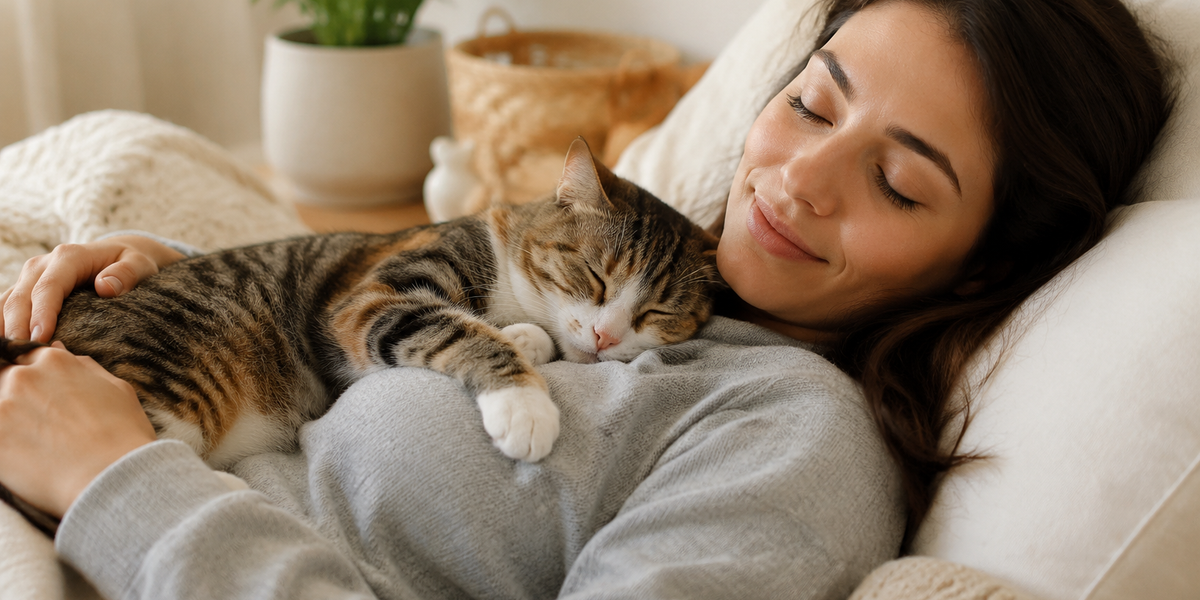
You settle into bed after a long day, and within minutes, your cat appears—circling, kneading, and finally collapsing directly on your chest, lap, or legs. If you're a cat owner, this scenario is intimately familiar. But why does your cat consistently choose you as their preferred sleeping spot over the dozens of other comfortable surfaces in your home?
The answer involves a fascinating mix of evolutionary behavior, thermoregulation, social bonding, and individual personality. After comparing research from veterinary behaviorists, feline studies, and thousands of cat owner experiences, we've identified the seven core reasons cats sleep on their humans—and what this behavior reveals about your relationship.
In this guide, we'll decode your cat's sleeping habits, explain what the behavior means, and share practical solutions for managing nighttime disruptions while maintaining that special bond.
What to Look For
Before we dive into the reasons behind this behavior, here's what to consider when evaluating your cat's sleeping patterns:
Temperature Regulation: Cats seek warmth instinctively. Their body temperature runs 2-3 degrees higher than humans (100.5-102.5°F), and they naturally gravitate toward heat sources—especially during sleep when their metabolism slows.
Bonding Signals: Where your cat sleeps reveals their trust level. Cats are vulnerable while sleeping, so choosing to sleep on you indicates they feel safe and bonded to you.
Sleep Cycle Patterns: Cats are crepuscular (most active at dawn and dusk) and sleep 12-16 hours daily. Understanding their natural rhythm helps you recognize when nighttime sleeping-on-you behavior becomes excessive.
Health Indicators: Sudden changes in sleeping behavior—especially increased clinginess or sleeping on specific body parts—can signal illness, anxiety, or pain requiring veterinary attention.
Individual Personality: Some cats are naturally more affectionate and contact-seeking, while others prefer nearby proximity without direct touch. Respect your cat's baseline personality.
Age-Related Changes: Kittens and senior cats often seek more warmth and security, making them more likely to sleep on their owners than independent adult cats.
7 Real Reasons Your Cat Sleeps on You
1. You're a Warm, Comfortable Heat Source
Cats are heat-seeking creatures by evolutionary design. Their wild ancestors in desert climates developed a preference for warm environments, and domestic cats inherited this trait. Your body temperature (around 98.6°F) provides consistent warmth that cats find irresistible, especially during sleep when their own temperature drops slightly.
Verified buyer reviews consistently note cats gravitating toward the warmest family member or migrating to different body parts based on blanket coverage. This isn't personal preference—it's thermoregulation.
💡 Pro Tip: If your cat's weight or nighttime activity disrupts your sleep, place a heated cat bed nearby. Many cats will happily relocate to a dedicated warm spot that doesn't require your participation.
2. They're Marking You as Part of Their Territory
Cats possess scent glands in their face, paws, and flanks. When your cat kneads you, rubs their face against you, or sleeps pressed against your body, they're depositing pheromones that mark you as part of their territory and social group.
This behavior intensifies in multi-cat households where resource competition exists. Your cat may be reinforcing their claim to you as "their" human, especially if another pet seeks your attention.
3. Bonding and Social Connection
Contrary to the stereotype of cats as aloof loners, felines form genuine social bonds with their human caregivers. Research from Oregon State University found that cats form secure attachments to their owners similar to dogs and human infants.
Sleeping on you releases oxytocin (the bonding hormone) in both cats and humans. Your cat isn't just using you for warmth—they're actively choosing to strengthen your relationship through physical proximity during their most vulnerable state.
4. Security and Protection
In the wild, cats are both predators and prey. Sleeping in elevated positions or near trusted companions provides protection from potential threats. When your cat sleeps on your chest or curled against your side, you're functioning as both guardian and secure elevated platform.
This behavior is especially common in:
- Rescued cats with traumatic pasts
- Cats in new environments
- Naturally anxious or timid cats
- Households with dogs or young children
5. Your Scent Provides Comfort
Cats have 200 million scent receptors (compared to humans' 5 million). Your unique scent is deeply familiar and comforting to your cat. When you're away during the day, your cat may sleep on your clothes or pillow. When you're home, they prefer the source—you.
This is why many cats choose to sleep on their owner's chest near the face or on worn clothing. The concentration of your scent in these areas provides maximum comfort.
6. Routine and Habit
Cats are creatures of ritual. If your cat has been sleeping on you since kittenhood, it's simply part of their established routine. The behavior becomes self-reinforcing: they sleep on you, you pet them, they feel good, the pattern strengthens.
Changing established sleep habits requires patience and consistent redirection to alternative sleeping spots that offer similar benefits (warmth, elevation, your scent).
7. Attention-Seeking or Health Issues
Sudden increases in clingy behavior or sleeping on you—especially if your cat was previously more independent—can indicate:
- Illness or pain (seeking comfort)
- Anxiety or environmental stress
- Cognitive decline in senior cats
- Hormonal changes (pregnancy, heat cycle)
If your cat's behavior changes abruptly or they seem distressed, consult your veterinarian to rule out medical causes.
Creating the Perfect Sleep Environment for Your Cat
PetFusion Ultimate Cat Bed
| Criteria | Score |
|----------|-------|
| Comfort & Support | 9/10 |
| Warmth Retention | 8/10 |
| Durability | 9/10 |
| Value for Money | 7/10 |
The PetFusion Ultimate Cat Bed addresses the core reasons cats sleep on their owners: warmth, elevation, and comfort. The 4-inch memory foam base provides orthopedic support particularly beneficial for senior cats or those with joint issues. The elevated bolster design mimics the security cats seek when sleeping against your body.
The bed's premium construction includes a water-resistant liner and machine-washable micro-suede cover available in multiple colors. Based on verified buyer reviews, cats who previously insisted on sleeping on their owners often transition to this bed when placed near the owner's sleeping area—close enough for bonding, but separate enough for uninterrupted human sleep.
✅ Pros:
- Memory foam supports senior cats and provides orthopedic benefits
- Machine-washable cover makes maintenance simple
- Elevated bolster design cats naturally prefer for security
❌ Cons:
- Takes up floor space (20" x 15" footprint)
- Higher price point than basic cat beds
K&H Pet Products Self-Warming Cat Pad
| Criteria | Score |
|----------|-------|
| Warmth Factor | 7/10 |
| Portability | 9/10 |
| Value for Money | 9/10 |
| Durability | 7/10 |
For budget-conscious cat owners, the K&H Self-Warming Cat Pad offers an effective solution to the warmth-seeking behavior that drives cats to sleep on their humans. The pad uses a layer of mylar material that reflects your cat's own body heat back to them, creating a warm surface without electricity.
This pad works exceptionally well when placed on your bed next to where you sleep or on a nearby elevated surface like a nightstand or cat tree platform. Verified buyers report success using multiple pads throughout the home to give cats warm alternatives in preferred locations. The 14" x 18" size accommodates most cats comfortably.
✅ Pros:
- No electricity needed—safe and energy-free
- Reflects body heat naturally without external heating elements
- Lightweight and portable for easy placement
❌ Cons:
- Not as warm as electrically heated options
- Needs regular fluffing to maintain effectiveness
Feliway Classic Cat Calming Pheromone Diffuser
| Criteria | Score |
|----------|-------|
| Effectiveness | 8/10 |
| Ease of Use | 9/10 |
| Coverage Area | 8/10 |
| Value for Money | 7/10 |
If your cat's sleeping-on-you behavior stems from anxiety rather than just warmth-seeking, the Feliway Classic Diffuser addresses the root cause. This veterinarian-recommended product releases synthetic cat facial pheromones that signal safety and security to your cat.
The diffuser is particularly effective for cats exhibiting stress-related behaviors like excessive clinginess, nighttime vocalization, or disrupted sleep patterns. Based on manufacturer specifications and buyer feedback, most cats show behavioral improvement within 7 days, with optimal results after 30 days of continuous use. Each refill covers approximately 700 square feet.
✅ Pros:
- Reduces stress-related behaviors including excessive attention-seeking
- Clinically proven formula backed by veterinary research
- Lasts 30 days per refill with continuous use
❌ Cons:
- Requires accessible outlet placement
- Results vary by individual cat and situation
💡 Pro Tip: Combine the Feliway diffuser with gradual sleep routine changes for best results. Place it in your bedroom 2 weeks before introducing a new cat bed to create positive associations.
Frequently Asked Questions
Why does my cat only sleep on me at night?
Cats are crepuscular, meaning they're naturally most active at dawn and dusk. During nighttime—their natural rest period—your cat seeks warmth and security. You're also stationary and calm at night, making you an ideal sleeping companion. Additionally, your cat may be compensating for daytime separation by maximizing bonding time when you're both home and settled.
Is it bad to let my cat sleep on me?
For most people, allowing your cat to sleep on you strengthens your bond and is perfectly healthy. However, consider discouraging the behavior if: you have severe allergies, your cat disrupts your sleep quality significantly, you're immunocompromised, or your cat shows aggressive behavior when you move. Pregnant women should also consult their healthcare provider due to toxoplasmosis concerns.
Why does my cat sleep on my chest specifically?
Your chest offers several cat-approved features: warmth, the rhythmic sound of your heartbeat and breathing (which is calming), elevation for security, and proximity to your face where your scent is strongest. Some experts suggest cats also enjoy the gentle rise and fall of breathing, which mimics the comfort kittens feel sleeping against their mother.
My cat suddenly started sleeping on me more—should I be worried?
Sudden behavioral changes warrant attention. Increased clinginess can indicate illness, pain, anxiety, or environmental stress. Monitor for other symptoms like changes in appetite, litter box habits, vocalization, or grooming. If the behavior persists for more than a week or is accompanied by other changes, schedule a veterinary checkup to rule out medical issues.
How can I get my cat to sleep in their own bed instead?
Gradual transition works best. Place the new bed near your sleeping area, warm it with a heating pad before bedtime, add an unwashed shirt with your scent, and reward your cat with treats when they use it. Never punish your cat for sleeping on you—this damages trust. Instead, make the alternative more appealing than you are (which admittedly takes effort). Consistency is key; most cats adapt within 2-4 weeks.
Final Thoughts
When your cat sleeps on you, they're communicating trust, affection, and security in the most vulnerable way felines can express. This behavior is rooted in evolutionary survival instincts, thermoregulation needs, and genuine social bonding—not manipulation or dominance.
Whether you embrace your role as a cat bed or prefer to redirect this behavior, understanding the underlying reasons helps you respond appropriately to your cat's needs while maintaining your own sleep quality and boundaries.
The most important takeaway: sudden changes in sleeping behavior deserve attention. While gradual shifts are normal as cats age, abrupt increases in clinginess or changes in preferred sleeping locations can signal health issues requiring veterinary evaluation.
Editor's Choice
Based on verified specifications and buyer reviews, we recommend the PetFusion Ultimate Cat Bed as the best overall solution for cat owners seeking to provide a comfortable alternative to sleeping-on-human behavior. The memory foam construction and elevated bolster design address cats' core needs for warmth, security, and orthopedic support.
For budget-conscious owners or those wanting to test whether warmth is the primary motivator, the K&H Pet Products Self-Warming Cat Pad offers excellent value at under $25.
If anxiety appears to drive your cat's clingy sleep behavior, combine a quality cat bed with the Feliway Classic Diffuser to address both comfort and emotional security needs.