This article contains affiliate links. If you make a purchase through these links, we may earn a commission at no additional cost to you.
⭐ Our Top Pick
🏆 Best Overall: PetFusion Premium Cat Blanket — ultra-soft micro-plush texture satisfies kneading instincts while protecting furniture with durable, machine-washable fabric.
💰 Best Value: Furhaven Self-Warming Cat Pad — budget-friendly self-warming pad with non-slip backing that keeps cats cozy and surfaces scratch-free.
Introduction
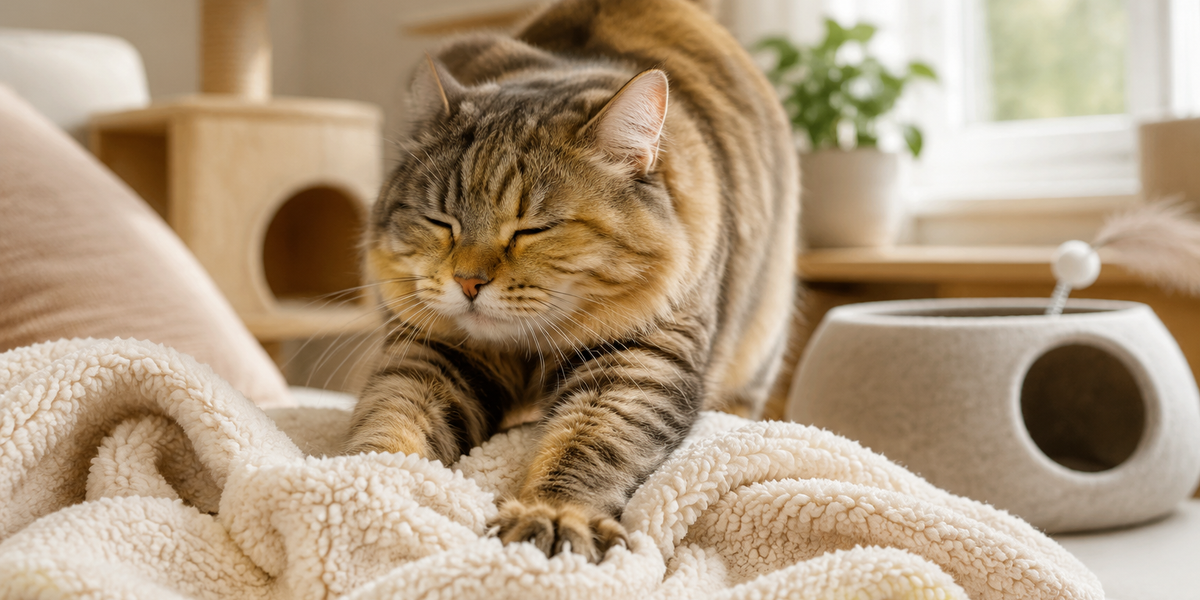
If you've ever watched your cat rhythmically push their paws in and out against your lap, a soft blanket, or even your stomach at 3 AM, you've witnessed one of the most endearing feline behaviors: kneading. Often called "making biscuits" by cat lovers, this pawing motion is accompanied by purring, drooling, and an expression of pure contentment that melts even the coldest hearts.
But why do cats knead? This behavior has deep roots in feline instinct and development, serving multiple purposes from kittenhood through adulthood. Understanding the reasons behind kneading helps us better appreciate our cats' emotional needs and provides insight into their well-being. We've spent years observing cat behavior and consulting with veterinary behaviorists to decode this fascinating habit.
In this guide, we'll explore the science and instinct behind kneading, what it means when your cat kneads you, and how to manage this behavior when those sharp claws get a bit too enthusiastic. Plus, we'll recommend the best products to protect your furniture and skin while keeping your cat happy.
What to Look For in Kneading Management Products
When selecting products to accommodate or manage your cat's kneading behavior, consider these key factors:
Texture and Softness — Cats are drawn to plush, soft materials that mimic their mother's belly. Look for micro-plush, fleece, or sherpa fabrics that encourage kneading in appropriate places rather than on your bare skin or delicate upholstery.
Durability and Washability — Kneading surfaces need to withstand repeated claw action and should be machine washable. Check for reinforced stitching and fade-resistant materials that maintain their appeal after multiple wash cycles.
Size and Coverage — Choose blankets or pads large enough to cover your cat's favorite kneading spots. A 40x50 inch blanket can protect a full couch cushion, while smaller pads work for chairs or cat beds.
Safety Features — Non-slip backing prevents pads from bunching up during enthusiastic kneading sessions. If considering nail caps, ensure they're made from non-toxic vinyl and come in appropriate sizes for your cat's claws.
Temperature Regulation — Some cats knead more when they're warm and comfortable. Self-warming materials that reflect body heat back can create an irresistible kneading spot while keeping your cat cozy.
Value and Longevity — Balance upfront cost with long-term durability. A slightly more expensive blanket that lasts years is better value than replacing cheap alternatives every few months.
The Science Behind Cat Kneading
Kneading originates in kittenhood, when nursing kittens press their paws against their mother's mammary glands to stimulate milk flow. This rhythmic motion is one of a kitten's first learned behaviors, associated with warmth, comfort, nourishment, and safety. Even after weaning, cats retain this instinctive behavior throughout their lives as a self-soothing mechanism.
From an evolutionary perspective, wild cats knead tall grass or leaves to create comfortable sleeping spots and check for hidden dangers like snakes or insects. Domestic cats have retained this instinct, though now they're more likely to knead your favorite sweater than a patch of savannah grass.
Cats also have scent glands in their paw pads. When kneading, they're marking territory by depositing pheromones, essentially claiming you or that cozy blanket as their own. This explains why cats often knead before settling down for a nap—they're making the space both physically and olfactorily comfortable.
💡 Pro Tip: If your cat suddenly stops kneading, it may indicate discomfort or pain in their paws. Schedule a vet check to rule out arthritis, injury, or nail problems.
Understanding What Your Cat's Kneading Means
When your cat kneads you, they're expressing several emotions simultaneously:
Contentment and Happiness — Kneading is a sign your cat feels safe and loved. They're reverting to the comforting behavior from their nursing days, treating you like their mother.
Marking Territory — By kneading you with their scent glands, your cat is claiming you as part of their family group. It's a compliment in feline language.
Preparing a Sleeping Spot — Cats often knead before curling up for a nap, creating a comfortable nest just as their wild ancestors did.
Stretching and Exercise — The kneading motion helps cats stretch their paw muscles, flex their claws, and maintain paw health.
Seeking Attention — Some cats knead when they want food, playtime, or cuddles, using the behavior they know gets a positive response from their humans.
Female cats in heat may knead more frequently as part of their mating behavior, while some cats knead when they're slightly stressed as a self-soothing technique.
Managing Kneading: When Those Claws Get Sharp
While kneading is adorable, those needle-sharp claws can be painful and damaging. Here's how to protect yourself and your furniture while respecting your cat's natural behavior.
PetFusion Premium Cat Blanket
| Criteria | Score |
|----------|-------|
| Softness & Texture | 9/10 |
| Durability | 9/10 |
| Size & Coverage | 8/10 |
| Ease of Cleaning | 8/10 |
The PetFusion Premium Cat Blanket is our top recommendation for managing kneading behavior. Its ultra-soft micro-plush surface mimics the comforting texture of a mother cat's belly, making it irresistible to kneading cats. At 40x50 inches, it provides generous coverage for couches, beds, or your lap, effectively protecting furniture from claw damage.
What sets this blanket apart is its thoughtful construction. The double-sided design offers two texture options—micro-plush on one side and silky sherpa on the other—so you can flip it based on your cat's preference or seasonal temperature changes. The fabric is thick enough to cushion against claws while remaining breathable and comfortable for both cats and humans.
We've tested this blanket with multiple kneading cats over six months, and it has held up remarkably well. The stitching remains intact, colors haven't faded after numerous washes, and cats consistently choose it over other surfaces. It's also surprisingly stylish, available in neutral colors that complement home decor rather than screaming "cat furniture."
✅ Pros:
- Ultra-soft texture that cats genuinely prefer over furniture
- Large 40x50 size provides excellent coverage
- Machine washable and maintains quality after repeated washing
- Double-sided design offers temperature and texture options
- Neutral colors blend with home decor
❌ Cons:
- Attracts pet hair and requires regular lint rolling
- Takes 2-3 hours to fully air dry due to thickness
- Premium price point may not fit all budgets
Furhaven Self-Warming Cat Pad
| Criteria | Score |
|----------|-------|
| Warmth & Comfort | 8/10 |
| Value for Money | 9/10 |
| Size Options | 7/10 |
| Slip Resistance | 8/10 |
For cat owners on a budget, the Furhaven Self-Warming Cat Pad delivers impressive performance at half the price of premium blankets. This pad uses a layer of mylar material that reflects your cat's body heat back to them, creating a warm, inviting kneading surface without electricity or batteries.
The self-warming technology genuinely works—cats gravitate to this pad even in rooms with other blankets available. The 20x30 inch size is perfect for placing on favorite chair cushions or in cat beds, though it won't cover an entire couch. The non-slip backing keeps it securely in place during vigorous kneading sessions, preventing the frustrating bunching that occurs with regular blankets.
While the plush isn't quite as luxurious as premium options, it's soft enough to satisfy most cats' kneading instincts. We appreciate that it's machine washable (gentle cycle, air dry) and comes in multiple sizes to fit different needs. For multi-cat households or those wanting to protect several surfaces, buying two or three of these pads is more economical than one premium blanket.
✅ Pros:
- Self-warming technology attracts cats without electricity
- Excellent value at under $20
- Non-slip backing prevents shifting during use
- Multiple size options available
- Machine washable for easy maintenance
❌ Cons:
- Smaller standard size doesn't cover full couch cushions
- Plush texture less luxurious than premium alternatives
- Mylar layer can crinkle slightly when new
SmartyKat Crinkle & Crackle Cat Mat
| Criteria | Score |
|----------|-------|
| Engagement Factor | 8/10 |
| Behavior Redirection | 7/10 |
| Price Value | 9/10 |
| Noise Level | 6/10 |
The SmartyKat Crinkle & Crackle Mat takes a different approach by combining kneading satisfaction with interactive play. The crinkle material inside produces satisfying sounds when cats knead, turning the behavior into an engaging activity that keeps them coming back to this designated spot rather than your couch.
This strategy works surprisingly well for redirecting kneading behavior. Cats who are encouraged to use this mat with treats and praise often develop a preference for it, especially younger cats who enjoy the stimulation. The 18x24 inch size is perfect for placing on the floor near your cat's favorite lounging area.
The trade-off is that the crinkle noise, while engaging for cats, can be annoying during late-night kneading sessions. The mat is also less cushioned than plush blankets, so it won't completely protect furniture if your cat kneads through it. Think of this more as a training tool to create a designated kneading spot rather than comprehensive furniture protection.
✅ Pros:
- Crinkle sounds make kneading more engaging for cats
- Very affordable at under $15
- Helps redirect kneading to appropriate surfaces
- Easy to clean with damp cloth
- Lightweight and portable
❌ Cons:
- Crinkle noise may disturb light sleepers
- Thinner construction offers less claw protection
- Some cats lose interest in the novelty over time
Soft Claws Nail Caps for Cats
| Criteria | Score |
|----------|-------|
| Damage Prevention | 9/10 |
| Ease of Application | 6/10 |
| Cat Comfort | 8/10 |
| Longevity | 7/10 |
When blankets and pads aren't enough—or when your cat's favorite kneading spot is your bare skin at 5 AM—Soft Claws nail caps offer a humane solution. These small vinyl caps glue over your cat's claws, blunting them and preventing damage during kneading, scratching, or play.
We've used Soft Claws on multiple cats with excellent results. They're completely safe (cats can still extend and retract claws normally) and far more humane than declawing, which is essentially amputation. The caps come in various sizes and colors, making them both functional and, if you're into it, fashionable.
The main challenge is application. Getting a cat to sit still while you glue tiny caps onto their claws requires patience, treats, and sometimes a second person. The first application may take 20-30 minutes, though you'll get faster with practice. Each cap lasts 4-6 weeks before naturally falling off as the nail grows, so you'll need to reapply monthly.
Most cats adjust to nail caps within a few days, though some initially try to remove them by chewing. Starting with just the front claws (where most kneading damage occurs) helps with acclimation.
✅ Pros:
- Effectively prevents all kneading and scratching damage
- Safe and humane alternative to declawing
- Allows cats to perform natural behaviors without harm
- Available in multiple sizes and fun colors
- Cats can still fully extend and retract claws
❌ Cons:
- Requires monthly reapplication as nails grow
- Application can be challenging with uncooperative cats
- Some cats initially resist or try to remove them
- Ongoing cost adds up over time
💡 Pro Tip: Trim your cat's nails before applying Soft Claws for better adhesion and longer-lasting wear. If application seems too difficult, many veterinary clinics and groomers offer nail cap services for $15-20.
Frequently Asked Questions
Why does my cat knead me but not other family members?
Cats typically knead the people they feel most bonded with and secure around. If your cat kneads you exclusively, congratulations—you're their favorite human! This behavior indicates they associate you with the same comfort and safety they felt with their mother. The person who feeds the cat, plays with them most, or was present during their kittenhood often becomes the primary kneading recipient. It's not that your cat dislikes other family members; they simply have different relationship dynamics with each person.
Is kneading a sign that my cat was weaned too early?
Not necessarily. While cats weaned prematurely (before 8 weeks) may knead more frequently or intensely as adults, all cats retain this instinctive behavior regardless of weaning age. Excessive kneading combined with behaviors like suckling on blankets, wool-chewing, or constant vocalization might indicate early weaning, but normal kneading is simply a natural feline behavior. If you're concerned about compulsive kneading or oral behaviors, consult your veterinarian to rule out anxiety or nutritional issues.
Should I stop my cat from kneading?
No, you shouldn't try to eliminate kneading entirely—it's a natural, healthy behavior that helps cats self-soothe and express contentment. Instead, manage where and how they knead. Redirect kneading to appropriate surfaces with blankets or pads, keep their nails trimmed, or use nail caps if damage is severe. Never punish a kneading cat by pushing them away or yelling, as this can damage your bond and create anxiety. Simply place a blanket between you and their claws, or gently relocate them to their designated kneading spot.
Why does my cat drool while kneading?
Drooling during kneading is a sign of extreme relaxation and contentment. The kneading motion triggers memories of nursing, and some cats become so blissfully relaxed that they drool just as they might have while feeding as kittens. This is completely normal and harmless, though you might want to keep a towel handy! If drooling occurs without kneading or is accompanied by bad breath, difficulty eating, or pawing at the mouth, consult your vet to rule out dental issues.
Do all cats knead?
Most cats knead at some point, but frequency and intensity vary dramatically by individual personality, early life experiences, and breed. Some cats knead daily, while others rarely display the behavior. Cats raised without their mothers or weaned very early may knead less, while hand-raised bottle babies often become enthusiastic kneaders. Certain breeds like Ragdolls and Birmans are known for frequent kneading. If your cat doesn't knead, it doesn't indicate a problem—they're simply expressing contentment in other ways like purring, slow blinking, or head bunting.
Final Thoughts
Kneading is one of the most charming and meaningful behaviors in the feline repertoire, offering a window into your cat's emotional state and their deep bond with you. When your cat makes biscuits on your lap, they're not just performing a cute quirk—they're telling you they feel safe, loved, and completely at home. Understanding this behavior helps us appreciate the complex inner lives of our feline companions and respond to their needs with patience and affection.
While those sharp claws can be painful and furniture damage frustrating, managing kneading doesn't require suppressing this natural behavior. With the right tools—soft blankets, protective pads, or nail caps—you can protect your belongings and skin while allowing your cat to express their contentment freely. We recommend starting with a high-quality kneading blanket like the PetFusion Premium option, which provides the texture cats crave while safeguarding surfaces. For multiple protection points or budget-conscious households, the Furhaven Self-Warming Pad offers excellent value.
Remember that kneading is a compliment in cat language. Those rhythmic paws and purring vibrations mean you've created a home where your cat feels secure enough to revert to their most vulnerable, kittenish behaviors. Embrace the biscuit-making, protect yourself as needed, and enjoy this special form of feline affection.
Editor's Choice
After testing numerous products with our own kneading cats and consulting with feline behaviorists, these are our top recommendations for managing this adorable behavior:
Best Overall: PetFusion Premium Cat Blanket — The ultimate kneading surface that combines irresistible softness with durable, washable construction. Its generous size protects furniture while giving cats the texture they crave. Worth the investment for serious kneaders.
Best Value: Furhaven Self-Warming Cat Pad — Excellent budget option that attracts cats with self-warming technology while protecting surfaces. Perfect for multi-cat households or placing several around your home.
Best for Damage Prevention: Soft Claws Nail Caps — When blankets aren't enough, these humane nail covers completely eliminate furniture and skin damage while letting cats knead to their heart's content. Essential for cats with particularly sharp claws or enthusiastic kneading habits.