Disclosure: Some links on this page are affiliate links. If you purchase through these links, we may earn a small commission at no extra cost to you. We only recommend products we genuinely trust.
⭐ Our Top Pick
🏆 Best Overall: PetSafe Healthy Pet Simply Feed Automatic Feeder — Reliable portion control to prevent your cat from sneaking dangerous human foods.
💰 Best Value: Catit Senses 2.0 Food Tree — Affordable interactive feeder that slows down eating and keeps your cat engaged.
Introduction
Every cat owner knows the struggle: you're enjoying a slice of pizza or a bowl of grapes, and your feline friend gives you that irresistible stare. But before you share a bite, it's crucial to know that many common human foods can be toxic—even deadly—to cats. In fact, the ASPCA Animal Poison Control Center handles thousands of cases each year involving cats ingesting human foods.
As cat lovers and pet care experts, we've researched the most dangerous foods lurking in your kitchen. In this guide, we'll cover 15 foods you should never feed your cat, what symptoms to watch for, and safe alternatives that keep your kitty happy and healthy. We'll also recommend top products to help you manage your cat's diet and prevent accidental poisoning.
What to Look For
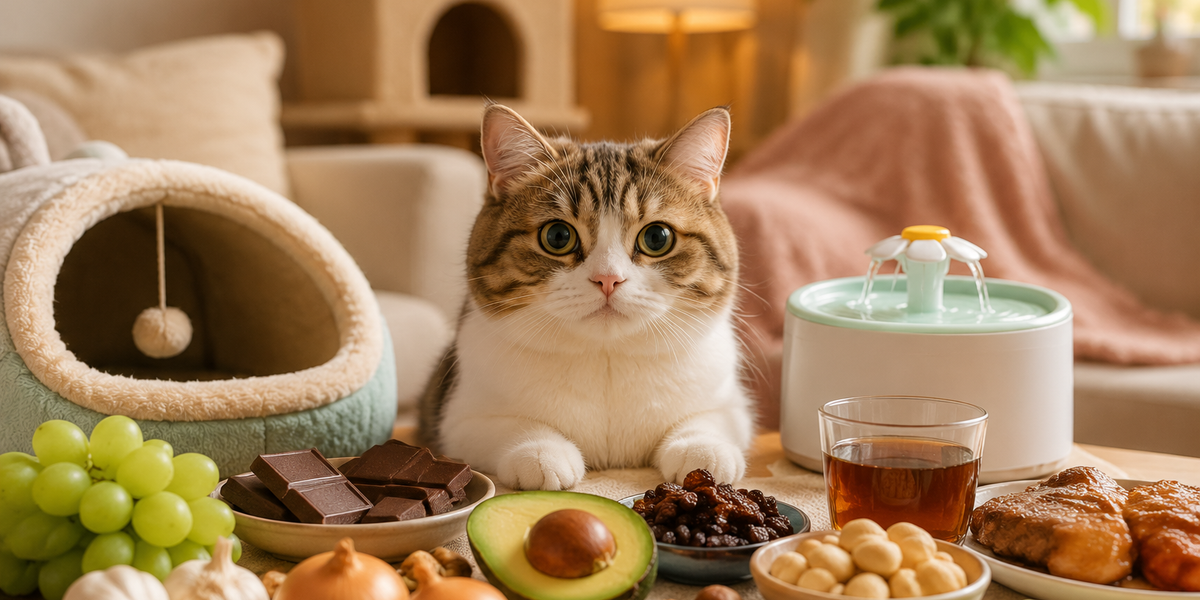
🐾 Know the top offenders: Onions, garlic, chocolate, grapes, raisins, xylitol, alcohol, caffeine, raw dough, and more—each poses unique risks.
🥗 Safe treat alternatives: Stick to cat-safe veggies like steamed carrots or green beans, or commercial cat treats.
🚨 Recognize poisoning symptoms: Vomiting, diarrhea, lethargy, drooling, tremors, seizures, or difficulty breathing require immediate veterinary attention.
📞 Have emergency contacts ready: Save your vet's number and the ASPCA Animal Poison Control Center (888-426-4435).
🍽️ Use portion control tools: Automatic feeders and slow feeders can prevent your cat from accessing dangerous foods when you're not looking.
Toxic Foods Deep Dive
🧅 Onions and Garlic (Allium Family)
| Criteria | Score |
|----------|-------|
| Toxicity Level | 10/10 |
| Commonality in Homes | 9/10 |
| Symptom Severity | 9/10 |
| Treatment Availability | 7/10 |
Onions, garlic, leeks, shallots, and chives contain compounds that can damage a cat's red blood cells, leading to hemolytic anemia. Even small amounts—powdered or fresh—are dangerous. Symptoms may appear days after ingestion and include weakness, pale gums, and dark urine. Cooking does not reduce the risk.
✅ Pros:
- None—completely avoid all forms.
❌ Cons:
- Causes potentially fatal anemia.
- Symptoms can be delayed, making diagnosis tricky.
🍫 Chocolate and Caffeine
| Criteria | Score |
|----------|-------|
| Toxicity Level | 9/10 |
| Commonality in Homes | 10/10 |
| Symptom Severity | 8/10 |
| Treatment Availability | 8/10 |
Chocolate contains theobromine and caffeine, both methylxanthines that cats cannot metabolize. Dark chocolate and baking chocolate are the most dangerous. Symptoms include vomiting, diarrhea, hyperactivity, tremors, seizures, and even death. Coffee, tea, and energy drinks pose similar risks.
✅ Pros:
- None—keep all chocolate and caffeine products out of reach.
❌ Cons:
- No safe amount; even a small piece can cause serious issues.
- Requires immediate veterinary intervention.
🍇 Grapes and Raisins
| Criteria | Score |
|----------|-------|
| Toxicity Level | 8/10 |
| Commonality in Homes | 8/10 |
| Symptom Severity | 9/10 |
| Treatment Availability | 7/10 |
Grapes and raisins can cause acute kidney failure in cats, though the exact toxin is unknown. Some cats are more sensitive than others. Symptoms include vomiting, lethargy, loss of appetite, and decreased urination. Even a single grape can be dangerous.
✅ Pros:
- None—never share grapes or raisins.
❌ Cons:
- Kidney damage may be irreversible.
- No known antidote; treatment is supportive.
🚫 Xylitol (Artificial Sweetener)
| Criteria | Score |
|----------|-------|
| Toxicity Level | 9/10 |
| Commonality in Homes | 7/10 |
| Symptom Severity | 10/10 |
| Treatment Availability | 6/10 |
Xylitol is found in sugar-free gum, candy, baked goods, peanut butter, and toothpaste. In cats, it can cause a rapid drop in blood sugar (hypoglycemia) and liver failure. Symptoms include vomiting, weakness, seizures, and jaundice. Unlike in dogs, xylitol poisoning in cats is less documented but still extremely dangerous.
✅ Pros:
- None—check labels carefully.
❌ Cons:
- Very small amounts can be lethal.
- Requires emergency veterinary care.
🥛 Dairy Products (Milk, Cheese, Ice Cream)
| Criteria | Score |
|----------|-------|
| Toxicity Level | 4/10 |
| Commonality in Homes | 9/10 |
| Symptom Severity | 3/10 |
| Treatment Availability | 9/10 |
Most adult cats are lactose intolerant. While not acutely toxic, dairy can cause digestive upset, including diarrhea, vomiting, and abdominal pain. Some cats may tolerate small amounts of cheese or yogurt, but it's best to avoid entirely.
✅ Pros:
- Not life-threatening in small amounts.
❌ Cons:
- Causes gastrointestinal distress.
- Can lead to dehydration if diarrhea is severe.
🥚 Raw Eggs, Meat, and Fish
| Criteria | Score |
|----------|-------|
| Toxicity Level | 6/10 |
| Commonality in Homes | 6/10 |
| Symptom Severity | 5/10 |
| Treatment Availability | 8/10 |
Raw eggs can carry Salmonella or E. coli, and raw fish contains an enzyme that destroys thiamine (Vitamin B1), leading to neurological issues. Raw meat may also harbor parasites. Cooked, unseasoned meat and fish are safe in moderation.
✅ Pros:
- Cooked, plain meat is a good protein source.
❌ Cons:
- Raw diets require careful handling and veterinary guidance.
- Risk of bacterial infection and nutritional imbalance.
🥜 Macadamia Nuts and Other Nuts
| Criteria | Score |
|----------|-------|
| Toxicity Level | 5/10 |
| Commonality in Homes | 5/10 |
| Symptom Severity | 4/10 |
| Treatment Availability | 8/10 |
Macadamia nuts can cause weakness, vomiting, tremors, and hyperthermia in dogs, but their effect on cats is less studied. Other nuts like almonds and walnuts are high in fat and can cause pancreatitis. It's best to keep all nuts away from cats.
✅ Pros:
- Not highly toxic but still risky.
❌ Cons:
- High fat content can cause pancreatitis.
- Choking hazard.
🍺 Alcohol and Raw Dough
| Criteria | Score |
|----------|-------|
| Toxicity Level | 10/10 |
| Commonality in Homes | 7/10 |
| Symptom Severity | 10/10 |
| Treatment Availability | 5/10 |
Alcohol in any form—beer, wine, spirits, or even raw dough that ferments in the stomach—can cause severe intoxication, respiratory depression, coma, and death. Raw dough expands in the stomach, leading to bloat and alcohol poisoning.
✅ Pros:
- None—keep all alcoholic beverages and dough out of reach.
❌ Cons:
- Extremely dangerous, even in small amounts.
- Requires immediate emergency care.
Frequently Asked Questions
What should I do if my cat eats a toxic food?
Contact your veterinarian or the ASPCA Animal Poison Control Center (888-426-4435) immediately. Do not induce vomiting unless instructed. Bring any packaging or leftover food for reference.
Can cats eat peanut butter?
Many peanut butters contain xylitol, which is toxic. Even without xylitol, peanut butter is high in fat and can cause pancreatitis. It's best to avoid.
Is it safe to give cats tuna?
Canned tuna packed in water (not oil or brine) is safe as an occasional treat, but it should not replace a balanced diet. Too much tuna can lead to mercury poisoning and nutritional deficiencies.
Are there any human foods that are safe for cats?
Yes! Small amounts of cooked, unseasoned chicken, turkey, beef, salmon, or vegetables like steamed carrots, green beans, and pumpkin are safe. Always introduce new foods slowly.
How can I prevent my cat from stealing human food?
Use automatic feeders to schedule meals, keep countertops clear, and store food in sealed containers. Training your cat to stay off tables also helps.
Final Thoughts
Keeping your cat safe from toxic foods is all about awareness and prevention. By knowing which common human foods are dangerous, you can avoid accidental poisoning and ensure your feline friend lives a long, healthy life. Remember, a well-balanced commercial cat food is always the best choice. If you want to offer treats, stick to cat-safe options.
We recommend investing in a reliable automatic feeder to maintain portion control and reduce the temptation for your cat to scavenge. Our top pick, the PetSafe Healthy Pet Simply Feed Automatic Feeder, helps you manage meal times and keeps your cat away from dangerous foods.
Editor's Choice
- Best Overall: PetSafe Healthy Pet Simply Feed Automatic Feeder — Reliable, easy to program, and perfect for portion control.
- Best Value: Catit Senses 2.0 Food Tree — Affordable interactive feeder that encourages slow eating.
- Best Smart Feeder: PetLibro Automatic Cat Feeder — WiFi-enabled with app control for busy owners.