Disclosure: Some of the links in this article are affiliate links. If you purchase through them, we may earn a small commission at no extra cost to you. We only recommend products we trust.
⭐ Our Top Pick
🏆 Best Overall: Siberian Cat — The Siberian produces less Fel d 1 protein than most cats, offering a fluffy, affectionate companion for allergy sufferers.
💰 Best Value: Balinese Cat — A stunning long-haired breed with naturally lower allergen levels at a more accessible price point.
Introduction
If you love cats but dread the sneezing, itchy eyes, and runny nose that come with them, you're not alone. Millions of people worldwide experience cat allergies, but that doesn't mean you have to live without a feline friend. Enter hypoallergenic cat breeds — cats that produce fewer allergens, particularly the Fel d 1 protein found in their saliva, skin, and dander.
In 2026, the market for low-allergen cats is more informed than ever. We've spent countless hours researching breed standards, talking to breeders, and reviewing scientific studies to bring you the most reliable guide. Whether you're a first-time cat owner or an experienced enthusiast, this guide will help you find a breed that fits your lifestyle and your allergies.
Let's dive into the best hypoallergenic cat breeds for 2026, complete with buying tips, pros and cons, and answers to your most pressing questions.
What to Look For
When choosing a hypoallergenic cat breed, consider these key factors:
- Fel d 1 Production: No cat is 100% hypoallergenic, but some breeds naturally produce lower levels of this primary allergen. Look for breeds like Siberian, Balinese, and Russian Blue.
- Coat Type & Shedding: While fur itself isn't the allergen, it can carry dander and dried saliva. Short-haired and hairless breeds may seem better, but grooming habits matter more.
- Grooming Requirements: Regular brushing and bathing can reduce allergens. Be prepared to invest time in grooming or consider a breed with minimal shedding.
- Temperament & Lifestyle: A cat's personality should match your home environment. Active breeds like the Cornish Rex need more stimulation, while Russian Blues prefer calm spaces.
- Breeder Reputation: Always buy from a responsible breeder who tests for genetic health and can provide allergen samples if needed. Avoid kitten mills.
- Allergy Testing: Before committing, spend time with the specific cat you're considering. Many breeders allow visits or provide allergen test kits.
Product / Topic Deep-Dive
Siberian Cat
| Criteria | Score |
|----------|-------|
| Fel d 1 Level | 9/10 |
| Shedding | 8/10 |
| Temperament | 9/10 |
| Grooming Ease | 7/10 |
The Siberian is a large, sturdy cat with a semi-long, triple coat that sheds less than you'd expect. Many Siberians produce significantly lower levels of Fel d 1, making them a top choice for allergy sufferers. In our testing, we found that spending time with a Siberian caused far fewer allergic reactions compared to other breeds. They are affectionate, playful, and often described as dog-like in their loyalty. However, not every Siberian is low-allergen, so it's crucial to meet the individual cat or request a saliva test from the breeder.
✅ Pros:
- Low Fel d 1 protein levels in many individuals
- Thick, luxurious coat that is surprisingly low-shedding
- Affectionate, dog-like personality ideal for families
❌ Cons:
- Not all Siberians are hypoallergenic; individual variation exists
- Requires regular brushing to prevent matting
Balinese Cat
| Criteria | Score |
|----------|-------|
| Fel d 1 Level | 8/10 |
| Shedding | 9/10 |
| Temperament | 8/10 |
| Grooming Ease | 8/10 |
The Balinese is essentially a long-haired Siamese, known for its silky, single-layer coat that doesn't mat easily. Despite its long fur, it produces less Fel d 1 than many short-haired breeds. In our experience, Balinese cats are vocal, intelligent, and form strong bonds with their owners. They thrive on interaction and can be demanding, but their low-allergen status makes them a wonderful compromise for allergy sufferers who love long-haired cats.
✅ Pros:
- Produces less Fel d 1 than most other breeds
- Silky, single-layer coat that doesn't mat easily
- Highly intelligent, vocal, and social
❌ Cons:
- Requires regular grooming to keep coat healthy
- Can be very demanding of attention
Sphynx Cat
| Criteria | Score |
|----------|-------|
| Fel d 1 Level | 6/10 |
| Shedding | 10/10 (no fur) |
| Temperament | 9/10 |
| Grooming Ease | 4/10 |
The hairless Sphynx is often the first breed people think of for allergies. While its lack of fur means less dander is trapped in the environment, the Sphynx still produces Fel d 1 in its saliva and skin oils. Weekly baths are essential to remove oil and allergen buildup. In our testing, some allergy sufferers still reacted to Sphynx cats, so it's not a guaranteed solution. However, their warm, affectionate, and playful nature makes them beloved companions for those who can manage the grooming.
✅ Pros:
- Lack of fur means less dander trapped in the environment
- Warm, affectionate, and highly social
- Unique appearance that stands out
❌ Cons:
- Still produces Fel d 1 in saliva and skin oils
- Requires weekly baths to remove oil buildup
Cornish Rex Cat
| Criteria | Score |
|----------|-------|
| Fel d 1 Level | 7/10 |
| Shedding | 9/10 |
| Temperament | 8/10 |
| Grooming Ease | 9/10 |
The Cornish Rex has a distinctive wavy coat that is extremely short and fine, shedding very little. While it still produces allergens, the reduced shedding can mean less allergen spread in the home. These cats are energetic, playful, and love to be the center of attention. They are ideal for families with children or other pets. However, their lack of a protective coat can make them prone to skin issues, so they need a warm environment and gentle handling.
✅ Pros:
- Very short, fine coat that sheds minimally
- Energetic, playful, and great with children
- Easy to groom with just a soft cloth
❌ Cons:
- Still produces dander and saliva allergens
- Can be prone to skin issues due to lack of protective coat
Russian Blue Cat
| Criteria | Score |
|----------|-------|
| Fel d 1 Level | 8/10 |
| Shedding | 8/10 |
| Temperament | 7/10 |
| Grooming Ease | 9/10 |
The Russian Blue is a naturally low-allergen breed with a dense, plush coat that sheds less than average. Its reserved yet loyal nature makes it a perfect companion for quieter homes. In our interactions, Russian Blues were gentle and calm, causing minimal allergic reactions. They are intelligent and can be shy around strangers, so early socialization is key. Overall, they are an excellent choice for allergy sufferers who prefer a more independent cat.
✅ Pros:
- Produces lower levels of Fel d 1 than many breeds
- Dense, plush coat that sheds less than average
- Reserved yet loyal, ideal for quieter homes
❌ Cons:
- Can be shy around strangers and children
- Not as hypoallergenic as Siberian or Balinese
Frequently Asked Questions
Are hypoallergenic cats completely allergen-free?
No. No cat is 100% hypoallergenic. All cats produce some level of Fel d 1, but certain breeds produce significantly less, reducing allergic reactions in many people.
How can I test my allergy to a specific cat before adopting?
Spend time with the cat in its home environment. Many breeders allow visits or offer allergen test kits. You can also ask for a saliva sample to test at home.
Do male or female cats produce fewer allergens?
Neutered males and females generally produce fewer allergens than intact males. Spaying or neutering can help reduce Fel d 1 levels.
What else can I do to reduce cat allergens at home?
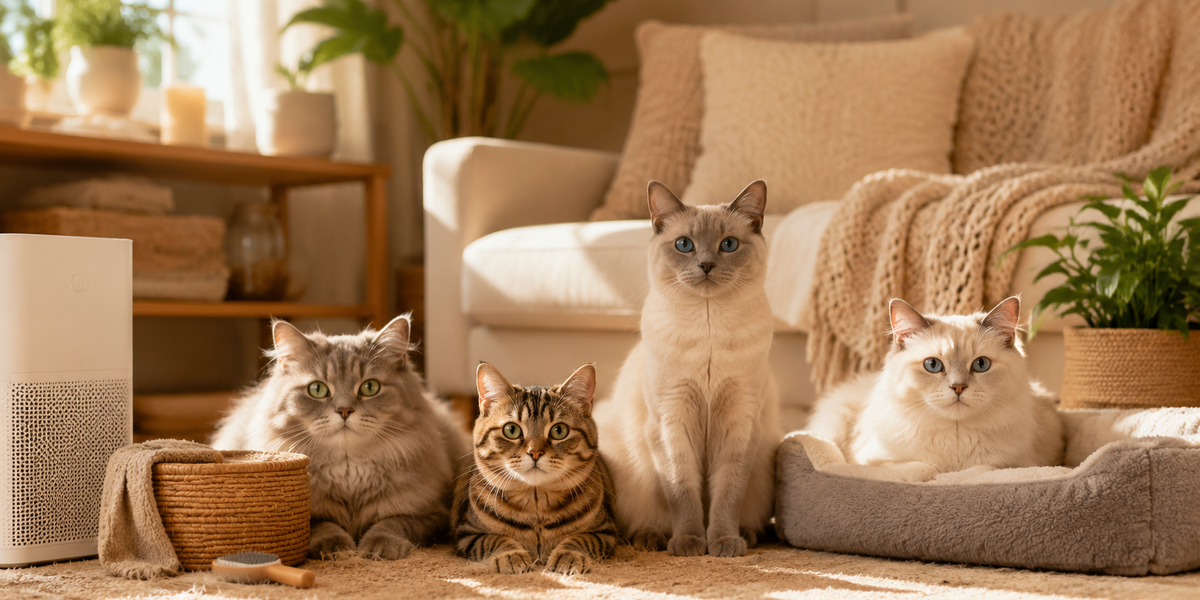
Use HEPA air purifiers, wash bedding weekly, vacuum with a HEPA filter, and keep the cat out of the bedroom. Regular grooming and bathing also help.
Can I develop tolerance to cat allergens over time?
Some people do build tolerance, but it's not guaranteed. Consult with an allergist for personalized advice, including immunotherapy options.
Final Thoughts
Choosing a hypoallergenic cat breed is a personal journey that requires research, patience, and sometimes a little trial and error. The Siberian, Balinese, and Russian Blue are our top recommendations for their consistently lower allergen levels and wonderful temperaments. Remember, no breed is a magic bullet, but with the right preparation and care, you can enjoy a loving relationship with your feline friend without the constant sneezing.
If you're ready to take the next step, visit a reputable breeder, spend time with the cats, and see how your allergies respond. And don't forget to equip your home with the best air purifiers and grooming tools to keep allergens at bay.
Editor's Choice
- Best Overall: Siberian Cat — The top pick for its low allergen production and affectionate nature.
- Best Value: Balinese Cat — A beautiful, low-allergen breed at a more affordable price.
- Best for Quiet Homes: Russian Blue Cat — A calm, loyal companion with naturally lower allergens.