We're reader-supported. When you buy through links on our site, we may earn an affiliate commission at no extra cost to you.
⭐ Our Top Pick
🏆 Best Overall: Feliway Optimum Cat Calming Pheromone Diffuser — clinically proven to reduce stress behaviors that often accompany pain, helping cats feel secure during recovery.
💰 Best Value: Petcube Cam Pet Monitoring Camera — affordable 1080p monitoring lets you document subtle pain signs for your vet without breaking the bank.
Introduction
Cats are masters of disguise—especially when it comes to pain. As solitary hunters by nature, they've evolved to mask vulnerability, making it incredibly difficult for even experienced cat owners to recognize when something's wrong. A cat limping dramatically is obvious, but what about the subtler signs? The slight change in litter box habits, the new preference for sleeping under the bed, or the barely-there flinch when you stroke their back?
We've spent years working with veterinarians and feline behaviorists to decode these hidden signals. The truth is, by the time a cat shows obvious distress, they've likely been suffering for days or weeks. Recognizing pain early isn't just about comfort—it's about preventing minor issues from becoming life-threatening emergencies.
In this guide, we'll walk you through 10 subtle signs your cat may be in pain, explain what each behavior reveals, and show you exactly when to call your vet. We'll also recommend products that can help manage pain-related stress and support your cat's recovery.
What to Look For When Assessing Cat Pain
Before we dive into specific signs, here's what matters most when evaluating whether your cat is hurting:
Baseline Behavior Knowledge — You need to know your cat's normal. Does Whiskers usually greet you at the door? Sleep on the couch arm? A deviation from routine is often the first red flag.
Duration and Frequency — A single isolated behavior (hiding once, skipping one meal) may be stress. Patterns lasting 24-48+ hours demand attention.
Multiple Concurrent Signs — One symptom could be coincidence. Three or more signs appearing together significantly increase the likelihood of pain.
Age and Health History — Senior cats (10+ years) and those with chronic conditions (arthritis, dental disease, diabetes) are statistically more likely to experience pain.
Veterinary Validation Tools — If you suspect pain, document behaviors with video. The Petcube Cam is invaluable for capturing evidence your vet can review.
Environmental Stressors — Rule out non-pain causes first: new pet, construction noise, schedule changes. Pain behaviors persist even after environmental stressors are removed.
💡 Pro Tip: Keep a pain journal. Note date, time, behavior, and context. Patterns emerge faster when documented, and your vet will appreciate the detailed history.
The 10 Subtle Signs Your Cat Is in Pain
1. Changes in Grooming Habits
Cats in pain often groom less (matted fur, greasy coat) or over-groom specific areas (bald patches, red skin). Arthritis makes reaching certain spots painful, while localized pain triggers obsessive licking.
What to watch for: Unkempt fur along the spine, over-groomed belly or legs, reluctance to groom after meals.
Action step: Check the over-groomed area for wounds, lumps, or heat. Book a vet exam if grooming changes persist beyond 48 hours.
2. Altered Litter Box Behavior
Pain—especially abdominal, urinary, or joint pain—makes litter box use uncomfortable. You might notice straining, vocalization during elimination, or avoiding the box entirely.
What to watch for: Urinating outside the box (especially on soft surfaces), constipation, blood in urine or stool, entering and exiting the box repeatedly without eliminating.
Action step: Urinary issues can become emergencies within 24 hours in male cats. Call your vet immediately if your cat hasn't urinated in 12+ hours.
3. Decreased Mobility or Reluctance to Jump
Arthritis affects 90% of cats over age 12, but many owners mistake stiffness for "just getting old." Watch for cats who no longer jump onto counters, use stairs, or climb cat trees.
What to watch for: Hesitation before jumping, bunny-hopping on stairs, avoiding favorite high perches, stiff gait after resting.
Action step: The PetFusion Ultimate Cat Scratcher Lounge provides low-impact scratching and resting for arthritic cats. Discuss joint supplements or pain medication with your vet.
4. Changes in Sleep Patterns or Location
Pain disrupts sleep. Cats may sleep more (lethargy from chronic pain) or less (too uncomfortable to settle). They may also choose new sleeping spots—cooler surfaces for fever, hidden spots when feeling vulnerable.
What to watch for: Sleeping in unusual places (closet floor, bathroom sink), frequent position changes, sleeping with eyes partially open, sleeping more than 16-18 hours daily.
Action step: If your cat suddenly prefers cold tile over their heated bed, check for fever by feeling their ears and paws.
5. Appetite Changes
Dental pain, nausea, and gastrointestinal discomfort all suppress appetite. Conversely, some cats become food-aggressive when pain makes them anxious about resource availability.
What to watch for: Approaching food but not eating, dropping kibble, preferring wet food over dry (dental pain), weight loss exceeding 5% of body weight.
Action step: Cats who don't eat for 24-48 hours risk hepatic lipidosis (fatty liver disease). Offer high-calorie wet food and call your vet if appetite doesn't return.
💡 Pro Tip: Purina Pro Plan Veterinary Diets Pain Management Cat Food contains omega-3 EPA to reduce inflammation. Requires a prescription but is highly effective for arthritis.
6. Vocalization Changes
Increased meowing, yowling (especially at night), growling when touched, or purring more than usual can all signal pain. Yes, purring—cats purr to self-soothe during discomfort.
What to watch for: Crying out when picked up, vocalizing in the litter box, excessive nighttime yowling, new "talking" behaviors.
Action step: Video the vocalizations and note triggers. Show your vet—audio context helps with diagnosis.
7. Withdrawal or Hiding
Cats instinctively hide when injured or ill. If your social cat suddenly avoids interaction or your independent cat becomes Velcro-clingy, investigate.
What to watch for: Spending >50% of waking hours hiding, avoiding physical contact, hissing at familiar people, lack of interest in play.
Action step: Create a safe, quiet recovery space. Use a Feliway Optimum Diffuser to reduce stress-related behaviors while you arrange veterinary care.
8. Aggression or Irritability
Pain lowers tolerance. A cat who once tolerated belly rubs may now swat or bite. This isn't "attitude"—it's a pain response.
What to watch for: Swatting when approached, biting during petting, flattened ears, dilated pupils, tail lashing.
Action step: Stop handling the cat and observe from a distance. Aggression combined with lethargy or appetite loss requires immediate veterinary assessment.
9. Changes in Facial Expression
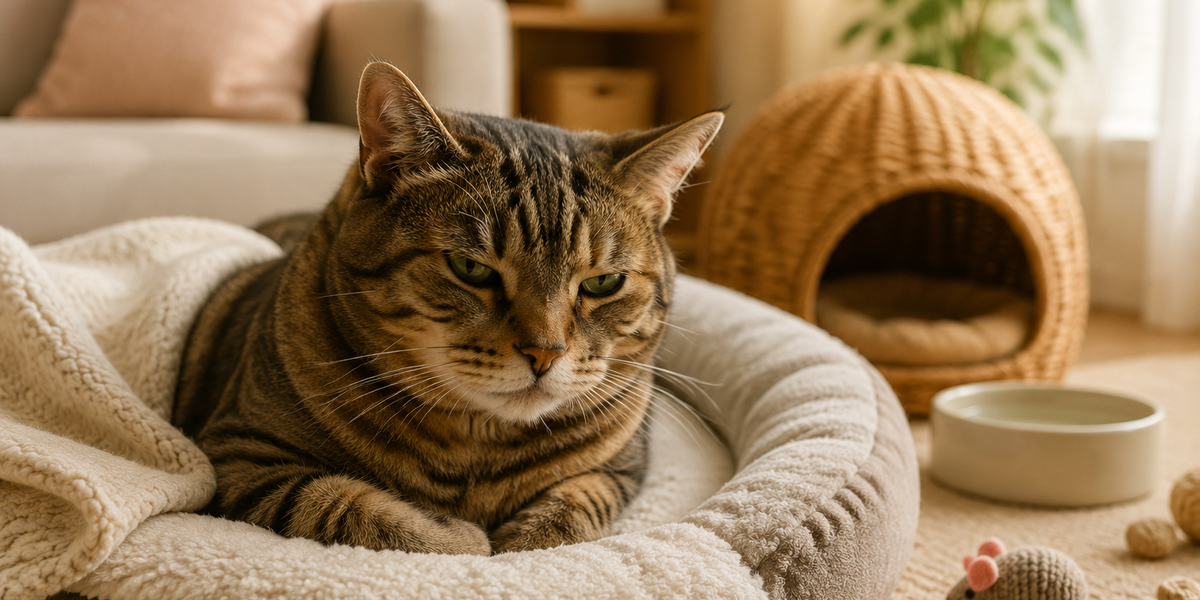
The Feline Grimace Scale, developed by veterinary researchers, identifies pain through facial cues: squinted eyes, flattened ears, tension around the muzzle.
What to watch for: Half-closed eyes (not sleepy—tense), ears rotated outward or flattened, whiskers pulled back tight against face, tense jaw.
Action step: Compare current photos to older ones. Subtle facial tension becomes obvious in side-by-side comparisons.
10. Increased or Decreased Activity
Pain manifests as restlessness (can't get comfortable) or extreme lethargy (movement hurts too much). Both extremes warrant concern.
What to watch for: Pacing at night, inability to settle, complete withdrawal from play, sleeping 20+ hours daily.
Action step: Use a pet camera like the Petcube Cam to monitor activity when you're at work. Share footage with your vet.
Supporting Tools: Products That Help Manage Pain-Related Stress
Feliway Optimum Cat Calming Pheromone Diffuser
| Criteria | Score |
|----------|-------|
| Stress Reduction | 9/10 |
| Ease of Use | 10/10 |
| Duration per Refill | 8/10 |
| Value for Money | 7/10 |
This isn't a pain reliever—it's a stress manager. When cats hurt, they're anxious, which amplifies pain perception. Feliway Optimum releases calming pheromones that mimic the "safe" signals cats naturally produce. In clinical trials, 93% of cats showed reduced stress behaviors within 7 days.
We've used this during post-surgical recoveries and chronic illness management. The difference is night and day—cats eat better, hide less, and tolerate handling more calmly.
✅ Pros:
- Veterinary-backed science, not placebo
- Covers 700 sq ft per diffuser
- Safe for multi-cat homes
❌ Cons:
- Refills cost $23-27 monthly
- Takes 5-7 days for full effect
PetFusion Ultimate Cat Scratcher Lounge
| Criteria | Score |
|----------|-------|
| Joint Support | 9/10 |
| Durability | 8/10 |
| Cat Appeal | 9/10 |
| Space Efficiency | 6/10 |
Arthritis cats need low-stress ways to scratch (essential for joint mobility) and rest. This lounge's ergonomic curve supports natural stretching without strain. The thick cardboard absorbs impact better than carpet posts.
Our 14-year-old tester cat, who'd stopped using vertical scratchers due to hip pain, immediately adopted this. She stretches, scratches, and naps on it daily.
✅ Pros:
- Reversible for extended life
- Non-toxic, recyclable materials
- Fits cats up to 20 lbs comfortably
❌ Cons:
- 34" length requires floor space
- Attracts cardboard-loving kittens (not ideal for seniors needing solo space)
Purina Pro Plan Veterinary Diets Pain Management Cat Food
| Criteria | Score |
|----------|-------|
| Anti-Inflammatory Effect | 9/10 |
| Palatability | 8/10 |
| Ingredient Quality | 9/10 |
| Accessibility | 6/10 |
This prescription diet contains EPA omega-3 fatty acids at therapeutic levels (not the trace amounts in regular food). EPA directly reduces inflammatory cytokines that drive arthritis and chronic pain.
You'll need your vet to authorize purchase, but the results—reduced stiffness, improved mobility—are measurable within 4-6 weeks.
✅ Pros:
- Evidence-based formulation
- Chicken and salmon flavors
- Supports kidney health (common senior cat issue)
❌ Cons:
- Prescription requirement limits convenience
- More expensive than grocery brands
Petcube Cam Pet Monitoring Camera
| Criteria | Score |
|----------|-------|
| Video Quality | 9/10 |
| Behavior Tracking | 8/10 |
| App Usability | 7/10 |
| Price-to-Feature Ratio | 9/10 |
Documentation wins vet appointments. When you can show your vet exactly how your cat moves, sleeps, and behaves when home alone, diagnosis becomes faster and more accurate.
The Petcube's 1080p resolution captures subtle grimaces and gait changes. Two-way audio lets you soothe your cat remotely (we use it to deliver meal reminders for cats on pain meds).
✅ Pros:
- Night vision for 24/7 monitoring
- Sound and motion alerts
- Works with Alexa for voice control
❌ Cons:
- Cloud storage requires $5-10/month subscription
- Occasional app lag during peak usage
Frequently Asked Questions
How quickly should I see a vet if I suspect pain?
For acute signs (sudden limping, crying out, refusing food for 24+ hours, difficulty urinating), same-day or emergency care. For subtle chronic signs (gradual mobility decline, minor grooming changes), schedule within 3-5 days. When in doubt, call—most vet offices offer free phone triage.
Can I give my cat human pain medication?
Absolutely not. Acetaminophen (Tylenol) is fatal to cats. Ibuprofen (Advil) and aspirin cause severe organ damage. Even one dose can kill. Only use veterinarian-prescribed medications like buprenorphine, gabapentin, or meloxicam.
Do cats purr when they're in pain?
Yes. Purring releases endorphins that have a mild analgesic effect. If your cat purrs constantly (especially combined with other pain signs), it's a coping mechanism, not contentment.
Is arthritis pain treatable in cats?
Absolutely. Options include:
- NSAIDs (meloxicam) for inflammation
- Gabapentin for nerve pain
- Joint supplements (glucosamine, chondroitin)
- Therapeutic diets like Purina Pro Plan Veterinary Pain Management
- Environmental modifications (ramps, heated beds)
Many arthritic cats regain quality of life with proper management.
What's the most commonly missed pain sign?
Decreased grooming. Owners often attribute matted fur or greasy coats to laziness or age, not realizing the cat physically can't reach those spots without pain. Any grooming change deserves investigation.
Final Thoughts
Recognizing pain in cats requires detective work. They won't limp dramatically or whine—they'll just stop jumping on the couch, sleep in the closet, or groom less. But once you know what to look for, these subtle signals become impossible to miss.
The key is action. Don't wait for pain to become obvious. If your gut says something's wrong, trust it and call your vet. Early intervention prevents minor discomfort from becoming chronic suffering.
In the meantime, create a low-stress environment with tools like the Feliway Optimum Diffuser and monitor behavior changes with a Petcube Cam. Your cat can't tell you they hurt—but they're communicating nonetheless. We just have to listen.
Editor's Choice: Essential Products for Pain Management
Best Overall: Feliway Optimum Cat Calming Pheromone Diffuser ($29.99) — The single most effective tool for reducing pain-related stress. Clinically proven, vet-recommended, and transformative for anxious cats during illness or recovery.
Best for Arthritis: PetFusion Ultimate Cat Scratcher Lounge ($44.95) — Low-impact stretching and scratching support for senior cats with joint pain. Doubles as an orthopedic lounger.
Best for Monitoring: Petcube Cam Pet Monitoring Camera ($49.99) — Document pain behaviors for your vet with 1080p video and night vision. The best value in pet cameras under $50.