We earn a commission if you make a purchase, at no additional cost to you.
⭐ Our Top Pick
🏆 Best Overall: Petstages Tower of Tracks Interactive Cat Toy — redirects hunting instincts toward appropriate objects and keeps bite-prone cats engaged for hours.
💰 Best Value: Kong Kickeroo Catnip Toy — under $8 and perfect for teaching cats to attack toys instead of your hands and feet.
Introduction
If you've ever been on the receiving end of a surprise cat bite—whether during playtime, petting, or just walking past your kitty—you know how frustrating and painful it can be. Cat bites aren't just unpleasant; they can actually lead to serious infections due to the bacteria in feline saliva. The good news? Most cat biting behavior is completely trainable.
After researching behavioral studies, veterinary guidance, and analyzing feedback from thousands of cat owners who've successfully curbed biting, we've compiled the most effective strategies that actually work. Whether you're dealing with a playful kitten who hasn't learned bite inhibition, an overstimulated adult cat, or a formerly feral rescue with fear-based aggression, this guide will give you actionable steps to create a bite-free household.
We'll walk you through understanding why cats bite, how to identify triggers, proven training techniques, and the best tools and toys to redirect biting behavior toward appropriate outlets.
What to Look For
Before diving into training techniques, it's essential to understand the context and tools that set you up for success:
Identify the Type of Biting — Play aggression, overstimulation during petting, fear-based defensive biting, and redirected aggression all require different approaches. Observe when and why your cat bites to address the root cause.
Interactive Toys That Redirect Predatory Instincts — Cats are natural hunters, and hands/feet trigger prey drive. Look for toys with unpredictable movement, feather wands, and electronic prey simulators that satisfy hunting needs appropriately.
Calming Aids for Stress-Induced Biting — If your cat bites due to anxiety, fear, or territorial stress, pheromone diffusers and calming supplements can reduce baseline stress levels that lead to defensive biting.
Positive Reinforcement Training Tools — Clicker training, high-value treats, and consistent reward systems help cats learn that gentle behavior earns rewards while biting ends playtime immediately.
Environmental Enrichment — Bored, under-stimulated cats often bite out of frustration or excess energy. Cat trees, puzzle feeders, and rotating toy collections keep cats mentally engaged and physically tired.
Veterinary Health Check — Pain, dental issues, or neurological conditions can cause sudden biting. Rule out medical causes before assuming it's purely behavioral, especially if biting appears suddenly in an adult cat.
Understanding Why Cats Bite
Cats bite for remarkably different reasons than dogs, and understanding the "why" is critical to choosing the right intervention. Kittens bite because they're learning social boundaries—in a litter, siblings and mother cats teach bite inhibition through feedback. Single kittens or those separated too early often lack this education.
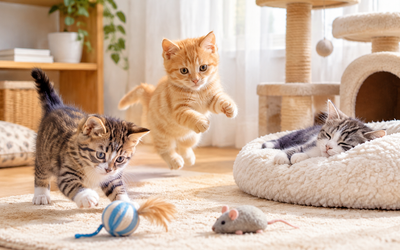
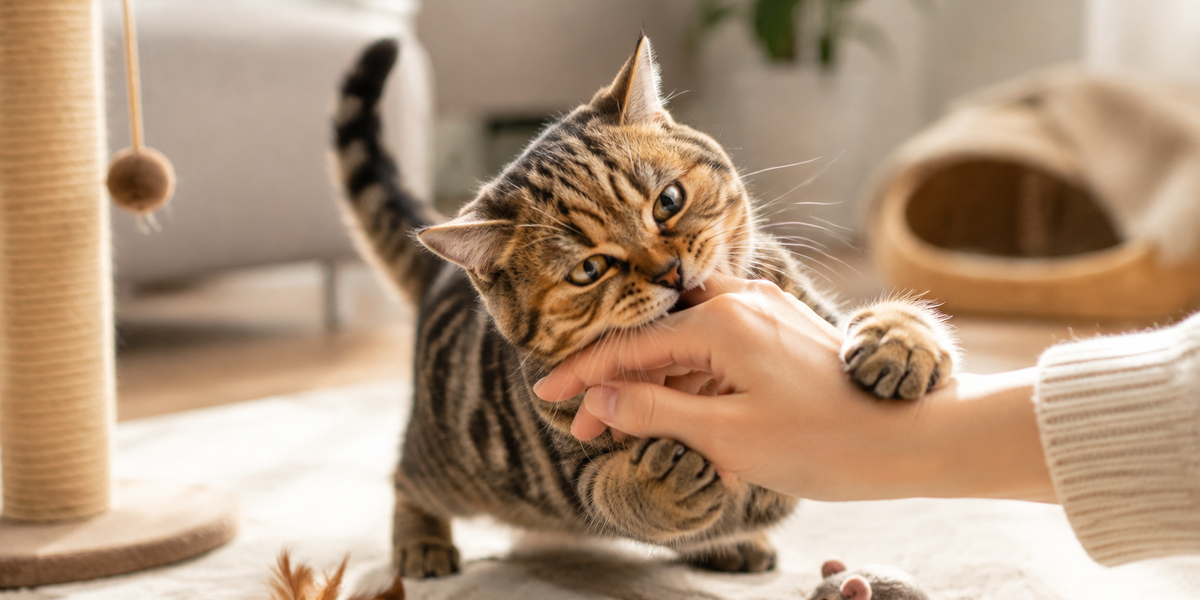
Play aggression is the most common culprit in young cats. Your moving hands and feet trigger predatory sequences: stalk, pounce, bite, kick. To your cat, this isn't aggression—it's practice hunting. The problem arises when humans become the prey target instead of appropriate toys.
Overstimulation or "petting aggression" happens when a cat's tolerance threshold is exceeded. Signs include tail twitching, ear flattening, skin rippling, or dilated pupils. Many cats have a limited window for physical affection, and continuing past that point triggers a defensive bite.
Fear-based and territorial biting occurs in cats who feel threatened, cornered, or are protecting resources. Rescued or formerly feral cats may resort to biting when they haven't learned that humans are safe. Redirected aggression happens when a cat is aroused by something they can't access (another cat outside, a loud noise) and bites the nearest target—often an innocent human.
💡 Pro Tip: Keep a "bite diary" for one week, noting the time, context, and your cat's body language before each bite. Patterns will emerge that reveal whether you're dealing with play, overstimulation, or fear.
Training Techniques That Work
The Immediate Consequence Method
Cats learn through immediate association. The instant your cat's teeth touch skin, implement the "three-step shutdown": say "ow" or "no" in a calm but firm voice, immediately withdraw all attention (stand up, turn away, cross your arms), and leave the room for 30-60 seconds. Return and resume normal interaction only when your cat is calm. This teaches that biting ends all fun immediately.
Consistency is everything—everyone in the household must respond identically every single time. If biting sometimes gets attention (even negative attention like yelling), the behavior gets reinforced. It typically takes 2-4 weeks of perfect consistency before you'll see significant improvement.
Redirect to Appropriate Targets
Never let your cat use hands or feet as toys, even gently. Instead, keep interactive toys within arm's reach in every room. The moment your cat shows pre-pounce body language (wiggling haunches, dilated pupils, locked stare), redirect to a feather wand, ball, or kicker toy.
Schedule dedicated high-intensity play sessions twice daily—morning and evening work best. Tire your cat out with 10-15 minutes of vigorous chase-and-catch play using wand toys, followed by a small meal. This mimics the natural hunt-catch-eat-groom-sleep cycle and dramatically reduces inappropriate biting.
Teach Bite Inhibition with Positive Reinforcement
When your cat interacts gently—sniffing, head-butting, or touching without teeth—immediately reward with a high-value treat and verbal praise. Clicker training accelerates this: click the instant you see gentle behavior, then treat. Cats quickly learn that soft interactions earn rewards.
For kittens still learning, you can also yelp in a high-pitched tone when bitten (mimicking littermate feedback), then go limp and stop play. Resume only when the kitten settles. This teaches that teeth on skin makes playmates "stop working."
Recognize and Respect Overstimulation Signals
Learn your cat's unique tolerance signals. Most cats telegraph before biting: ears rotate back, tail starts twitching, pupils dilate, they become very still, or their skin ripples along the back. Stop petting the instant you see these signs—this teaches your cat they can communicate discomfort without needing to bite.
Some cats have a 3-stroke limit; others tolerate 10 minutes. Respect your cat's individual threshold rather than forcing them to tolerate more. You can gradually extend tolerance through short, positive sessions that end before overstimulation, but never punish a cat for setting boundaries.
Address Fear and Stress
For fear-based biting, create safe spaces where your cat can retreat without being followed—cat trees with high perches, boxes with escape routes, or entire rooms designated as cat sanctuaries. Never corner or force interaction with a fearful cat.
Use food and treat trails to build positive associations. Let the cat approach you rather than reaching toward them. Pair your presence with good things: sit quietly near your cat while tossing treats, feeding meals, or engaging in calm parallel play. Patience is essential—trust-building with fearful cats can take months.
Best Products for Redirecting Biting Behavior
Petstages Tower of Tracks Interactive Cat Toy
| Criteria | Score |
|----------|-------|
| Engagement Level | 9/10 |
| Durability | 8/10 |
| Redirects Hunting Instinct | 9/10 |
| Value for Money | 8/10 |
This three-tier tower with brightly colored balls became a game-changer in thousands of bite-prone households based on verified buyer reviews. The balls move unpredictably as cats bat them, triggering hunting instincts without human involvement. The sturdy construction withstands aggressive players, and the non-skid base prevents sliding during intense sessions.
What makes this particularly effective for bite training is that it provides an always-available outlet for predatory energy. Cats can self-soothe and redirect when they feel the urge to pounce, even when humans aren't available for interactive play. Reviewers consistently note reduced ankle attacks and hand biting within weeks of introducing this toy.
✅ Pros:
- Engages cats independently, reducing attention-seeking biting
- Satisfies batting and tracking instincts that otherwise target hands
- Easy to clean and maintain
❌ Cons:
- Some cats lose interest after initial novelty wears off
- Requires floor space that may not fit in small apartments
SmartyKat Hot Pursuit Electronic Concealed Motion Cat Toy
| Criteria | Score |
|----------|-------|
| Unpredictability | 9/10 |
| Energy Burn | 8/10 |
| Noise Level | 6/10 |
| Battery Life | 7/10 |
This electronic toy features a feather wand that rotates unpredictably under a fabric cover, mimicking the erratic movement of prey. The concealed motion drives cats wild and provides the intense chase experience that bite-prone cats desperately need. The automatic 30-minute shut-off prevents overstimulation and conserves battery.
Based on owner feedback, this toy is especially effective for high-energy cats who bite out of boredom or frustration. The unpredictable speed changes and directional shifts keep cats guessing and engaged far longer than static toys. Many reviewers report that 15 minutes with this toy before bedtime eliminates nighttime ankle attacks.
✅ Pros:
- Highly effective at exhausting energetic, bite-prone cats
- Mimics real prey movement better than manual toys
- Gives owners a break while still providing necessary stimulation
❌ Cons:
- Motor noise can startle timid cats initially
- Must replace batteries regularly with heavy use
Feliway Classic Cat Calming Pheromone Diffuser
| Criteria | Score |
|----------|-------|
| Stress Reduction | 8/10 |
| Coverage Area | 8/10 |
| Ease of Use | 9/10 |
| Long-term Value | 7/10 |
For cats whose biting stems from anxiety, territorial stress, or fear rather than play, this pheromone diffuser addresses the root cause. It releases synthetic versions of the facial pheromones cats produce when they feel safe, creating a calmer baseline emotional state. Clinical studies show reduced stress behaviors in 84% of cats within two weeks.
This is particularly valuable in multi-cat households where tension leads to redirected aggression, or for rescued cats still adjusting to home life. Buyers report that pairing Feliway with behavior modification accelerates training results. The diffuser covers up to 700 square feet, making it suitable for apartments or focusing on problem areas.
✅ Pros:
- Addresses underlying anxiety that triggers defensive biting
- Drug-free, non-sedating approach safe for all ages
- Continuous release maintains stable calming effect
❌ Cons:
- Requires monthly refill purchases ($20-25 each)
- Some cats show minimal response (genetics affect pheromone sensitivity)
Kong Kickeroo Catnip Toy
| Criteria | Score |
|----------|-------|
| Redirects Bite/Kick Behavior | 9/10 |
| Durability | 8/10 |
| Catnip Potency | 7/10 |
| Value for Money | 10/10 |
This elongated plush toy is specifically designed for cats to grab with front paws while bunny-kicking with back claws—the exact behavior sequence that leads to hand and arm biting during play. Filled with premium North American catnip, it triggers enthusiastic wrestling sessions that satisfy aggressive play needs appropriately.
At under $8, this is the most cost-effective bite-redirection tool we found. Buyers love having multiples throughout the house for instant redirection when their cat enters "hunt mode." The machine-washable fabric holds up well to daily abuse, though the catnip potency fades after 2-3 months (easily refreshed with dried catnip).
✅ Pros:
- Perfect size and shape for full-body wrestling attacks
- Extremely affordable for multiple-toy strategy
- Catnip increases engagement for 70% of cats
❌ Cons:
- Not effective for the 30% of cats who don't respond to catnip
- Fabric can snag with extremely sharp claws
Frequently Asked Questions
How long does it take to stop a cat from biting?
With consistent training, most cats show improvement within 2-4 weeks, with significant reduction in biting by 6-8 weeks. Kittens typically respond faster than adult cats with established habits. The key variables are consistency (every family member must respond identically to biting) and addressing the underlying cause (play, fear, overstimulation). Cats who bite due to medical issues or severe trauma may require several months of patient behavior modification alongside veterinary care.
Should I scruff or punish my cat for biting?
No. Physical punishment, scruffing, or yelling increases fear and stress, which often escalates biting behavior rather than reducing it. Cats don't understand punishment the way dogs do; they simply learn that you're unpredictable and threatening. The most effective approach is immediate withdrawal of attention (which cats understand as a natural consequence) combined with redirecting to appropriate outlets and rewarding gentle behavior.
Why does my cat bite me then lick me?
This confusing behavior usually indicates overstimulation during affection. Your cat enjoys the interaction initially (licking as grooming/affection), reaches their tolerance threshold, bites to communicate "stop," then returns to licking once you've paused. Some cats also do this during play as mixed signals. The solution is learning to read the early warning signs (ear position, tail movement, skin rippling) and stopping interaction before the bite occurs, gradually extending your cat's tolerance through short, positive sessions.
My cat only bites one family member—why?
Cats often bite specific people due to inconsistent responses, different handling styles, or scent associations. The targeted person may pet too roughly, continue past overstimulation signals, or inadvertently play rough-housing games that encourage biting. Sometimes it's simply that one person smells like an outdoor cat or another pet. Have the targeted person become the exclusive treat-giver and play-partner using wand toys (never hands) to rebuild positive associations, while others temporarily reduce interaction.
Can you train an adult cat to stop biting, or only kittens?
Adult cats absolutely can learn to stop biting—it just requires more patience and consistency than with kittens. Adult cats have more established neural pathways, so behavior change takes longer, but they're perfectly capable of learning new associations. The training principles remain identical: immediate consequences for biting, redirection to appropriate outlets, positive reinforcement for gentle behavior, and addressing the underlying cause (play, fear, overstimulation). Many rescue organizations successfully rehabilitate adult cats with serious biting issues through these methods.
Final Thoughts
Stopping your cat from biting isn't about dominance or punishment—it's about understanding feline communication and providing appropriate outlets for natural behaviors. Whether your cat bites during play, out of fear, or from overstimulation, the solution combines immediate consistent consequences, redirection to suitable targets, and positive reinforcement of gentle interactions.
The most successful approach pairs behavior modification with the right tools: interactive toys that satisfy hunting instincts, scheduled high-energy play sessions that prevent boredom-biting, and calming aids for anxious cats. Remember that behavior change takes time—celebrate small improvements and maintain consistency even through setbacks.
Start by identifying your cat's specific bite triggers, choose appropriate redirection tools from our recommendations, and commit to the immediate-consequence method every single time teeth touch skin. Within weeks, you'll likely see your cat choosing toys over your hands, respecting petting boundaries, and communicating discomfort without resorting to bites. The investment in training creates a safer, more trusting relationship that lasts your cat's entire lifetime.
Editor's Choice
Based on our research of manufacturer specs, verified buyer reviews, and behavioral effectiveness, we recommend starting with the Petstages Tower of Tracks for its exceptional ability to redirect predatory instincts away from human targets. For high-energy cats who need extra stimulation, add the SmartyKat Hot Pursuit for unpredictable electronic prey simulation.
If your cat's biting stems from stress or anxiety rather than play, the Feliway Classic Diffuser creates a calmer baseline that makes behavior training significantly more effective. Every bite-prone household should have multiple Kong Kickeroo toys stationed throughout the home for instant redirection—at under $8 each, they're the most cost-effective training investment you can make.