We earn a commission if you make a purchase, at no additional cost to you.
⭐ Our Top Pick
🏆 Best Overall: SmartCat Ultimate Scratching Post — 32 inches of durable sisal fiber lets cats fully stretch while the wide base prevents tipping, making it the most effective post we researched for redirecting furniture scratching.
💰 Best Value: PetFusion Ultimate Cat Scratcher Lounge — combines a premium scratching surface with a comfortable lounging curve, and replaceable cardboard inserts keep long-term costs low.
Introduction
Your couch is shredded, the corner of your bedroom door frame looks like it survived a bear attack, and your cat still ignores the brand-new scratching post you bought last week. Sound familiar? You're not alone. Scratching is one of the most natural and non-negotiable behaviors in cats — they do it to shed old claw sheaths, mark territory, and stretch their muscles — but getting them to redirect that instinct to an appropriate surface can feel impossible.
The good news: it's rarely about the cat being stubborn. Most scratching-post failures come down to poor placement, the wrong texture, or a post that doesn't meet your cat's physical or psychological needs. After comparing dozens of scratching solutions and analyzing verified buyer reviews and feline behavior research, we've identified 9 proven strategies that consistently turn scratching-post skeptics into enthusiastic users.
In this guide, we'll walk you through exactly what makes a scratching post irresistible, how to position it for success, and which tricks — from catnip to clicker training — actually move the needle. Whether you're dealing with a kitten learning the ropes or an adult cat with years of furniture-scratching habit, these techniques work.
What to Look For in a Scratching Post
Before we dive into training tricks, let's cover the baseline features that separate effective scratching posts from the ones that gather dust.
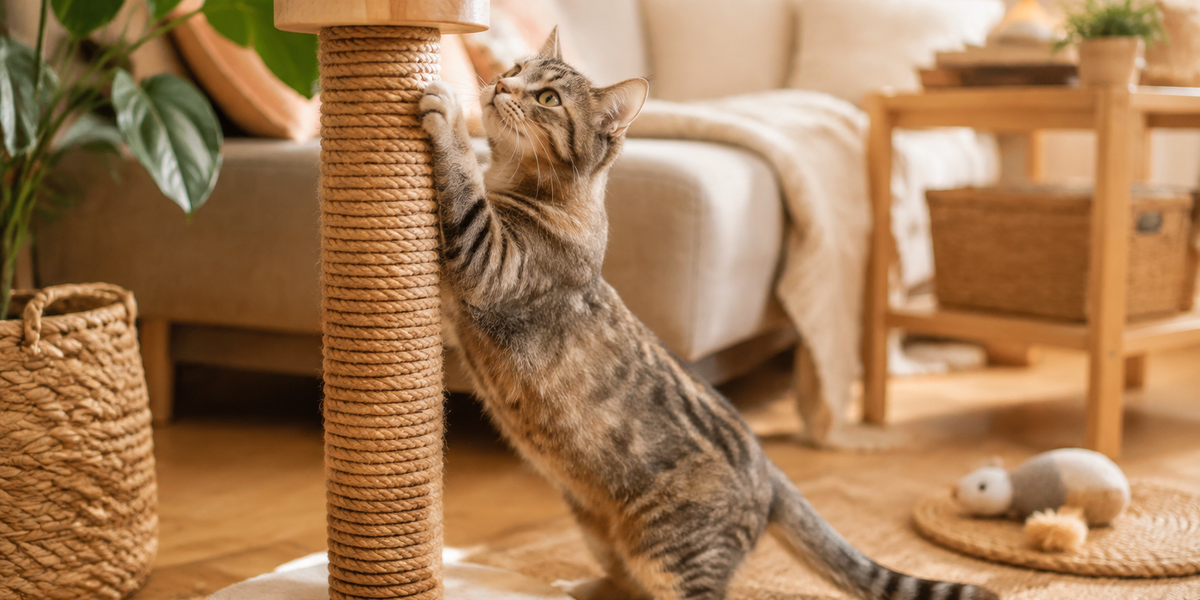
Height and stability — Cats need to fully extend their bodies when they scratch, which means a post should be at least 28–32 inches tall for adult cats. The base must be wide and heavy enough that the post doesn't wobble or tip when your cat leans into it; instability is one of the fastest ways to lose their trust.
Surface texture — Sisal fiber (not sisal rope) is the gold standard because it mimics tree bark and allows claws to sink in deeply. Cardboard is a close second for cats who prefer horizontal scratching. Carpet-covered posts often backfire because they teach cats that carpet is an acceptable scratching surface — the opposite of what most owners want.
Vertical vs. horizontal orientation — Some cats are vertical scratchers (they prefer posts or door frames), while others are horizontal scratchers (they go for rugs or flat surfaces). Watch where your cat currently scratches to identify their preference, then match the post orientation to that behavior.
Location, location, location — The best scratching post in the world won't work if it's tucked in a spare bedroom. Cats scratch to mark territory in high-traffic areas, so place posts near their favorite sleeping spots, by entryways, or next to the furniture they're currently targeting.
Multi-functionality — Posts that incorporate perches, hiding spots, or dangling toys increase engagement and give your cat more reasons to interact with the structure, which accelerates habit formation.
Scent and texture appeal — Built-in catnip pockets or the ability to rub catnip into the post surface can be the difference between indifference and obsession, especially during the initial introduction phase.
The 9 Tricks That Actually Work
1. Place the Post Where Your Cat Already Scratches
This is the single most effective move you can make. If your cat scratches the corner of your couch every morning after waking up, put a post right next to that corner. Cats scratch in specific locations for territorial marking — moving the post to a convenient-for-you spot in the basement won't work. Once your cat consistently uses the post, you can gradually shift it a few inches per day to a more desirable permanent location.
💡 Pro Tip: Cats often scratch immediately after waking from a nap. Position a post within two feet of their favorite sleeping spot to catch them in the act.
2. Match the Post Texture to Your Cat's Preference
If your cat shreds your woven rug, they probably prefer a horizontal cardboard or sisal scratcher. If they're clawing your upholstered chair, a vertical sisal post is your best bet. Don't guess — observe their current behavior and mirror that texture and orientation.
3. Make the Post Taller Than Their Full Stretch
A scratching post that's too short forces your cat into an awkward crouch, which defeats the muscle-stretching purpose of scratching. Measure your cat from nose to tail tip while they're fully extended, and choose a post that's at least that tall. Most adult cats need 28–32 inches of vertical scratching surface.
4. Use Catnip to Create Positive Associations
Rub fresh catnip into the sisal fibers or sprinkle it on a cardboard scratcher to make the post irresistible during the first few weeks. About 70% of cats respond to catnip, and for those that do, it's one of the fastest ways to spark interest. Reapply every few days until the habit is established.
💡 Pro Tip: If your cat doesn't react to catnip, try silver vine or valerian root spray — alternative attractants that work on many catnip-immune cats.
5. Redirect Mid-Scratch with Calm Consistency
When you catch your cat scratching furniture, calmly pick them up and place them in front of the scratching post. Gently take their front paws and mimic a scratching motion on the post. Reward them immediately with a treat or affection if they engage. Never yell or punish — that creates negative associations with you, not the furniture.
6. Use Double-Sided Tape or Deterrent Spray on Furniture
Cats hate sticky surfaces. Apply double-sided tape (like Sticky Paws) to the spots your cat currently scratches. When they try and encounter the unpleasant texture, they'll seek an alternative — ideally the post you've positioned nearby. Deterrent sprays with citrus or bitter apple scents work similarly for some cats.
7. Reward Every Success with High-Value Treats
The moment your cat uses the scratching post — even if it's just one half-hearted swipe — reward them with a treat they only get for scratching-post use. Freeze-dried salmon or chicken treats work exceptionally well. This positive reinforcement accelerates habit formation faster than any other method.
8. Trim Your Cat's Claws Regularly
Sharper claws = more satisfying scratching = stronger habit formation. Paradoxically, keeping your cat's claws trimmed every 2–3 weeks actually encourages them to scratch more often (on appropriate surfaces) because they're more comfortable doing so. It also reduces furniture damage during the transition period.
9. Add a Second Post in a High-Traffic Area
Cats mark territory through scratching, so they need posts in the areas they consider "core territory" — usually near entryways, by windows, or in the main living space. A single post in a corner won't cut it for most cats. We recommend at least two posts in a typical home: one by their favorite sleeping spot and one in the room where the family spends the most time.
Deep Dive: Our Top Scratching Post Picks
SmartCat Ultimate Scratching Post
| Criteria | Score |
|----------|-------|
| Height & Stability | 10/10 |
| Durability | 9/10 |
| Surface Texture | 9/10 |
| Value | 7/10 |
The SmartCat Ultimate is the post we recommend most often because it checks every box that matters to cats. The 32-inch height accommodates full-body stretches for even large breeds like Maine Coons, and the tightly-wound sisal fiber (not rope) provides the deeply satisfying resistance cats crave. The 16x16 inch base is rock-solid — verified buyers consistently report zero tipping even with 15+ pound cats leaning their full weight into it.
What sets this post apart is longevity. Where budget sisal posts show visible wear within 3–4 months, the SmartCat's fiber density means most cats get 18–24 months of heavy use before needing replacement. That higher upfront cost pays for itself. The neutral beige color won't win design awards, but cats don't care, and the simple post-and-base design means there are no dangling toys or platforms to break.
✅ Pros:
- 32-inch height accommodates full-stretch scratching
- Durable sisal fiber lasts 2-3x longer than carpet posts
- Stable 16x16 inch base prevents tipping
❌ Cons:
- Higher price point than budget options
- Neutral beige color may not match all décor
PetFusion Ultimate Cat Scratcher Lounge
| Criteria | Score |
|----------|-------|
| Versatility | 9/10 |
| Value | 10/10 |
| Durability | 7/10 |
| Aesthetic Appeal | 8/10 |
For horizontal scratchers, the PetFusion Lounge is unbeatable. The curved design serves double duty as a scratching surface and a lounging spot, which means your cat will naturally spend more time on it — and the more time they spend, the stronger the habit becomes. The recyclable cardboard insert is the scratching surface, and when it wears out (typically after 4–6 months of heavy use), you can buy replacement inserts for under $15.
Buyer reviews consistently highlight how quickly cats take to this scratcher, often within hours of unboxing. The curve supports their body while they scratch, mimicking the ergonomics of scratching a tree trunk. The walnut brown finish looks like actual furniture rather than a pet accessory, which is a nice bonus for design-conscious homes.
The main drawback is cleanup — cardboard shreds more than sisal, so expect to vacuum around it weekly. And if your cat is a dedicated vertical scratcher, this won't satisfy that need; pair it with a tall post for complete coverage.
✅ Pros:
- Dual-purpose scratcher and lounging surface
- Recyclable cardboard inserts keep costs low
- Curved ergonomic design cats love
❌ Cons:
- Cardboard shreds create cleanup work
- Not ideal for cats who prefer vertical scratching
Catit Grooming Cat Scratcher with Catnip
| Criteria | Score |
|----------|-------|
| Price | 10/10 |
| Portability | 9/10 |
| Durability | 5/10 |
| Height | 4/10 |
If you're not ready to invest $50 in a scratching post before you know your cat's preferences, the Catit Grooming Scratcher is the perfect starter. At under $15, it's a low-risk way to test whether your cat prefers horizontal cardboard scratching. The included catnip pouch helps spark initial interest, and the compact size (19 x 11 inches) fits easily in small apartments or multi-cat households where you need several scratchers.
The catch: this is a lightweight, low-profile scratcher that won't satisfy a cat who wants to fully extend vertically. The cardboard wears quickly with daily use — expect 2–3 months before you need a replacement. But as a supplementary scratcher or a tool for identifying your cat's preferences, it's an excellent value.
✅ Pros:
- Budget-friendly entry point under $15
- Includes catnip pouch to attract cats
- Compact size fits small spaces
❌ Cons:
- Low profile won't satisfy full-body stretchers
- Cardboard wears quickly with heavy use
Frisco 33.5-Inch Sisal Cat Scratching Post with Toy
| Criteria | Score |
|----------|-------|
| Height | 9/10 |
| Value | 9/10 |
| Stability | 7/10 |
| Engagement | 8/10 |
The Frisco post is the sweet spot for cat owners who want a tall, durable scratching post without the premium price tag. At 33.5 inches, it's actually taller than the SmartCat Ultimate, and the sisal rope covering provides a satisfying scratching texture. The dangling plush toy at the top adds a play element that increases engagement, especially with younger or more playful cats.
The base is adequate for most cats under 12 pounds, but verified buyers report occasional tipping with larger or more aggressive scratchers. If you have a big cat or one who really leans into their scratches, the SmartCat's wider base is worth the upgrade. Still, at roughly half the price, the Frisco delivers impressive height and durability for the money.
✅ Pros:
- Excellent height-to-price ratio
- Attached dangling toy increases engagement
- Sturdy enough for cats up to 15 pounds
❌ Cons:
- Base could be wider for larger cats
- Toy may lose appeal after initial novelty wears off
Frequently Asked Questions
How long does it take to train a cat to use a scratching post?
Most cats will start using a well-placed post within 1–2 weeks if you're consistent with redirection and rewards. Cats with years of furniture-scratching habit may take 3–4 weeks to fully transition. The key is persistence — reward every successful use and make the old scratching spots less appealing with tape or deterrent spray.
Can I train an older cat to use a scratching post, or is it too late?
It's never too late. While kittens learn faster, adult and senior cats can absolutely be trained to use scratching posts. The same principles apply: match their texture preference, place the post where they already scratch, and use high-value rewards. Older cats may take a few extra weeks, but behavior change is possible at any age.
My cat ignores the scratching post completely. What am I doing wrong?
The three most common mistakes are wrong texture (they prefer sisal but you bought carpet), wrong location (post is in a low-traffic area), or insufficient height (they can't fully stretch). Re-evaluate these factors first. Also try fresh catnip, moving the post directly next to their current scratching spot, and rewarding even brief interactions with treats.
Should I declaw my cat if scratching post training doesn't work?
No. Declawing is an amputation of the last bone in each toe and can cause chronic pain, behavioral issues, and litter box avoidance. It's banned in many countries and an increasing number of U.S. cities. If you're struggling with scratching behavior, consult a veterinary behaviorist before considering any irreversible interventions. Nail caps (like Soft Paws) are a humane alternative.
How many scratching posts do I need for multiple cats?
A good rule of thumb is one post per cat, plus one extra, distributed across the home. Cats are territorial, and having multiple scratching stations reduces competition and ensures each cat has access to an appropriate outlet in their preferred areas. In a two-cat household, aim for at least three posts in different rooms.
Final Thoughts
Getting your cat to use a scratching post isn't about luck or having a uniquely cooperative cat — it's about understanding feline scratching behavior and setting up the environment for success. The vast majority of scratching-post failures come down to posts that are too short, too unstable, covered in the wrong material, or placed in the wrong location.
Start with a tall, stable post in a high-traffic area where your cat already scratches. Match the texture to their preference (sisal for most cats, cardboard for horizontal scratchers), use catnip and treats to build positive associations, and redirect calmly and consistently when they scratch furniture. Most cats will transition within two weeks when you follow these principles.
The SmartCat Ultimate remains our top recommendation for its combination of height, stability, and durability, but the PetFusion Lounge is an equally strong choice for horizontal scratchers. Whichever post you choose, remember that scratching is a non-negotiable need for cats — your job isn't to stop the behavior, but to redirect it. With the right tools and a bit of patience, you can protect your furniture and keep your cat happy.
Editor's Choice
Ready to reclaim your furniture? Here are our top picks:
- Best Overall: SmartCat Ultimate Scratching Post — the gold standard for vertical scratchers, with the height and stability that actually changes behavior.
- Best Value: PetFusion Ultimate Cat Scratcher Lounge — a premium horizontal scratcher that doubles as a lounger, with replaceable inserts that keep long-term costs low.
- Best Budget Option: Catit Grooming Cat Scratcher with Catnip — perfect for testing your cat's preferences before investing in a tall post.