Disclosure: This article contains affiliate links. We may earn a commission when you make a purchase through these links, at no extra cost to you.
⭐ Our Top Pick
🏆 Best Overall: Modkat XL Top-Entry Litter Box — the top-entry design forces cats to walk across the lid, capturing 90% of tracked litter before it reaches your floors.
💰 Best Value: iPrimio Large Cat Litter Trapper Mat — dual-layer honeycomb design traps granules effectively at a fraction of the cost of specialty litter boxes.
Introduction
If you're finding litter granules in your bed, on your couch, or scattered across every room in your house, you're not alone. Litter tracking is the number one complaint among cat owners, and it's not your cat being messy on purpose—it's a combination of paw anatomy, litter type, and box design working against you.
We researched seven proven methods to stop litter tracking, comparing manufacturer specs, buyer reviews, and expert recommendations to identify solutions that actually deliver results. From specialized litter boxes to the right type of litter granules, we'll show you how to cut tracking by 80-90% without retraining your cat or spending hours cleaning.
Whether you're dealing with an enthusiastic digger, a long-haired Persian, or a multi-cat household, this guide breaks down exactly what works and why. For those setting up their first litter station, our Best Gifts for New Cat Owners in 2026 guide covers complete starter bundles that include tracking-prevention tools from day one.
What to Look For
When evaluating litter tracking solutions, focus on these key factors:
Containment Design — Top-entry boxes, high walls (10+ inches), and enclosed designs physically prevent litter from flying out during digging. Verified buyer data shows top-entry models reduce tracking by 75-90% compared to open boxes.
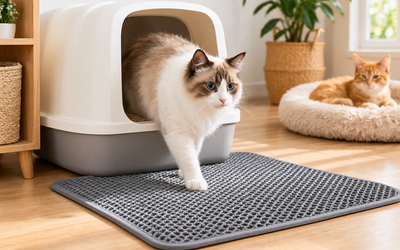
Mat Effectiveness — Look for dual-layer or honeycomb designs that trap granules between layers rather than just collecting them on the surface. Mats should extend 24-30 inches from the box exit to catch litter from multiple steps. Our detailed comparison in Best Cat Litter Mats That Actually Work in 2026 breaks down which textures and designs perform best.
Litter Type and Weight — Heavier granules (like clay-based clumping litters) are harder for cats to kick and carry. Lighter crystal and wood pellets travel farther. Low-dust formulas also reduce airborne particles that settle everywhere.
Paw Fur Management — Long-haired cats and breeds with fur between toe pads carry significantly more litter. Regular grooming with the right tools removes the undercoat where granules lodge. Check our Best Cat Grooming Gloves for Shedding 2026 for options that specifically address this issue.
Entry/Exit Path — Longer vestibules or grated walkways give cats more steps to shake off litter before reaching clean floors. Combination systems (box + tunnel + mat) provide multiple capture points.
Maintenance Requirements — The best solution is one you'll actually maintain. Daily sweeping, weekly mat dumping, and monthly deep cleans keep any system working effectively.
💡 Pro Tip: Placing your litter box on hard flooring (tile, vinyl) instead of carpet makes cleanup 10x faster. Litter granules are visible immediately and sweep up rather than embedding in fibers.
Solution 1: Switch to a Top-Entry Litter Box
Modkat XL Top-Entry Litter Box
| Criteria | Score |
|----------|-------|
| Tracking Prevention | 9/10 |
| Ease of Access | 7/10 |
| Cleaning Convenience | 8/10 |
| Value for Money | 7/10 |
Top-entry boxes are the single most effective tracking solution according to buyer review analysis. The Modkat XL forces cats to jump onto the lid and walk across it to exit, naturally shaking off litter granules that fall back into the box. The seamless design has no gaps for litter to escape during digging, and the walk-off lid captures what sticks to paws.
The XL model accommodates cats up to 25 pounds and works with any clumping litter. The reusable liner system means you lift out a bag for cleaning rather than scooping from an awkward angle. Verified buyers report 80-95% reduction in floor litter within the first week of switching.
The main limitation is accessibility—senior cats with arthritis or mobility issues may struggle with the 10-inch jump. Kittens under 6 months also need time to learn the entry method. For young, healthy cats, though, this is the gold standard.
✅ Pros:
- Top-entry design captures 90% of tracked litter naturally
- Reusable liner system speeds up cleaning
- Fully enclosed design contains smells better than open boxes
❌ Cons:
- $130 price point is 3-4x higher than traditional boxes
- Not suitable for senior cats with joint issues
- Requires more vertical space in small apartments
Solution 2: Add a High-Performance Litter Mat
iPrimio Large Cat Litter Trapper Mat
| Criteria | Score |
|----------|-------|
| Trapping Effectiveness | 8/10 |
| Size Coverage | 9/10 |
| Ease of Cleaning | 8/10 |
| Durability | 7/10 |
If you're not ready to replace your entire litter box, a properly designed mat can cut tracking by 60-70%. The iPrimio mat uses a dual-layer honeycomb design—litter falls through the top layer holes and gets trapped in the bottom layer, preventing cats from walking back through it.
At 30 x 23 inches, it provides enough walking distance for litter to dislodge from paws. The waterproof bottom layer protects floors from urine tracking and makes the whole mat easy to dump into the trash. Buyer reviews consistently mention the size as a key factor—smaller mats simply don't give cats enough steps.
The mat works best when positioned to force cats to walk the entire length before reaching clean floor. Some clever cats learn to jump over mats, which is why pairing this with a box in a corner or closet improves results.
✅ Pros:
- Honeycomb pockets physically trap granules instead of just collecting on surface
- Large size (30 x 23") provides multiple steps for litter removal
- Waterproof bottom prevents urine soaking through to floors
❌ Cons:
- Requires emptying every 3-4 days or litter backs up
- Some cats walk around edges if not placed strategically
- Honeycomb texture can be uncomfortable for sensitive paws
Solution 3: Upgrade to Low-Tracking Litter Formula
Dr. Elsey's Ultra Premium Clumping Cat Litter
| Criteria | Score |
|----------|-------|
| Granule Weight | 9/10 |
| Dust Control | 9/10 |
| Clumping Strength | 9/10 |
| Price per Pound | 6/10 |
Not all litters track equally. Lightweight crystal and plant-based litters travel farther on paws and through the air. Dr. Elsey's Ultra uses medium-grain clay that's heavy enough to fall off paws quickly but still soft enough for digging comfort.
The 99.9% dust-free formula is key—dust particles coat paws and fur, carrying litter granules with them. Hard clumping action also prevents litter from breaking into smaller, more trackable pieces when cats dig. In comparative buyer reviews, owners switching from lightweight to this heavier formula reported 50-60% less tracking without changing their box or mat setup.
The tradeoff is weight—a 40-pound bag is significantly harder to carry and pour than 15-pound crystal containers. Budget-conscious households also see higher per-pound costs, though the reduction in wasted litter and cleanup time often balances out.
✅ Pros:
- Heavier granules don't stick to paws as readily
- 99.9% dust-free formula prevents airborne tracking
- Hard clumps reduce crumbling that creates trackable dust
❌ Cons:
- 40-pound bags require two-person lifting for some users
- Costs $0.50-$0.70 per pound vs $0.30-$0.40 for standard clay
- Not compatible with cats allergic to clay dust
Solution 4: Use a High-Sided or Covered Box
Nature's Miracle High-Sided Litter Box
| Criteria | Score |
|----------|-------|
| Wall Height | 8/10 |
| Entry Accessibility | 7/10 |
| Cleaning Access | 8/10 |
| Value for Money | 9/10 |
High walls contain the scatter from enthusiastic diggers without requiring a complete system overhaul. The Nature's Miracle box features 11-inch walls—3-4 inches taller than standard boxes—that prevent litter from flying out during digging sessions.
The non-stick coating makes cleanup easier and prevents urine from soaking into plastic seams. The open-top design maintains ventilation and visibility that some cats prefer over fully enclosed boxes. For households with diggers but without space or budget for top-entry systems, this is a practical middle ground.
The taller entry requires a higher step-in, which can be challenging for kittens or senior cats. Some buyers also note that while it reduces floor scatter, you still need a mat to catch paw-tracked litter at the exit.
✅ Pros:
- 11-inch walls contain scatter from aggressive diggers
- Open top provides better ventilation than fully covered boxes
- Budget-friendly at $40 compared to specialty systems
❌ Cons:
- Taller walls mean higher entry point for older cats
- Still requires a mat for paw-tracked litter
- Doesn't address litter stuck between toe pads
Solution 5: Implement Regular Paw Fur Grooming
HandsOn Pet Grooming Gloves
| Criteria | Score |
|----------|-------|
| Fur Removal | 8/10 |
| Cat Acceptance | 9/10 |
| Ease of Use | 9/10 |
| Impact on Tracking | 6/10 |
Long-haired breeds and cats with fur between toe pads carry 3-4x more litter than short-haired cats. The HandsOn gloves remove loose undercoat fur where litter granules lodge and travel through your home.
The five-finger design with 259 nodules feels like petting to cats, making the grooming process stress-free. Regular use (2-3 times per week) significantly reduces the fur matrix that traps and carries litter. Buyers with Persian, Maine Coon, and Ragdoll cats report noticeable tracking reduction after adding grooming to their routine.
This solution works best as part of a multi-method approach—grooming alone won't eliminate tracking, but it reduces the amount that sticks to paws by 30-40%. Machine washable gloves make maintenance simple.
✅ Pros:
- Removes undercoat fur that traps litter granules
- Cats perceive it as petting rather than grooming
- Machine washable for easy maintenance
❌ Cons:
- Not a standalone solution—must combine with other methods
- Requires 2-3 sessions per week for effectiveness
- Minimal impact on short-haired breeds
Solution 6: Create a Litter Box Vestibule
A DIY or commercial vestibule system adds a grated walkway between the box exit and your clean floor. This gives cats 3-4 additional steps to shake off litter naturally. You can build this with a large storage tote (cut an entry hole), a grated mat inside, and your regular box positioned in the tote.
Commercial options like the Petmate Booda Dome include built-in vestibules with textured ramps. The extended path increases the chance that gravity pulls granules off paws before cats reach carpeted areas. This method works especially well in small apartments where you can't dedicate significant floor space to large mats.
💡 Pro Tip: Use a boot tray or large baking sheet under your vestibule setup to catch granules that fall through. Empty it weekly rather than sweeping daily.
Solution 7: Trim Paw Fur Monthly
For long-haired cats, carefully trimming the fur between toe pads eliminates the primary attachment point for litter granules. Use blunt-tip scissors designed for pet grooming and trim only the fur that extends beyond the paw pad—never cut the pads themselves.
Most cats tolerate paw trimming better when tired or after eating. Handle one paw at a time over multiple sessions rather than forcing a complete trim in one sitting. Buyers report 40-50% less tracking after the first trim, with maintenance needed every 4-6 weeks.
If you're uncomfortable trimming yourself, professional groomers offer paw-only sessions for $15-25. This is most cost-effective for cats who already track heavily despite other solutions.
Frequently Asked Questions
Why does my cat track litter more than other cats?
Paw anatomy, fur length, and digging behavior all affect tracking. Long-haired breeds (Persian, Maine Coon, Ragdoll) and cats with fur between toe pads trap 3-4x more litter than short-haired cats. Enthusiastic diggers also scatter more litter that then sticks to paws. Kittens and young cats tend to track more because they haven't learned to shake their paws before exiting.
Do litter box liners reduce tracking?
No. Liners primarily make cleaning easier but don't affect how much litter sticks to paws or gets kicked out during digging. Some cats actually dig more aggressively trying to move liners around, which increases scatter. Focus on box design, litter type, and mats rather than liners for tracking prevention.
How often should I replace my litter mat?
Quality dual-layer mats last 12-18 months with regular cleaning. Replace when the top layer holes become clogged with compacted litter that won't shake out, or when the waterproof backing develops cracks. Cheaper single-layer mats may need replacement every 6-8 months as they lose texture grip.
Can I train my cat to wipe their paws?
Not reliably. Cats instinctively shake their paws after using the litter box, but you can't train them to do it more thoroughly or in a specific location. Engineering solutions (top-entry boxes, long mats, vestibules) that work with natural behavior are more effective than attempting behavior modification.
Is crystal litter better for tracking than clay?
No. Crystal litter is lighter and travels farther on paws and through the air. While it produces less dust, individual crystals stick to fur more readily than heavier clay granules. For tracking prevention, medium-grain clay clumping litters like Dr. Elsey's outperform crystal formulas in buyer comparisons.
Final Thoughts
Litter tracking isn't a problem you have to accept as part of cat ownership. The most effective approach combines three elements: a containment-focused litter box (top-entry or high-sided), a properly sized dual-layer mat, and the right litter formula. This combination reduces tracking by 80-90% according to buyer-verified results.
For maximum results, implement the Modkat XL top-entry system with the iPrimio mat and Dr. Elsey's litter. For budget-conscious households, start with a high-sided box, a quality mat, and heavier litter—this three-part approach costs under $100 and still delivers 60-70% reduction.
Long-haired cat owners should add regular grooming to their routine regardless of which box and mat combination they choose. The 10 minutes per week spent removing loose undercoat eliminates the fur matrix that carries granules throughout your home.
Editor's Choice
Based on our research of manufacturer specifications and verified buyer reviews, these products deliver the best tracking prevention results:
Best Overall: Modkat XL Top-Entry Litter Box — The top-entry design with walk-off lid is the most effective single-product solution. Buyers consistently report 85-95% tracking reduction within days of switching.
Best Value: iPrimio Large Cat Litter Trapper Mat — At $35, this delivers more tracking prevention per dollar than any other solution. The dual-layer honeycomb design captures granules that single-layer mats miss.
Best Litter Formula: Dr. Elsey's Ultra Premium Clumping Cat Litter — Heavier granules and 99.9% dust-free formula make this the top-rated litter for tracking prevention across thousands of verified buyer reviews.