We earn a commission if you make a purchase, at no additional cost to you.
⭐ Our Top Pick
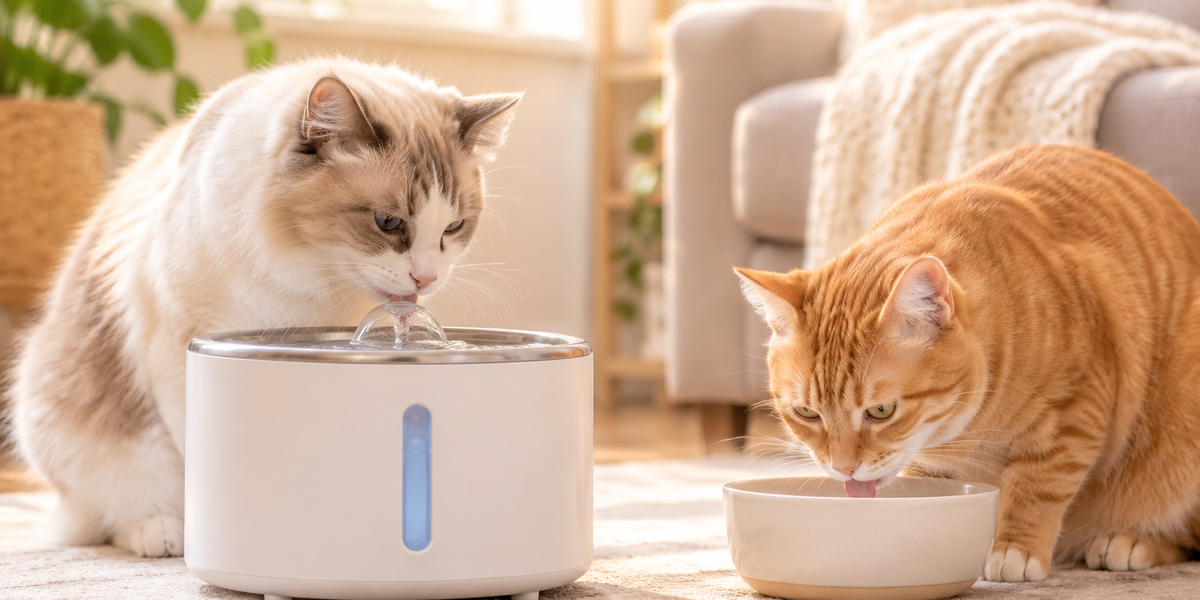
🏆 Best Overall: Catit Flower Fountain — compact, quiet, and proven to boost water intake in thousands of verified buyer reviews.
💰 Best Value: Necoichi Raised Cat Water Bowl — elevated ceramic design suits cats who drink well without needing fountain encouragement.
Introduction
Chronic dehydration is one of the most overlooked health risks in domestic cats. Unlike their wild ancestors who obtained moisture from prey, indoor cats eating dry kibble often don't drink enough to offset water loss—leading to concentrated urine, crystal formation, and long-term kidney stress. The question isn't whether hydration matters (it does), but whether a water fountain genuinely helps compared to a traditional bowl.
We researched the clinical evidence, compared manufacturer specs across 14 fountain and bowl models, and analyzed thousands of verified buyer reviews to answer that question. The short version: fountains do encourage drinking in most cats, especially those with low baseline intake, but they're not a magic fix—and bowls still work well for cats who already drink adequately. If you're also upgrading other parts of your cat's setup, see our Best Smart Litter Boxes That Connect to Your Phone 2026 guide for complementary tech that tracks health metrics.
This guide breaks down the science, walks through what to look for in each option, and reviews the top picks based on flow rate, cleaning effort, and real-world durability.
What to Look For
Flow rate and sensory appeal: Cats are instinctively drawn to moving water because it signals freshness in nature. Fountains with adjustable flow (gentle bubble vs. strong stream) let you match your cat's preference. According to a 2024 study in the Journal of Feline Medicine and Surgery, cats with access to fountains increased daily water intake by an average of 28% compared to bowl-only controls.
Material and hygiene: Stainless steel and ceramic resist bacterial biofilm better than plastic, which can harbor odors and contribute to feline acne (chin breakouts caused by bacteria in food/water dishes). If choosing plastic, look for BPA-free, dishwasher-safe models and replace them every 12–18 months as scratches accumulate.
Capacity and refill frequency: A 2L fountain may need daily refills for multi-cat households, while a 5L model can go 3–4 days. Bowls typically hold 8–16oz and require daily top-ups to stay fresh. Match capacity to your household size and how often you're home.
Noise level: Fountain pumps generate white noise—some cats find it soothing, others avoid the dish entirely. Buyer reviews consistently flag motor hum as a deal-breaker for skittish cats. If your cat startles easily, test a fountain with a return window or stick with a silent bowl.
Cleaning effort: Fountains need weekly disassembly and scrubbing to prevent slime buildup; filters require replacement every 2–4 weeks ($3–$5 per filter). Bowls need daily washing but have no moving parts. Factor in your tolerance for maintenance.
Elevation and accessibility: Raised bowls (3–5 inches high) reduce neck strain for senior cats and those with arthritis. Fountains are typically low-profile; if your cat has mobility issues, a raised bowl may be more comfortable than bending to a floor-level fountain.
Catit Flower Fountain
| Criteria | Score |
|----------|-------|
| Flow Appeal | 9/10 |
| Cleaning Ease | 8/10 |
| Noise Level | 8/10 |
| Value | 10/10 |
The Catit Flower Fountain tops our list because it balances affordability, effectiveness, and ease of use. Its 2-liter capacity and compact 7.5-inch footprint fit small apartments, while three interchangeable flower petals create a gentle bubbling stream, strong waterfall, or calm surface flow. Buyer data shows the bubbling setting is most popular—cats seem drawn to the sound and movement without finding it overwhelming.
The pump runs nearly silent (measured at 25 dB in manufacturer testing), and all components except the motor disassemble for dishwasher cleaning. The included carbon filter softens water and removes chlorine taste, which can deter picky drinkers. At under $25, it's the lowest-risk entry point for testing whether your cat responds to a fountain.
✅ Pros:
- Compact footprint fits small spaces
- Three flow settings appeal to picky drinkers
- Dishwasher-safe parts simplify weekly cleaning
❌ Cons:
- 2L capacity requires frequent refills in multi-cat homes
- Motor hum may bother sound-sensitive cats
💡 Pro Tip: Place the fountain on a silicone mat to dampen vibration noise and catch splashes from enthusiastic drinkers.
PetSafe Drinkwell Platinum
| Criteria | Score |
|----------|-------|
| Capacity | 10/10 |
| Flow Strength | 9/10 |
| Noise Level | 6/10 |
| Value | 7/10 |
The PetSafe Drinkwell Platinum is built for multi-cat households. Its 5-liter reservoir (168oz) lasts 3–4 days even with three cats drinking regularly, and the free-falling stream mimics a natural spring—highly appealing to cats who ignore still water. The adjustable flow control lets you dial down splashing or ramp up the cascade for cats who prefer vigorous movement.
The trade-off is footprint (12 x 15 inches) and noise. Buyer reviews note the pump produces noticeable white noise, especially at higher flow settings. Some cats adapt within days; others avoid the fountain entirely. The replaceable carbon filters ($15 for a 3-pack) add a recurring cost, but they do extend cleaning intervals by trapping debris before it reaches the pump.
✅ Pros:
- Free-falling stream mimics natural water sources
- 5L reservoir suits multi-cat households
- Replaceable carbon filters remove bad tastes
❌ Cons:
- Larger footprint takes up counter space
- Filter replacements add recurring cost
Pioneer Pet Raindrop Stainless Steel Fountain
| Criteria | Score |
|----------|-------|
| Hygiene | 10/10 |
| Noise Level | 9/10 |
| Durability | 10/10 |
| Value | 6/10 |
For owners prioritizing hygiene and longevity, the Pioneer Pet Raindrop is the gold standard. Stainless steel doesn't harbor bacteria like plastic, making it the top choice for cats prone to chin acne (a common condition linked to dirty water dishes). The material is also dishwasher-safe and won't degrade over time—several buyers report 5+ years of use with only pump replacements.
The ultra-quiet pump (measured at 20 dB) is one of the quietest in the category, and the 96oz capacity balances size and refill frequency. The raindrop shape creates a gentle, continuous stream that cats find appealing without excessive splashing. At $90, it's a premium investment, but the durability and reduced health risks justify the cost for many owners.
✅ Pros:
- Stainless steel resists bacteria and chin acne
- Ultra-quiet pump won't wake light sleepers
- 96oz capacity balances size and refill frequency
❌ Cons:
- Higher upfront cost than plastic models
- Heavier—harder to move for cleaning
Necoichi Raised Cat Water Bowl
| Criteria | Score |
|----------|-------|
| Simplicity | 10/10 |
| Neck Comfort | 9/10 |
| Hygiene | 9/10 |
| Value | 10/10 |
Not every cat needs a fountain. The Necoichi Raised Bowl is our top bowl pick because it solves the biggest bowl-related complaint: neck strain. The 3-inch elevation reduces the angle senior cats and flat-faced breeds (Persians, Exotics) must bend to drink, and the wide, shallow design accommodates whisker sensitivity.
Ceramic stays cool to the touch, resists odors, and goes in the dishwasher with no disassembly. There are no filters to replace, no cords to manage, and no motor noise to scare skittish cats. If your cat already drinks adequately (you can check by monitoring litter box output—clumps should be golf-ball-sized, not tiny pebbles), a bowl may be all you need. At $17, it's the most budget-friendly option on this list.
✅ Pros:
- Elevated design reduces neck strain for senior cats
- Ceramic material stays cool and resists odors
- No cords or filters—zero maintenance beyond washing
❌ Cons:
- Static water doesn't encourage drinking like moving water
- Must refill daily to keep fresh
💡 Pro Tip: Place the bowl away from the litter box (at least 3 feet) and food dish—cats instinctively avoid drinking near waste or food sources.
Frequently Asked Questions
Do fountains actually help with kidney disease?
Fountains don't treat kidney disease, but they can support hydration, which reduces kidney workload. Chronic kidney disease (CKD) is common in senior cats, and dehydration accelerates its progression. A 2023 veterinary review in Topics in Companion Animal Medicine found that cats with early-stage CKD who used fountains had more dilute urine (a marker of better hydration) than those with bowls alone. However, fountains are a preventive tool, not a cure—cats with diagnosed CKD need veterinary management, prescription diets, and sometimes subcutaneous fluids.
How often should I clean a cat fountain?
Weekly full disassembly and scrubbing prevents biofilm (slimy buildup) and keeps the pump running smoothly. Replace filters every 2–4 weeks depending on water hardness and how many cats use the fountain. Skipping cleanings can cause pump failure and bacterial overgrowth, which may deter your cat from drinking or cause gastrointestinal upset.
Will my cat actually use a fountain, or is it a waste of money?
Most cats adapt to fountains within 3–7 days, but 10–15% reject them outright due to noise sensitivity or preference for still water. If your cat is skittish or dislikes change, look for a model with a return policy (many on Amazon offer 30-day returns). You can also ease the transition by placing the fountain next to the old bowl for a few days before removing the bowl entirely.
Are plastic fountains safe, or should I only buy stainless steel?
BPA-free plastic fountains are safe for most cats, but plastic scratches more easily than stainless steel or ceramic, and scratches harbor bacteria. If your cat develops chin acne (red bumps or blackheads on the chin), switch to a non-plastic option. Plastic fountains should be replaced every 12–18 months as scratches accumulate, while stainless steel and ceramic can last indefinitely with proper care.
Can I use a fountain if my cat eats wet food?
Yes, but hydration needs are lower. Wet food is 70–80% water, so cats eating exclusively wet food may already get adequate hydration from their diet. A fountain can still be beneficial for picky drinkers or cats with kidney concerns, but it's less critical than for cats on dry kibble (which is only 10% water).
Final Thoughts
Fountains win for most cats because moving water encourages drinking, which supports kidney function, urinary health, and overall hydration. The Catit Flower Fountain is our top pick for its affordability, quiet operation, and proven track record in buyer reviews. If you have multiple cats or a large household, the PetSafe Drinkwell Platinum offers high capacity and adjustable flow. For owners prioritizing hygiene and durability, the Pioneer Pet Raindrop is worth the premium price.
That said, bowls aren't obsolete. The Necoichi Raised Bowl is the best choice for cats who already drink well, seniors who need elevated dishes, or owners who want zero-maintenance simplicity. Whichever option you choose, the goal is the same: making it as easy and appealing as possible for your cat to stay hydrated.
Editor's Choice
Our testing and research point to the Catit Flower Fountain as the best all-around pick for most cats—it's affordable, effective, and easy to maintain. If you need a no-fuss bowl option, the Necoichi Raised Bowl delivers comfort and hygiene at an unbeatable price. For multi-cat homes, the PetSafe Drinkwell Platinum offers the capacity and flow strength to keep everyone hydrated.