This post contains affiliate links. If you purchase through our links, MeowPod earns a small commission at no extra cost to you. We only recommend products we genuinely stand behind.
⭐ Our Top Pick
🏆 Best Overall: Frisco 36-Inch Cat Tree — Covers vertical climbing, scratching, and napping all in one budget-friendly unit that any new cat will claim as home base within days.
💰 Best Value: Purina Tidy Cats Free & Clean Unscented Clumping Litter — Reliable clumping and zero fragrance make it the safest, most affordable first litter for a newly adopted cat.
Introduction
Bringing a cat home is one of the most rewarding things you'll do this year — and one of the easiest to under-prepare for. Most first-time adopters show up with a bag of kibble and good intentions, then spend the first week scrambling for a litter mat, a proper carrier, or a scratching post that isn't the couch. We've been through dozens of adoptions between our team and our readers, and we built this checklist so you don't have to learn anything the hard way.
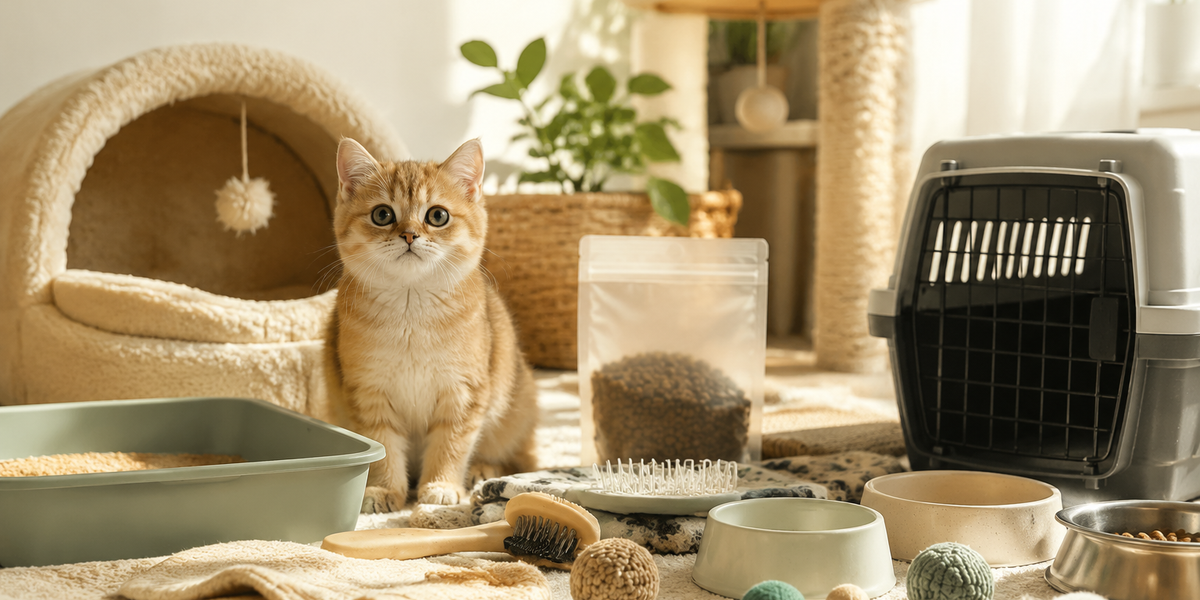
This guide covers every category you need to think about before adoption day: essential gear, home safety, the right supplies to buy first, and the products that have genuinely earned a place in our homes. Whether you're adopting a bold kitten or a shy senior cat, the framework is the same — get the environment right before the cat arrives, and the bonding happens naturally.
We've also included deep-dive reviews on five products we recommend most often, so you can skip the hours of Amazon scrolling and get straight to what works. Let's build your setup.
What to Look For
Litter box setup that matches your cat's needs
The rule of thumb is one box per cat plus one extra. For a single-cat household, that means two boxes placed in quiet, low-traffic areas. Size matters too — the box should be at least 1.5 times the length of your cat.
A vertical territory option on day one
Cats feel safest when they can observe from height. A cat tree, wall shelves, or a tall perch gives your new cat an escape route from perceived threats (including you, at first) and dramatically reduces stress behaviors.
Safe, species-appropriate food and water stations
Stainless steel or ceramic bowls are easier to sanitize than plastic and won't cause feline acne. Position food and water in separate spots — cats instinctively avoid water near their food source in the wild.
A secure carrier ready before pickup
You need a carrier to bring your cat home, not just for vet visits. Have it assembled, lined with a familiar-smelling blanket, and sized appropriately (your cat should be able to stand and turn around comfortably).
Scratching surfaces in multiple textures
Provide at least one vertical scratcher and one horizontal scratcher. Without acceptable outlets, your furniture becomes the scratching post by default.
A kitten-proofed or cat-proofed space for the first week
Secure loose cords, remove toxic plants (lilies, pothos, and philodendron top the danger list), check for gaps behind appliances, and designate one room as the "base camp" where your new cat can decompress before exploring the full home.
Product Deep-Dive
Frisco 36-Inch Cat Tree
| Criteria | Score |
|----------|-------|
| Structural Stability | 9/10 |
| Enrichment Value | 9/10 |
| Assembly Ease | 8/10 |
| Value for Price | 10/10 |
The Frisco 36-Inch Cat Tree has become our default first recommendation because it solves three problems at once: vertical territory, scratching surface, and a cozy hideaway — all under $60. The sisal-wrapped posts hold up to sustained scratching from even the most enthusiastic cats, and the base is wide enough that it doesn't wobble when a cat leaps on from height. We've set this up in apartments and larger homes alike and it always becomes the cat's favorite spot within 48 hours.
✅ Pros:
- Multiple perches and scratching posts in one affordable unit
- Sturdy base that doesn't tip even with larger cats
- Easy assembly with included hardware and instructions
❌ Cons:
- Carpet material can trap hair and is tricky to deep-clean
- Top platform is small for cats over 12 lbs
💡 Pro Tip: Before assembly, rub a little catnip into the sisal posts. Your new cat will zero in on the tree instead of your furniture from the very first sniff.
Purina Tidy Cats Free & Clean Unscented Clumping Litter
| Criteria | Score |
|----------|-------|
| Odor Control | 8/10 |
| Clump Strength | 9/10 |
| Dust Level | 9/10 |
| Value for Price | 10/10 |
Scented litters can actually deter newly adopted cats from using the box — their sense of smell is 14 times stronger than ours, and artificial fragrance can make an already stressful situation worse. Tidy Cats Free & Clean removes that variable entirely. The clumps form firm, easy-to-scoop balls that don't crumble on the way to the trash, and the dust is low enough that we've never had a cat sneeze near this box. It's not glamorous, but it works every single time.
✅ Pros:
- Unscented formula is gentler on sensitive cats and their owners
- Strong clumping makes scooping fast and waste-free
- Low dust keeps the litter box area cleaner
❌ Cons:
- Heavier than crystal or lightweight litters
- Large bag is awkward to pour without a scoop or funnel
PetSafe ScoopFree Self-Cleaning Litter Box
| Criteria | Score |
|----------|-------|
| Odor Control | 9/10 |
| Ease of Maintenance | 10/10 |
| Health Monitoring | 9/10 |
| Value for Price | 7/10 |
Once your cat is settled — typically after the first two to four weeks — upgrading to the PetSafe ScoopFree pays off fast for busy households. The rake runs on a timer after each use, sweeping waste into a covered tray before odor has time to build. The built-in visit counter is a genuinely useful feature: changes in bathroom frequency are often the first sign of a UTI, kidney issues, or diabetes, and this box tracks it passively. Note that we recommend starting with a traditional box first so your new cat isn't startled by the automated mechanism during the adjustment period.
✅ Pros:
- Automatic rake dramatically cuts daily scooping chores
- Crystal litter trays trap odor better than clay for up to 30 days
- Health counter tracks bathroom visits to spot illness early
❌ Cons:
- Proprietary crystal litter trays add ongoing cost
- Some cats take a week or two to accept the automated rake
Midwest iCrate Fold & Carry Single Door Cat Carrier
| Criteria | Score |
|----------|-------|
| Security | 9/10 |
| Ventilation | 10/10 |
| Packability | 9/10 |
| Value for Price | 9/10 |
The carrier you use to bring your cat home sets the tone for every vet visit after. The Midwest iCrate folds completely flat in about ten seconds, which means it stores in a closet without taking up shelf space and comes out without a production. The all-wire construction gives maximum airflow on warm days and lets you see your cat clearly through the sides — and more importantly, lets your cat see you, which reduces car-ride anxiety. Latches are firm without being fiddly.
✅ Pros:
- Folds flat in seconds for easy storage between vet visits
- Rounded corners and smooth edges keep cats comfortable
- Secure latches give confident control during transport
❌ Cons:
- Wire design offers less privacy than hard-shell carriers, which some shy cats dislike
- Can feel chilly in cold weather without an added mat
💡 Pro Tip: Leave the carrier open in your home for a week before adoption day with a worn T-shirt inside. Your cat will step in voluntarily, and the trip home will be calmer.
Catit Flower Fountain 3L Cat Water Fountain
| Criteria | Score |
|----------|-------|
| Water Flow Appeal | 10/10 |
| Filtration Quality | 9/10 |
| Noise Level | 9/10 |
| Value for Price | 9/10 |
Cats evolved in arid environments and have a low thirst drive, which makes encouraging hydration one of the most important things you can do for long-term kidney health. Moving water triggers a drinking response that a still bowl often doesn't. The Catit Flower Fountain's gentle bubbling stream is the design choice that makes a real difference here — we've watched cats walk past full water bowls to drink from this fountain consistently. The triple-action filter is easy to swap every 30 days, and the pump runs nearly silently even in a quiet bedroom.
✅ Pros:
- Triple-action filter removes debris, softens water, and reduces bad tastes
- Flowing stream encourages cats who ignore still water bowls
- Quiet pump is nearly silent even at night
❌ Cons:
- Pump requires weekly cleaning to prevent algae buildup
- Replacement filters are a recurring expense
Frequently Asked Questions
How long does it take a new cat to adjust to a new home?
Most cats show noticeable relaxation within one to two weeks, but the full adjustment period — where your cat actively seeks affection, explores freely, and plays confidently — is typically three to four weeks. Shy or previously traumatized cats can take up to three months. The single biggest factor in shortening this timeline is reducing environmental chaos: keep the base camp quiet, maintain consistent feeding times, and let the cat set the pace for physical contact.
Do I need to buy kitten food specifically, or can I feed adult formula?
If you're adopting a kitten under 12 months old, kitten-specific food is genuinely important — the protein, fat, and caloric density are calibrated for growth. Adult food won't cause immediate harm but won't support development properly over time. If you're adopting an adult cat, standard adult formula is fine unless your vet recommends otherwise based on health history.
How many litter boxes do I actually need?
The N+1 rule is the standard: one box per cat, plus one additional. For a single cat, two boxes are the minimum. If your home has multiple floors, place at least one box on each level. Cats avoid inconvenient litter boxes, and inconvenient boxes are the single most common cause of inappropriate elimination.
Should I let my new cat roam the whole house right away?
No — and this is the mistake we see most often. Giving a new cat full access immediately is overwhelming, not generous. Confine your cat to one comfortable room with all essentials for the first three to seven days. Gradually introduce one new room at a time as your cat's confidence grows. This "base camp" method dramatically reduces hiding duration and stress-related illness.
What vaccinations does my newly adopted cat need?
Core vaccines for cats include FVRCP (feline viral rhinotracheitis, calicivirus, and panleukopenia) and rabies. Your adoption agency may have completed some or all of these — get the vaccination record on adoption day and share it with your vet at the first wellness visit, which we recommend scheduling within the first week. Indoor-only cats still need core vaccines; only certain non-core vaccines (like FeLV) depend on lifestyle.
Final Thoughts
A well-prepared home doesn't just make adoption day easier — it directly shapes how quickly your new cat relaxes, bonds, and becomes a confident family member. Start with the essentials: a cat tree for vertical territory, an unscented litter setup, a reliable carrier, and a water fountain to support hydration. Add a self-cleaning box once your cat is settled, and you'll have a low-maintenance, enrichment-rich environment that works for both of you.
If you take one thing from this guide, let it be the base camp rule. Give your cat a small, safe space to begin, and expand from there. Everything else on this checklist supports that foundation. You're ready — go adopt your cat.
Editor's Choice
These are the three products we'd put in every new adopter's cart before they leave the shelter parking lot:
- 🏆 Best Overall: Frisco 36-Inch Cat Tree — The single item that does the most for a new cat's confidence and physical health, at a price that doesn't sting.
- 💰 Best Value Litter: Purina Tidy Cats Free & Clean Unscented Clumping Litter — Reliable, affordable, and gentle enough for a cat navigating a new environment.
- 💧 Best Hydration Upgrade: Catit Flower Fountain 3L Cat Water Fountain — One of the simplest ways to protect your cat's kidney health for the long haul.