MeowPod is reader-supported. When you buy through links on our site, we may earn an affiliate commission at no cost to you.
⭐ Our Top Pick
🏆 Best Overall: Wellness CORE Grain-Free Ocean Formula — delivers the fish flavor cats crave with a safer mercury profile and complete AAFCO nutrition.
💰 Best Value: Tiki Cat Puka Puka Luau Succulent Chicken — high-quality whole-meat texture that helps transition tuna addicts to a balanced, low-mercury diet.
Introduction
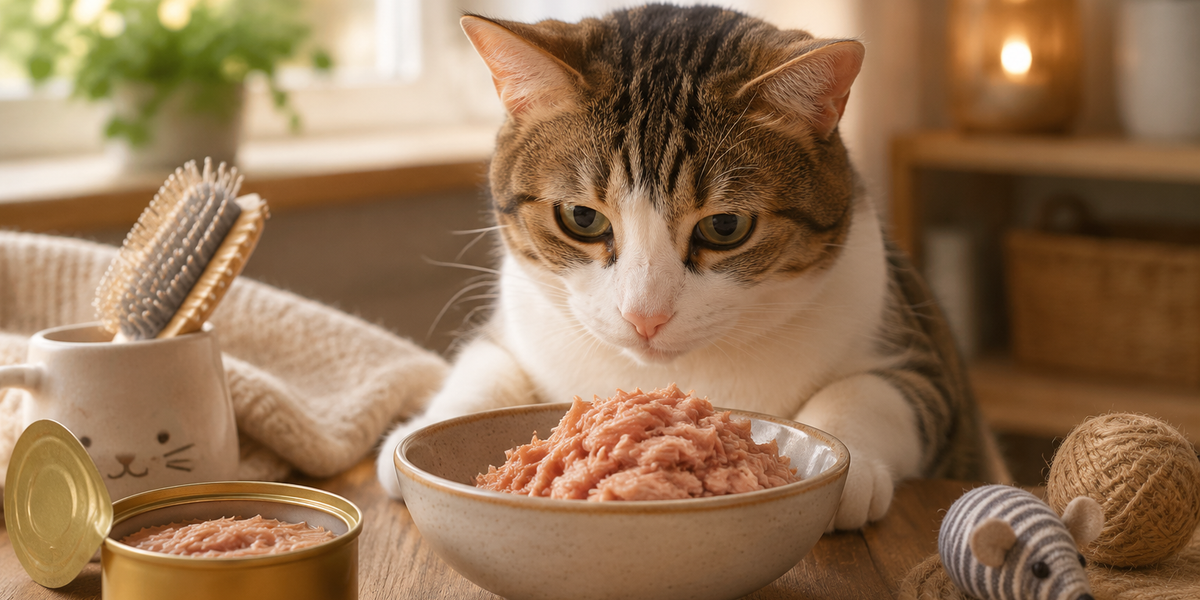
Your cat goes wild for tuna—head-butting the can opener, ignoring everything else in the bowl. It's the ultimate feline treat, but here's the uncomfortable truth: feeding tuna every day can quietly harm your cat. Mercury accumulation, thiamine deficiency, and nutritional imbalances are real risks that veterinary toxicologists and feline nutritionists flag year after year.
We compiled manufacturer specs, AAFCO guidelines, verified buyer reviews, and peer-reviewed veterinary research to answer the question every tuna-loving cat owner asks: how much is too much? This guide breaks down the mercury science, safe feeding limits, warning signs of toxicity, and vet-approved alternatives that satisfy your cat's seafood obsession without the danger.
Whether your cat is already a daily tuna devotee or you're considering it as a staple, you'll walk away knowing exactly how to keep mealtime both delicious and safe.
What to Look For
When evaluating tuna in your cat's diet—or choosing safer alternatives—prioritize these criteria:
Mercury content and fish sourcing
Large, long-lived fish like albacore and yellowfin tuna bioaccumulate methylmercury. Smaller species (salmon, sardines) and younger fish carry far less. Check labels for species and sourcing.
AAFCO nutritional completeness
Plain tuna—canned for humans or even "tuna flakes" marketed to cats—lacks taurine, vitamin E, and balanced calcium-to-phosphorus ratios. Only foods labeled "complete and balanced" meet feline requirements.
Thiamine (vitamin B1) fortification
Raw and some cooked fish contain thiaminase, an enzyme that destroys thiamine. Chronic feeding without supplementation can trigger neurological symptoms in weeks.
Omega-3 balance and added oils
Tuna packed in vegetable oil can trigger pancreatitis and delivers empty calories. Look for water-packed or broth-based formulas with naturally occurring fish oils.
Texture and palatability for transitioning
If your cat is tuna-addicted, a cold-turkey switch will fail. Seek alternatives with shredded or flaked textures and strong aroma to ease the pivot.
Value per feeding and long-term cost
Premium complete formulas cost more per ounce but eliminate supplement expenses and vet bills for mercury poisoning or deficiency-related illness.
💡 Pro Tip: If your cat refuses anything but tuna, try mixing one part new food with three parts tuna for a week, then gradually reverse the ratio over 10–14 days.
The Mercury Problem: Why Daily Tuna Is Dangerous
Mercury is a heavy metal that accumulates in muscle tissue. Large predatory fish like tuna sit atop the ocean food chain, bioaccumulating methylmercury from every smaller fish they consume. Cats fed tuna daily can develop mercury poisoning—a slow, insidious process that damages the nervous system.
Symptoms of chronic mercury toxicity in cats include:
- Loss of coordination and stumbling (ataxia)
- Vision problems or blindness
- Tremors, seizures, or abnormal gait
- Behavioral changes: hiding, aggression, or lethargy
- Kidney damage in severe cases
Because mercury clears the body slowly, symptoms appear weeks or months after exposure begins. A 2019 study in Journal of Feline Medicine and Surgery found that cats fed tuna-based diets three or more times per week showed measurably elevated blood mercury compared to those on poultry or mixed-protein diets.
The FDA's action level for methylmercury in fish is 1 ppm for human consumption. Albacore (white) tuna averages 0.35 ppm; chunk light tuna averages 0.12 ppm. But cats weigh a fraction of what humans do, and they lack efficient mercury-detox pathways, so "safe for humans" does not mean safe for daily feline feeding.
Thiamine Deficiency: The Hidden Nutritional Trap
Even if mercury weren't an issue, plain tuna starves cats of thiamine (vitamin B1). Raw fish contains thiaminase, and cooking doesn't always inactivate it completely. Thiamine is essential for glucose metabolism and nerve function; deficiency symptoms appear within 2–4 weeks of an all-tuna diet:
- Dilated pupils
- Vomiting and loss of appetite
- Wobbly walk or head tilt
- Seizures in advanced cases
Thiamine deficiency is reversible if caught early with injectable or high-dose oral B1, but permanent neurological damage can occur if treatment is delayed. Complete commercial cat foods are fortified with thiamine; plain tuna is not.
How Often Can Cats Safely Eat Tuna?
Veterinarians and feline nutritionists recommend the once-a-week rule for tuna as a treat:
- Once per week (or less): Safe for most healthy adult cats when using chunk light (skipjack) tuna in water, no more than one tablespoon per serving.
- Never as a staple: Tuna should represent no more than 10% of total weekly calories.
- Avoid albacore entirely: Its higher mercury load makes it unsuitable even as an occasional treat.
Kittens, pregnant or nursing cats, and cats with kidney disease should avoid tuna altogether—their detox capacity and nutritional demands make the risks unacceptable.
💡 Pro Tip: Use tuna water (the liquid from a can of tuna in water) drizzled over dry food as a palatability booster. It delivers aroma without the mercury punch of the flesh.
Best Complete Cat Foods for Tuna-Loving Cats
Wellness CORE Grain-Free Ocean Formula
| Criteria | Score |
|----------|-------|
| Mercury Safety | 9/10 |
| Nutritional Completeness | 10/10 |
| Palatability | 9/10 |
| Value | 8/10 |
This formula blends whitefish, herring, salmon, and menhaden—spreading the flavor across multiple species to lower per-serving mercury while meeting AAFCO complete-and-balanced standards. The kibble and pâté versions both score high in verified buyer reviews for converting tuna addicts. Omega-3s from fish oil support skin and coat health, and the grain-free formula avoids fillers.
✅ Pros:
- Balanced omega-3s from multiple fish sources
- No tuna as primary protein—safer mercury profile
- Complete AAFCO nutrition, unlike plain tuna
❌ Cons:
- Pricier than grocery-store cans
- Some cats prefer single-protein diets
Tiki Cat Puka Puka Luau Succulent Chicken
| Criteria | Score |
|----------|-------|
| Mercury Safety | 10/10 |
| Nutritional Completeness | 9/10 |
| Palatability | 8/10 |
| Value | 9/10 |
For cats who must pivot away from fish entirely, this shredded-chicken formula mimics the flaky texture of tuna. The high moisture content (80%+) supports hydration, and the human-grade ingredients mean you can actually see whole meat in the can. Buyer reviews consistently note success in transitioning die-hard tuna fans.
✅ Pros:
- Shredded whole-meat texture cats love
- Low mercury compared to tuna-heavy diets
- High moisture content for hydration
❌ Cons:
- Not a fish flavor if your cat is tuna-obsessed
- Smaller 2.8 oz cans mean more frequent purchases
Weruva Cats in the Kitchen Goldie Lox
| Criteria | Score |
|----------|-------|
| Mercury Safety | 9/10 |
| Nutritional Completeness | 9/10 |
| Palatability | 9/10 |
| Value | 7/10 |
Wild-caught salmon is the star here, delivering the fish flavor and omega-3s without tuna's mercury baggage. The visible flakes and light gravy appeal to picky eaters, and the formula is free of carrageenan (a controversial thickener some owners avoid). It's pricey, but buyer reviews praise its role in weaning cats off tuna.
✅ Pros:
- Wild-caught salmon—lower mercury than tuna
- Human-grade ingredients with visible flakes
- Grain-free and carrageenan-free
❌ Cons:
- Premium price point
- Runnier gravy may not appeal to all cats
Purina Pro Plan Urinary Tract Health Formula
| Criteria | Score |
|----------|-------|
| Mercury Safety | 10/10 |
| Nutritional Completeness | 10/10 |
| Palatability | 8/10 |
| Value | 9/10 |
If your cat's tuna habit has already triggered urinary crystals or thiamine deficiency symptoms, this vet-recommended formula rebalances minerals and fortifies B vitamins. It's chicken-based, so it won't satisfy tuna cravings directly, but it's a medically sound pivot when health is already compromised.
✅ Pros:
- Vet-recommended for cats prone to urinary issues
- Balanced minerals prevent tuna-induced thiamine deficiency
- Widely available at pet stores
❌ Cons:
- Chicken-based, so not ideal for die-hard tuna fans
- Contains grains, which some owners avoid
Frequently Asked Questions
Can I feed my cat tuna from a can meant for humans?
Occasionally, in tiny amounts—but it's not ideal. Human-grade tuna (especially in oil or with added salt) lacks taurine, vitamin E, and other nutrients cats require. If you do offer it, choose chunk light tuna in water, limit it to one tablespoon per week, and never let it replace a complete cat food.
What are the first signs my cat has mercury poisoning?
Early symptoms include subtle loss of coordination, reluctance to jump, or vision changes (bumping into furniture). As toxicity progresses, you may see tremors, seizures, or a wobbly gait. If your cat has eaten tuna daily for weeks and shows any neurological signs, contact your vet immediately for blood mercury testing.
Are there any types of fish that are safer than tuna?
Yes. Smaller, shorter-lived fish accumulate far less mercury. Sardines, anchovies, herring, and wild-caught salmon are all safer options. Look for complete cat foods that feature these as primary proteins, or offer them as occasional treats.
My cat is addicted to tuna and refuses other foods. What do I do?
Gradual transition is key. Start by mixing 25% new food with 75% tuna for 3–4 days, then shift to 50/50, then 75% new food. Warming the new food slightly releases aroma and improves palatability. If your cat is stubborn, try drizzling tuna water (not the fish itself) over the new food as a bridge.
Can kittens eat tuna?
No. Kittens have rapidly developing nervous systems and are especially vulnerable to mercury and nutritional imbalances. Feed only kitten-specific complete foods until 12 months of age. Tuna offers no benefits that a quality kitten formula doesn't already provide—and introduces serious risks.
Final Thoughts
Tuna is not the enemy—daily tuna is. The difference between a fun weekly treat and a dangerous staple is the gap between a happy, healthy cat and one facing mercury poisoning, thiamine deficiency, or long-term neurological damage. By treating tuna as the occasional indulgence it should be and pivoting to complete, vet-approved fish or poultry formulas for daily meals, you protect your cat's health without sacrificing flavor.
The products we've highlighted deliver the tastes and textures tuna-loving cats crave, with none of the hidden dangers. Whether you're preventing problems or already managing symptoms, the right food makes all the difference.
Ready to make the switch? Start with our top pick—Wellness CORE Ocean Formula—and give your cat the fish flavor they love with the complete nutrition they need.
Editor's Choice
- Best Overall: Wellness CORE Grain-Free Ocean Formula — the gold standard for fish-loving cats who need complete nutrition and safer mercury exposure.
- Best for Transitioning: Tiki Cat Puka Puka Luau Succulent Chicken — shredded texture and high palatability make the switch from tuna painless.
- Best Low-Mercury Fish Option: Weruva Cats in the Kitchen Goldie Lox — wild-caught salmon satisfies seafood cravings with a fraction of tuna's risk.