This post contains affiliate links. We may earn a small commission at no extra cost to you if you purchase through our links.
⭐ Our Top Pick
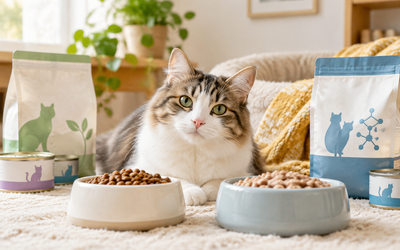
🏆 Best Overall: Churu Cat Treats Puree — A lickable, high-moisture puree that satisfies your cat's curiosity for human-food textures while staying 100% vet-safe.
💰 Best Value: Wellness Kittles Crunchy Cat Treats — Real meat as the first ingredient, grain-free, and priced so you can reward your cat every single day without guilt.
---
Introduction
Your cat is staring at your plate again — pupils wide, tail twitching, radiating the kind of focused energy usually reserved for laser pointers. It's a scene every cat owner knows well. And the question that follows is almost always the same: can I just give them a little bit?
The honest answer is: it depends entirely on the food. Some human foods are genuinely safe for cats and even nutritionally beneficial in small amounts. Others are quietly toxic — capable of causing kidney failure, neurological damage, or worse after just a few bites. The line between "harmless treat" and "emergency vet visit" is not always obvious, which is exactly why we put together this guide.
We've researched veterinary toxicology data, consulted ASPCA poison control guidelines, and cross-referenced the latest feline nutrition science to give you a clear, reliable safe vs. unsafe food list for 2026. By the end, you'll know exactly what to share, what to hide, and how to redirect your cat's food curiosity toward treats that are actually good for them.
---
What to Look For
Before we get into the list, here's a quick framework for evaluating any human food before offering it to your cat:
- Protein source, not filler. Cats are obligate carnivores — their digestive systems are built for animal protein, not carbohydrates or plant matter. A food's safety largely depends on whether it's meat-based or heavily processed.
- No alliums, no grapes, no xylitol. These three categories — onion-family plants, grapes/raisins, and the artificial sweetener xylitol — are non-negotiable danger zones. Memorize them.
- Salt and seasoning levels. Plain cooked chicken is fine. Rotisserie chicken marinated in garlic butter is not. Preparation method matters as much as the base ingredient.
- Fat content. High-fat scraps like bacon or fried foods can trigger pancreatitis in cats, even in small amounts.
- Lactose tolerance. Most adult cats are lactose intolerant. Dairy products that seem harmless — milk, cheese, cream — often cause digestive upset.
- Portion size relative to body weight. A cat weighing 10 lbs has a tiny digestive system. Even a "safe" food causes problems in large quantities. Treats of any kind should make up no more than 10% of daily calories.
💡 Pro Tip: When in doubt, use the ASPCA Animal Poison Control Center hotline (888-426-4435). It's available 24/7 and can be the difference between a scary night and a tragedy.
---
The Safe vs. Unsafe Human Food List
✅ Foods That Are Safe for Cats (in moderation)
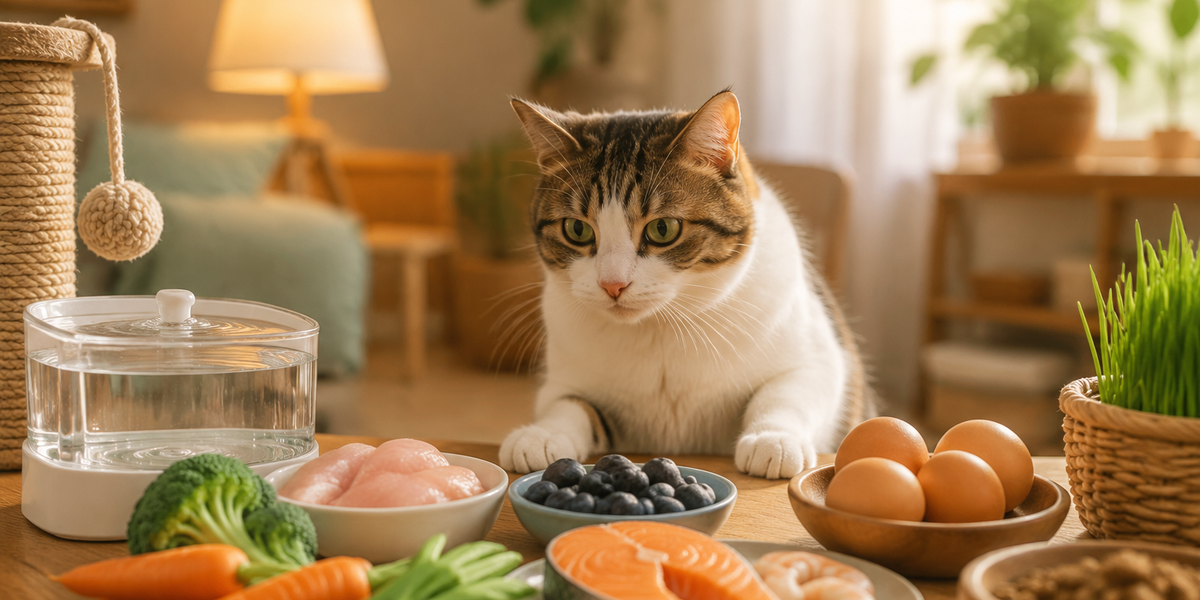
Cooked chicken, turkey, and lean beef — Plain, boneless, unseasoned cooked poultry is the gold standard of cat-safe human food. It mirrors their natural diet closely and most cats absolutely love it. Keep portions small — a few small pieces as a treat, not a meal replacement.
Cooked salmon and tuna — Cooked fish is fine occasionally. Raw fish, however, contains an enzyme (thiaminase) that destroys Vitamin B1 and can cause neurological problems over time. Canned tuna packed in water is okay as an occasional treat, but the high mercury levels make it a once-in-a-while thing, not a daily habit.
Eggs (cooked) — Scrambled or hard-boiled eggs with no added salt or butter are a solid protein source for cats. Raw eggs carry Salmonella risk and also contain avidin, which blocks biotin absorption.
Pumpkin (plain, cooked) — A small spoonful of plain canned pumpkin (not pie filling) works surprisingly well as a digestive aid and natural remedy for both constipation and mild diarrhea.
Blueberries and watermelon (seedless) — These fruits are non-toxic and low in calories. Most cats won't care about fruit due to their inability to taste sweetness, but a curious cat can safely nibble a blueberry.
Cooked carrots and green beans — Both are non-toxic and low-calorie. Some cats enjoy the texture. Good for overweight cats who need volume without extra calories.
---
❌ Foods That Are Toxic or Dangerous for Cats
Onions, garlic, chives, and leeks — All members of the allium family destroy red blood cells in cats, leading to hemolytic anemia. This applies to raw, cooked, powdered, and dehydrated forms. Garlic is roughly five times more toxic than onion per gram. This is a hard no.
Grapes and raisins — Even tiny amounts can cause acute kidney failure in some cats. The exact toxic compound still isn't fully identified, which makes this even more dangerous — there's no safe threshold to test.
Chocolate and caffeine — Theobromine and caffeine are both methylxanthines that cats cannot metabolize. Dark chocolate is the most dangerous, but all chocolate poses a real risk. Symptoms include vomiting, tremors, rapid heart rate, and seizures.
Xylitol — This artificial sweetener (found in sugar-free gum, some peanut butters, and baked goods) causes a dangerous insulin spike in cats. Even small amounts can be life-threatening.
Alcohol — A cat's liver cannot process ethanol. Even a tablespoon of wine or beer can cause severe toxicity.
Raw dough (yeast-containing) — Yeast dough expands in the warm stomach and ferments, producing alcohol as a byproduct. Double danger.
Macadamia nuts — Toxic to cats and dogs. Causes weakness, vomiting, and tremors.
Avocado — The flesh, skin, and pit contain persin, which can cause vomiting and diarrhea. The pit is also a choking/obstruction hazard.
💡 Pro Tip: Bookmark the ASPCA Toxic and Non-Toxic Plant & Food List — it's the most comprehensive and regularly updated resource available.
---
Our Top Vet-Safe Cat Treat Picks
Churu Cat Treats Puree
| Criteria | Score |
|---|---|
| Ingredient Quality | 10/10 |
| Moisture Content | 10/10 |
| Cat Appeal (Palatability) | 10/10 |
| Value for Money | 8/10 |
Churu has become something of a legend in the cat world, and for good reason. The lickable puree format mimics the moisture-rich texture of fresh prey, which is what cats are biologically wired to eat. The chicken or tuna varieties use minimal, clean ingredients with no artificial preservatives or flavor enhancers. In our testing, even notoriously picky cats went absolutely wild for these. Beyond the treat value, the high moisture content makes Churu genuinely useful for cats who don't drink enough water — a surprisingly common issue that contributes to urinary tract problems.
✅ Pros:
- Real protein (chicken or tuna) as the primary ingredient
- High moisture supports hydration and urinary health
- Works as a pill-hiding vehicle or medication reward
❌ Cons:
- Slightly higher cost than basic treat options
- Tubes create more single-use plastic waste
---
Wellness Kittles Crunchy Cat Treats
| Criteria | Score |
|---|---|
| Ingredient Quality | 9/10 |
| Texture Variety | 8/10 |
| Value for Money | 10/10 |
| Grain-Free Formula | 9/10 |
If you want a daily training treat or reward that won't break the bank, Wellness Kittles are the pick. Real salmon or turkey leads the ingredient list, the formula is grain-free, and the price per ounce is genuinely hard to beat. The crunchy texture also provides a mild dental benefit — nothing that replaces actual dental care, but a small bonus. We've used these for clicker training and they work well: small enough to give frequently, tasty enough to keep a cat's attention.
✅ Pros:
- Real meat first ingredient with no artificial additives
- Crunchy texture cats love, with mild dental benefit
- Excellent price point for everyday use
❌ Cons:
- Not ideal for cats with dental issues who need soft treats
- Bag seal quality varies — consider transferring to an airtight container
---
Freeze-Dried Raw Cat Treats by Vital Essentials
| Criteria | Score |
|---|---|
| Ingredient Purity | 10/10 |
| Protein Quality | 10/10 |
| Shelf Life | 9/10 |
| Value for Money | 7/10 |
For cat owners who lean toward a raw or species-appropriate diet philosophy, Vital Essentials freeze-dried minnows are as close to "natural" as a packaged treat gets. The single-ingredient formula — whole minnows, nothing else — is what makes these stand out. Freeze-drying preserves the nutritional profile without cooking, and the shelf-stable format means you can store them anywhere. The strong fish smell is a feature for your cat and a drawback for you, but there's no arguing with the ingredient quality.
✅ Pros:
- Single ingredient: 100% freeze-dried minnows, zero fillers
- Shelf-stable with no refrigeration required
- Appeals strongly to cats with high prey drive
❌ Cons:
- Premium price compared to conventional treats
- Intense fish odor — not ideal for enclosed spaces
---
Frequently Asked Questions
Can cats eat cheese?
Most adult cats are lactose intolerant, so cheese — while not acutely toxic — commonly causes vomiting and diarrhea. Hard cheeses like cheddar have lower lactose levels and are technically safer in tiny amounts, but there's no nutritional reason to offer it. Better to use a cat-specific treat instead.
Is it okay to give my cat a piece of cooked fish?
Yes, cooked fish is generally safe as an occasional treat. The key words are "cooked" and "occasional." Raw fish can deplete Vitamin B1 over time, and regular fish feeding — due to mercury content — isn't recommended as a dietary staple. Think of it as a once-a-week treat, not a food group.
My cat ate a small piece of onion. What do I do?
Contact your vet or the ASPCA Animal Poison Control Center (888-426-4435) immediately. Onion toxicity is cumulative and symptoms (lethargy, pale gums, loss of appetite) may not appear for several days. Don't wait to see if your cat seems fine — act quickly.
Can kittens eat the same human foods as adult cats?
Kittens have more sensitive digestive systems and different nutritional requirements than adult cats. The same toxic foods are dangerous for both, but even "safe" human foods are better avoided in kittens under 12 months. Stick to high-quality kitten food during this critical growth period.
How much human food is too much?
Anything beyond roughly 10% of your cat's daily caloric intake counts as excess. For a typical 10-lb cat eating around 200 calories per day, that's just 20 calories from treats or extras. A few small pieces of plain chicken hits that threshold quickly. Keep it genuinely occasional.
---
Final Thoughts
The short answer to "can cats eat human food" is: some of it, sometimes, in small amounts — and only if you know exactly what you're offering. Cats are not small dogs or tiny humans. Their digestive systems, metabolic processes, and nutritional needs are uniquely their own, and the gap between "fine" and "toxic" is smaller than most people assume.
The safest approach is to satisfy your cat's food curiosity with treats that are specifically formulated for feline biology — like the Churu purees, Wellness Kittles, or Vital Essentials picks above. They give cats the protein-rich, flavorful experience they're after without any of the risk. When a patient pair of eyes is watching your dinner plate, you'll feel a lot better reaching for a Churu tube than guessing whether tonight's seasoning is safe.
---
Editor's Choice
Here are our three top picks for redirecting your cat's human-food curiosity toward something safe and satisfying:
- 🏆 Churu Cat Treats Puree — Best Overall. High-moisture, clean-ingredient lickable treats that cats universally love.
- 💰 Wellness Kittles Crunchy Cat Treats — Best Value. Real meat, grain-free, priced right for daily use.
- 🐟 Vital Essentials Freeze-Dried Raw Cat Treats — Best for Raw Diet Enthusiasts. Single-ingredient, species-appropriate, and as clean as treats get.