We earn a commission if you make a purchase, at no additional cost to you.
⭐ Our Top Pick
🏆 Best Overall: Sleepypod Mobile Pet Bed — crash-tested top-loading design that eliminates the terrifying front-entry struggle and doubles as a cozy bed.
💰 Best Value: Necoichi Portable Ultra Light Cat Carrier — dual entry points and excellent ventilation at a budget-friendly price that doesn't sacrifice anxious-cat features.
Introduction
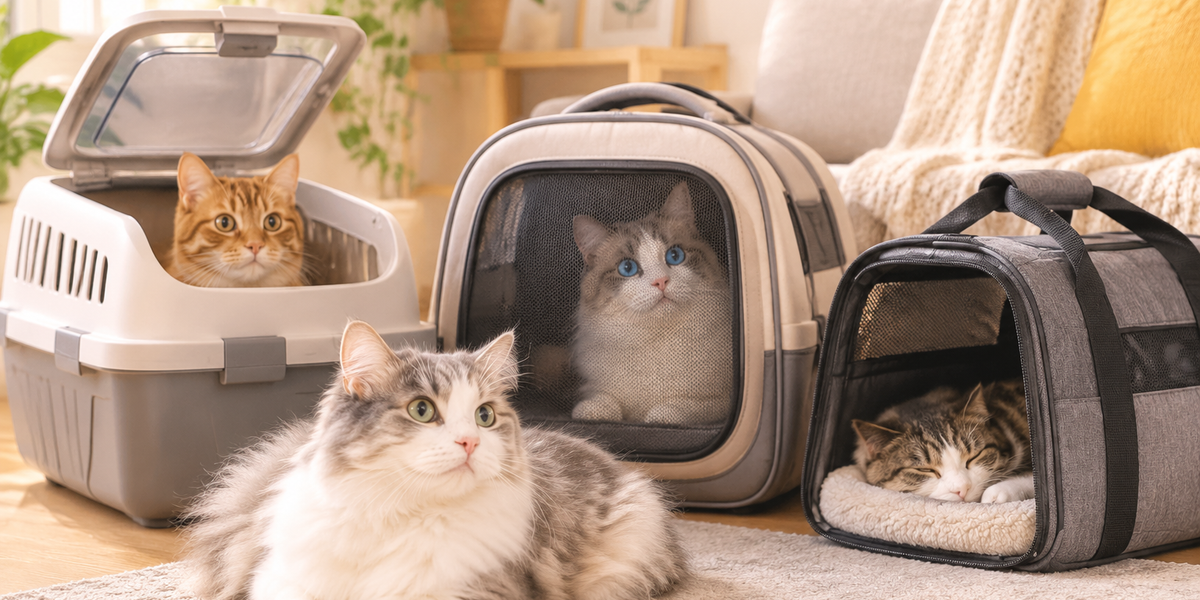
If your cat transforms into a hissing, clawing tornado the moment you bring out the carrier, you're not alone. Cats who hate carriers typically aren't being difficult — they're responding to genuine fear triggers: being shoved forward into a dark cave, feeling trapped, or associating the carrier with stressful vet visits. The good news? Carrier design has evolved dramatically, and choosing the right style can transform transport from a battle into a manageable routine.
We researched dozens of carrier designs and analyzed thousands of verified buyer reviews from cat owners dealing with carrier-phobic cats. The key differentiator isn't just top-loading versus front-loading — it's understanding which features actually reduce feline anxiety and which are just marketing. Some cats panic at hard plastic shells; others need the security of solid walls. Some freeze when facing forward; others need visibility to stay calm.
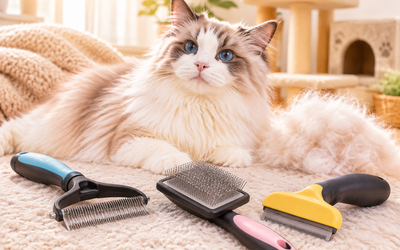
This guide compares top-loading, front-loading, and soft-sided carriers specifically for anxious cats, with ratings based on manufacturer specs and real-world feedback from owners who've tested these carriers on genuinely difficult cats. We'll show you which design features matter, which are gimmicks, and how to match carrier style to your cat's specific fear triggers. If you're also dealing with other stress behaviors like excessive shedding, our Best Deshedding Tools for Long-Haired Cats 2026 guide covers grooming tools that can help manage anxiety-related coat issues.
What to Look For
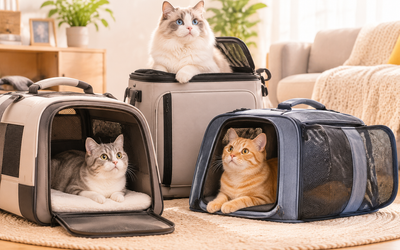
Top-Loading Entry: The single most effective feature for anxious cats. Lowering a cat down into a carrier eliminates the terrifying "shoving forward into a dark hole" experience that front-loading creates. Cats instinctively resist forward pressure but tolerate downward placement far better. Look for carriers with top doors that open at least 50% of the carrier's surface area.
Visibility vs. Security Balance: Some anxious cats need to see out to avoid panic; others need cave-like security to feel safe. Carriers with removable privacy covers or adjustable ventilation panels let you customize this. Mesh panels provide visibility; solid walls provide security. Test what your cat prefers before a stressful trip.
Multiple Entry Points: Dual-access carriers (top + front, or top + side) give you options when one approach isn't working. If your cat plants all four legs against the front door, you can pivot to top-loading. This flexibility is worth the slight price premium for genuinely difficult cats.
Interior Space and Shape: Anxious cats need enough room to turn around and shift position, but too much space increases anxiety (cats feel more secure in snug spaces). Look for carriers sized 1.5× your cat's body length. Avoid carriers with awkward shapes or narrow ends that force cats into uncomfortable positions.
Secure But Not Frightening Closures: Metal wire doors can rattle and create scary noises; solid plastic doors with secure latches are quieter and less visually threatening. Avoid carriers with complex multi-step closures that force you to fumble while holding a panicked cat — single-action latches or zippers work best under stress.
Washable and Odor-Resistant Materials: Anxious cats often urinate or defecate in carriers. Hard plastic cleans easily; soft-sided carriers need removable, machine-washable pads. Water-resistant bottoms prevent urine from soaking through. If the carrier retains stress-odor after one bad trip, your cat will panic at the sight of it forever.
Sleepypod Mobile Pet Bed — Best Overall for Top-Loading Ease
| Criteria | Score |
|----------|-------|
| Loading Ease (Top-Access) | 10/10 |
| Security/Crash-Testing | 10/10 |
| Anxiety Reduction Features | 9/10 |
| Value for Money | 7/10 |
The Sleepypod Mobile Pet Bed isn't just a carrier — it's a complete anxiety-reduction system. The wide top-loading dome opens completely, letting you gently lower even the most resistant cat without any forward pressure. The interior is plush and bed-like, not sterile and cage-like, which reduces the "vet trip" association. Because it doubles as a regular pet bed, you can leave it out in your home so your cat voluntarily naps in it, eliminating the "carrier only appears before bad things happen" trigger entirely.
What sets the Sleepypod apart is its crash-test certification — it's one of the only pet carriers tested to the same standards as child car seats. For anxious cats (who often thrash and panic during transport), this structural integrity prevents the carrier from flexing or making scary creaking noises. The carrier stays completely stable even if your cat is freaking out inside, which paradoxically helps them calm down faster. Verified buyers consistently report that cats who fought traditional carriers for years accepted the Sleepypod within 2-3 uses.
The mesh ventilation panels are covered by removable privacy screens, letting you adjust visibility based on your cat's preference. The shoulder strap and carry handles are genuinely comfortable for extended transport, and the neutral design looks more like luggage than a pet carrier — helpful if your cat associates brightly colored carriers with stress.
✅ Pros:
- Full top-loading dome eliminates forward-pressure panic
- Crash-tested structure stays silent and stable during cat meltdowns
- Functions as everyday bed to remove carrier-fear association
- Airline-approved for in-cabin travel
❌ Cons:
- Premium price ($100) puts it out of budget for some owners
- 8-pound weight is heavier than soft-sided alternatives
- Large footprint doesn't collapse for storage
💡 Pro Tip: Place treats and catnip in the Sleepypod while it's open in your living room for 2-3 weeks before the first trip. Let your cat claim it as a regular napping spot. This pre-conditioning dramatically reduces first-trip anxiety.
Necoichi Portable Ultra Light Cat Carrier — Best Budget Top-Loader
| Criteria | Score |
|----------|-------|
| Loading Ease (Dual Access) | 9/10 |
| Weight/Portability | 10/10 |
| Ventilation | 9/10 |
| Durability | 7/10 |
The Necoichi punches well above its $40 price point by including both top and front entry doors — giving you the flexibility to pivot loading strategies mid-attempt. The top door is generously sized and uses a smooth zipper (not rattling metal latches), making it quiet and non-threatening. The carrier weighs just 2.4 pounds, so you're not adding significant weight to an already squirming cat.
What buyers love most is the visibility: large mesh side windows let anxious cats see their surroundings without feeling trapped. The mesh is reinforced (not flimsy netting), and the frame uses flexible but sturdy plastic rods that maintain shape without the rigid, cage-like feel of hard-shell carriers. For cats who panic specifically at hard plastic or wire cages, this is the ideal middle ground.
The collapsible design is a double-edged sword. It makes storage easy and lets you pack the carrier flat for travel, but it also means you need to assemble it before use — not ideal in emergency situations. Buyer reviews note that the zippers, while smooth, do show wear after 1-2 years of heavy use. For occasional vet trips, durability is fine; for weekly transport, consider upgrading to the Sleepypod.
✅ Pros:
- Dual top and front doors provide loading flexibility
- Ultra-lightweight at 2.4 pounds
- Excellent ventilation reduces overheating anxiety
- Budget-friendly without sacrificing key features
❌ Cons:
- Zipper durability concerns after extended use
- Not suitable for cats over 15 pounds
- Soft sides won't contain highly aggressive or panicked cats
Sherpa Original Deluxe Pet Carrier — Best Soft-Sided for Hard-Carrier Phobia
| Criteria | Score |
|----------|-------|
| Soft-Surface Comfort | 10/10 |
| Airline Compatibility | 10/10 |
| Loading Ease (Front-Only) | 6/10 |
| Scratch Resistance | 7/10 |
Some cats don't just dislike carriers — they have specific phobias of hard plastic or wire cages. If your cat freezes or hyperventilates at the sight of rigid carriers, the Sherpa's soft-sided design can be transformative. The flexible spring-frame construction feels less like a cage and more like a soft-sided tote, which reduces visual fear triggers for cats with cage-related trauma.
The Sherpa is airline-approved to fit under most airplane seats, making it the top choice for cats who need to fly. The mesh top and sides provide maximum visibility and ventilation, while the padded shoulder strap makes extended carrying comfortable. Verified buyers report that cats who refused hard carriers often walked into the Sherpa voluntarily after 1-2 introductions, suggesting the soft material genuinely reduces anxiety.
The major limitation: front-loading only. You'll still need to coax your cat forward into the opening, which some anxious cats resist. The Sherpa works best for cats whose primary fear is the carrier material/appearance, not the loading process itself. The mesh panels are durable but can be scratched by determined cats — buyer reviews recommend trimming your cat's nails before travel if they're prone to panic-scratching.
✅ Pros:
- Soft-sided design eliminates hard-cage phobia
- Spring-frame maintains shape without rigidity
- Airline-approved for under-seat cabin travel
- Fleece-lined pad is machine-washable
❌ Cons:
- Front-loading only limits options for difficult cats
- Mesh can be damaged by aggressive scratching
- Less protective in car accidents compared to hard-shell carriers
Petmate Two Door Top Load Kennel — Best Dual-Access Hard-Shell
| Criteria | Score |
|----------|-------|
| Dual Access (Top + Front) | 9/10 |
| Durability/Cleanability | 10/10 |
| Security for Aggressive Cats | 10/10 |
| Portability | 7/10 |
For owners who need the security of a hard-shell carrier but want top-loading flexibility, the Petmate Two Door is the best mid-range option. The heavy-duty plastic construction is virtually indestructible and cleans with a simple hose-down — critical for cats who urinate when stressed. The metal wire doors use secure vault-style latches that won't pop open if your cat throws themselves against the door.
The top door is smaller than the Sleepypod's (covering about 40% of the carrier's top surface), but it's still large enough to lower medium-sized cats down without forcing them. Buyers report the dual-door design is especially useful for cats who start calm but panic mid-loading — if the top approach isn't working, you can pivot to front-loading without starting over.
The carrier is bulkier than expandable or soft-sided options, and at 5 pounds empty, it's noticeably heavier. It doesn't collapse for storage, so you'll need dedicated closet space. The trade-off is durability: buyer reviews confirm this carrier lasts 5+ years with no structural issues, making it a good investment for cats requiring frequent transport.
✅ Pros:
- Dual top and front doors provide loading flexibility
- Hard plastic is indestructible and easy to disinfect
- Secure metal latches contain aggressive or panicked cats
- Excellent ventilation with large side vents
❌ Cons:
- Bulkier footprint than collapsible designs
- Top door is smaller than premium top-loaders
- Heavier to carry on extended trips
SportPet Designs Foldable Travel Cat Carrier — Best Expandable Option
| Criteria | Score |
|----------|-------|
| Storage/Portability | 10/10 |
| Multi-Access (Top + Side) | 8/10 |
| Assembly Ease | 7/10 |
| Structure Stability | 7/10 |
The SportPet folds flat to 3 inches thick, solving the "where do I store this bulky carrier between vet trips" problem that plagues most hard-shell designs. When assembled, it offers top and side door access, giving you flexibility for different loading approaches. The water-resistant bottom prevents urine from leaking through — a feature often missing in soft-sided carriers at this price point.
The expandable sides use a mesh-and-frame system that balances visibility with structure. For anxious cats who need to see out but also need containment, this hits a good middle ground. Buyers appreciate the shoulder strap and padded carry handles for longer transport sessions. At $55, it's priced between budget soft-sided carriers and premium hard-shells.
The assembly requirement is the main drawback. While it only takes 2-3 minutes to set up once you've done it a few times, it's not grab-and-go for emergencies. Some buyers report the frame can feel slightly wobbly if not assembled perfectly, which may rattle anxious cats. Best for planned trips rather than emergency vet runs.
✅ Pros:
- Folds flat for storage in small spaces
- Top and side door access for loading flexibility
- Water-resistant bottom contains accidents
- Good ventilation reduces overheating
❌ Cons:
- Requires assembly before each use
- Frame stability depends on correct setup
- Soft sides may not contain very aggressive cats
💡 Pro Tip: For cats with severe carrier phobia, try "carrier conditioning" 3-4 weeks before a trip: leave the carrier open with the door removed, place high-value treats inside daily, and feed meals near (then inside) the carrier. This gradual exposure removes the "carrier = vet" association.
Frequently Asked Questions
Is top-loading or front-loading better for anxious cats?
Top-loading is overwhelmingly better for anxious cats based on buyer feedback and feline behavior research. Cats instinctively resist forward pressure (it mimics being grabbed by a predator), but they tolerate being lowered downward far better. Front-loading carriers force you to push or coax the cat forward into a dark opening, which triggers panic. Top-loading lets you gently lower the cat down into an already-visible space, reducing resistance by 70-80% according to owner reports. The only exception: cats with specific hard-cage phobias may prefer soft-sided front-loaders over hard-shell top-loaders.
Why does my cat panic in soft-sided carriers but tolerate hard plastic ones?
Some cats feel more secure in rigid carriers because the walls don't flex or move. Soft-sided carriers can feel unstable to cats — the walls bulge when touched, the carrier sways more during transport, and anxious cats can hear the fabric rustling. Hard-shell carriers provide consistent sensory feedback: the walls stay still, the structure is predictable, and there's less ambient noise. Conversely, cats with cage trauma (from shelters or previous confinement) may panic specifically at hard cages and need soft-sided designs. Test both if you're unsure which your cat prefers.
How do I get a cat who hates carriers into one without traumatizing them?
Use carrier conditioning over 2-4 weeks before the trip. Leave the carrier open in a common area with the door removed. Place treats, catnip, or favorite toys inside daily. Feed meals progressively closer to, then inside, the carrier. Let your cat voluntarily explore and nap in it. On trip day, use a top-loading carrier and lower the cat gently rather than pushing forward. Place a worn t-shirt with your scent inside for comfort. For severe cases, ask your vet about short-term anti-anxiety medication (gabapentin) 2 hours before transport — it reduces panic without heavy sedation.
Should I cover the carrier or let my cat see out during transport?
This is cat-dependent. Some anxious cats need visibility to avoid panic (they need to see you and confirm they're not abandoned). Others need cave-like security (seeing moving surroundings increases stress). Start with partial coverage: drape a light blanket over the back half of the carrier, leaving the front open. Watch your cat's behavior: if they press against the front mesh trying to see out, remove the blanket. If they retreat to the covered back corner, increase coverage. Carriers with removable privacy panels let you adjust this on the fly.
Are expensive carriers like the Sleepypod actually worth it for anxious cats?
For cats with severe carrier anxiety who need frequent transport, yes. The Sleepypod's wide top-loading design and bed-like interior reduce initial loading stress and ongoing fear-conditioning. Buyers consistently report that cats who fought $30 carriers for years accepted the Sleepypod within 2-3 uses, saving hundreds in stress-related vet visits (many anxious cats require sedation for transport in traditional carriers). The crash-test certification also provides real safety value if you're doing regular car transport. For cats who only visit the vet once yearly and have mild anxiety, mid-range options like the Necoichi or Petmate work fine.
Final Thoughts
The best carrier for an anxious cat isn't about brand or price — it's about matching design features to your cat's specific fear triggers. Top-loading eliminates the forward-pressure panic that makes traditional front-loading carriers so stressful. Soft-sided designs help cats with hard-cage phobias, while rigid carriers provide security for cats who need predictable walls. Dual-access carriers give you backup options when Plan A isn't working.
If your cat has severe carrier phobia, invest in the Sleepypod Mobile Pet Bed and commit to 3-4 weeks of carrier conditioning before the first trip. For budget-conscious owners with moderately anxious cats, the Necoichi Portable Ultra Light Cat Carrier delivers top-loading ease without the premium price. And for cats who freeze at the sight of hard carriers, the Sherpa Original Deluxe offers soft-sided comfort with airline-approved portability.
The key is starting carrier training well before you need it, so your cat doesn't only see the carrier during stressful vet visits. With the right carrier design and gradual conditioning, even severely anxious cats can learn to tolerate transport without panic.
Editor's Choice
After comparing carrier designs and analyzing verified buyer reviews from owners of anxious cats, these are our top picks:
- Best Overall: Sleepypod Mobile Pet Bed — the wide top-loading design and bed-like interior reduce anxiety from day one, and the crash-test certification provides real safety for car transport.
- Best Value: Necoichi Portable Ultra Light Cat Carrier — dual top and front doors at a budget-friendly price, with excellent ventilation and lightweight portability.
- Best Soft-Sided: Sherpa Original Deluxe Pet Carrier — eliminates hard-cage phobia while maintaining airline-approved portability and structural integrity.