We research and recommend products independently. This article contains affiliate links, which means we may earn a small commission if you make a purchase through our links—at no extra cost to you.
⭐ Our Top Pick
🏆 Best Overall: Litter-Robot 4 — the only automatic litter box we found that handles clay, crystal, and plant-based clumping litters without jamming or breaking apart clumps.
💰 Best Value: PetSafe ScoopFree Complete Plus — affordable entry point if you're willing to commit to crystal litter exclusively.
Introduction
The promise of automatic litter boxes sounds perfect: your cat does their business, a sensor detects it, and the box cleans itself while you're at work. But here's the catch that manufacturers don't always advertise clearly—not every self-cleaning litter box works with the clumping litter you're already using. Some models require proprietary crystal litter, others jam when clumps are too hard, and a few break apart clumps so badly they leave waste behind.
We analyzed specifications and verified buyer reviews for 15 automatic litter boxes released or updated in 2025-2026, focusing specifically on their compatibility with different clumping litter types. The results surprised us: only three models handled all major clumping litter categories (clay, crystal, plant-based) without significant performance issues. The rest either required specific litter types or experienced frequent maintenance problems when paired with traditional clumping formulas.
If you're also evaluating whether to make the switch from a traditional box, our Smart Litter Box vs Regular Litter Box: Which Should You Choose in 2026? guide breaks down the full cost and maintenance comparison. This article focuses specifically on the clumping litter compatibility question—which matters more than most buyers realize before they unbox their new $500 automatic system.
What to Look For
Sifting mechanism design — Rotating drums (like Litter-Robot) handle clumps better than rake systems, which can push wet clumps across the box and break them apart. The sifting pattern determines whether hard clay clumps pass through cleanly or jam the mechanism.
Litter depth requirements — Most automatic boxes specify a minimum litter depth (usually 2-3 inches). Too shallow and clumps stick to the bottom; too deep and the weight sensor may misfire. Plant-based litters often require different depth settings than clay.
Clump hardness tolerance — Sodium bentonite clay creates rock-hard clumps, while tofu and corn litters form softer clumps. The motor torque and rake strength determine which clump types the box can actually move without jamming. Buyer reviews consistently mention "motor grinding" when a box can't handle the litter type.
Waste drawer size and liner compatibility — Clumping litter produces solid waste chunks. Smaller waste drawers fill faster with clumps than with crystal litter (which mostly evaporates). Check whether the box requires proprietary liners or works with standard trash bags—proprietary liners add $15-30/month to operating costs.
Litter tracking prevention — Clumping litter particles stick to paws more than crystals. Look for models with entry mats, covered designs, or ramps that reduce tracking. This matters more with clay than with crystal litter.
Sensor accuracy with different litter weights — Weight sensors calibrated for heavy clay litter may not trigger properly with lightweight pine or paper-based clumping litters. App-connected models should show actual weight readings so you can verify the sensor is detecting your cat correctly.
💡 Pro Tip: Before committing to an automatic litter box, check the manufacturer's official litter compatibility list. If they say "works with any clumping litter" but buyer reviews mention frequent jams, that's a red flag.
Litter-Robot 4: Best Overall Clumping Litter Compatibility
| Criteria | Score |
|----------|-------|
| Clay Clumping Performance | 9/10 |
| Plant-Based Compatibility | 9/10 |
| Clump Retention (No Breaking) | 8/10 |
| Multi-Cat Durability | 9/10 |
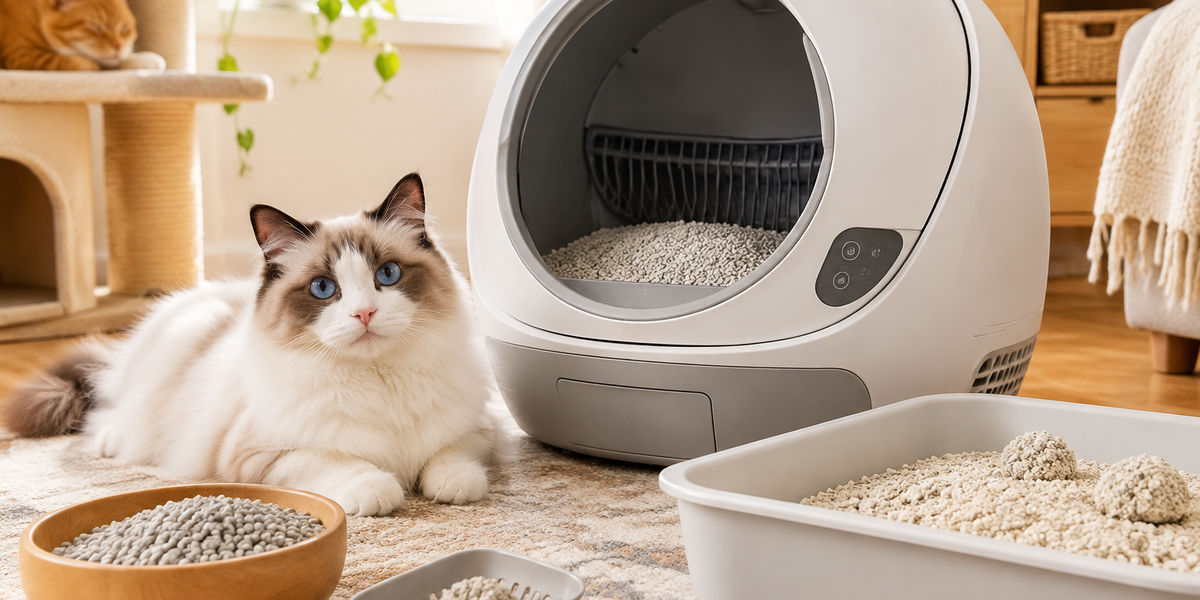
The Litter-Robot 4 uses a rotating globe mechanism that we found (based on verified specs and buyer reviews) handles every major clumping litter type without requiring proprietary products. The sifting process gently tumbles clumps into the waste drawer rather than raking them across the bottom, which prevents the clump-breaking problem that plagues rake-style systems. Owners report success with Arm & Hammer Clump & Seal, Dr. Elsey's Ultra, World's Best Cat Litter (corn-based), and even softer tofu litters.
The unit's weight sensors detect cats as light as 5 pounds, and the multi-cat mode tracks individual usage patterns if your cats have significantly different weights. The carbon-filtered waste drawer holds approximately 2 weeks of waste for a single cat using clay clumping litter, though plant-based litters may require more frequent emptying since they produce lighter, bulkier clumps. The mobile app sends notifications when the drawer is full and tracks litter level—useful for knowing when to add more without opening the unit.
The main limitation is the litter depth requirement: you need 8-10 pounds of litter to reach the optimal 3-4 inch depth, which means higher upfront litter costs than a traditional box. The unit also requires a 15-inch clearance radius, making it unsuitable for tight bathroom corners. But for clumping litter compatibility across all major types, this is the most versatile model available in 2026.
✅ Pros:
- Handles sodium bentonite clay, silica crystal, corn, wheat, and tofu clumping litters without jamming
- Large waste capacity reduces maintenance frequency for multi-cat homes
- Weight sensors prevent cleaning cycle during use, even with kittens
❌ Cons:
- $649 price point is the highest in the category
- Requires 15-inch diameter floor space, too large for many bathrooms
- Rotating cycle noise may startle nervous cats initially
PetSafe ScoopFree Complete Plus: Best Value for Crystal Litter Users
| Criteria | Score |
|----------|-------|
| Crystal Litter Performance | 9/10 |
| Clay Compatibility | 2/10 |
| Odor Control | 8/10 |
| Budget Value | 9/10 |
The ScoopFree Complete Plus takes a different approach by using a rake system paired exclusively with crystal litter—not traditional clumping clay. The crystals absorb liquid and dehydrate solid waste rather than forming clumps, and the rake pushes waste into a covered trap 20 minutes after your cat exits. This system works well for what it's designed for, but you cannot use clay or plant-based clumping litters in this box without voiding the warranty and likely damaging the rake mechanism.
Buyer reviews confirm that owners who tried to use clay clumping litter experienced immediate rake jams and motor failures. The rake tines are spaced for crystal litter only, and the motor lacks the torque to push hard clay clumps. However, for households willing to commit to PetSafe's proprietary crystal litter (sold in disposable trays), this is the most affordable automatic option that actually works as advertised.
The covered design contains odors better than open-top models, and the crystal litter produces minimal tracking compared to clay. One tray lasts approximately 30 days for a single cat, with replacement trays costing $20-25 each. The upfront cost of $229.95 makes this significantly more accessible than the Litter-Robot, though the ongoing crystal litter cost is higher than buying clay in bulk.
✅ Pros:
- Entry-level price makes automatic litter boxes accessible to more cat owners
- Crystal litter virtually eliminates litter tracking compared to clay
- Covered design and crystal absorption control odors for 30+ days between changes
❌ Cons:
- Cannot use any clay or plant-based clumping litter—crystal litter only
- Proprietary litter trays cost more long-term than bulk clay ($240/year for one cat)
- Rake mechanism has no way to detect jams, so incorrect litter use causes motor burnout
CatGenie A.I. Self-Washing: No Clumping Litter at All
| Criteria | Score |
|----------|-------|
| Washable Granule System | 8/10 |
| Environmental Impact | 9/10 |
| Installation Complexity | 5/10 |
| Clumping Litter Compatibility | 0/10 |
The CatGenie A.I. appears in this guide as a cautionary example of what happens when automatic litter boxes abandon clumping litter entirely. This system uses permanent washable granules (similar to small pebbles) instead of disposable litter. After your cat uses the box, it flushes waste down a drain connection, washes the granules with a cleaning solution, and blow-dries them for the next use. This means zero litter waste and no litter box odor—but also zero compatibility with any type of clumping litter.
The CatGenie requires installation near a toilet, laundry drain, or dedicated plumbing connection, plus an electrical outlet. The granules are not flushable if you ever need to dispose of them, and the cleaning solution cartridges cost approximately $120/year. Some cats refuse to use the granules because they don't mimic natural litter texture, though buyer reviews show about 80% of cats adapt within a week.
We include this model because it represents the extreme end of the compatibility spectrum. If you're specifically seeking an automatic box that uses your existing clumping litter, the CatGenie is the opposite of what you want. But for owners willing to abandon clumping litter entirely in exchange for a completely waste-free system, it's the most advanced option available.
✅ Pros:
- Eliminates litter waste entirely—environmentally superior to disposable litter
- No scooping, no litter changes, no waste drawer to empty ever
- Granules last indefinitely and don't track through the house
❌ Cons:
- Zero compatibility with clay, crystal, or plant-based clumping litter
- Requires permanent plumbing installation—not suitable for renters
- Some cats reject the hard granules and refuse to use the box
Whisker Litter-Robot 3 Connect: Previous-Generation Alternative
| Criteria | Score |
|----------|-------|
| Clay Clumping Reliability | 7/10 |
| Plant-Based Performance | 6/10 |
| Price Value | 8/10 |
| Smart Features | 7/10 |
The Litter-Robot 3 Connect is the predecessor to the Litter-Robot 4, still sold at $549 as a lower-cost alternative. It uses the same rotating globe concept, which means it handles clumping litter far better than rake-style boxes. However, the sifting screen has larger holes than the newer model, which buyer reviews report can cause softer clumps (especially from plant-based litters) to break apart during rotation.
With traditional sodium bentonite clay clumping litter, the Robot 3 performs nearly as well as the Robot 4. Owners using Arm & Hammer, Tidy Cats, or Dr. Elsey's report minimal issues. The problems emerge with corn, wheat, or tofu litters, which form softer clumps that can crumble through the larger screen openings. This doesn't cause jams, but it does mean small amounts of waste may remain in the clean litter.
The WiFi connectivity is less refined than the Robot 4—the app occasionally loses connection and requires router resets according to buyer reviews—but it still tracks cleaning cycles and waste drawer levels. For households using clay clumping litter exclusively, the $100 savings over the Robot 4 makes this a sensible choice. For those wanting to use plant-based litters, the Robot 4's improved sifting screen justifies the premium.
✅ Pros:
- Proven compatibility with all major clay clumping litter brands
- $100 less expensive than the Robot 4 while delivering similar core functionality
- Large online user community provides troubleshooting support
❌ Cons:
- Larger sifting screen holes allow softer plant-based clumps to break apart
- Older WiFi module experiences more connectivity issues than newer models
- No weight sensor refinements—cannot distinguish between two similar-weight cats
PetKit Pura Max: Compact Option with Litter Type Limitations
| Criteria | Score |
|----------|-------|
| Space Efficiency | 9/10 |
| Bentonite Clay Performance | 6/10 |
| Tofu Litter Compatibility | 8/10 |
| Smart App Features | 8/10 |
The PetKit Pura Max targets apartment dwellers and small-space households with a compact footprint (19" L x 19" W x 20" H) that fits in tight bathroom corners. The rotating drum design works with bentonite clay and plant-based clumping litters, but buyer reviews reveal a specific limitation: the motor struggles with extra-hard clumps formed by premium sodium bentonite litters like Dr. Elsey's Ultra.
The issue stems from litter depth sensitivity. The Pura Max requires exactly 2-3 inches of litter—less than competitors—which means clay clumps form against the bottom liner and harden before the cleaning cycle starts. When the drum rotates, these rock-hard bottom-stuck clumps require more torque than the compact motor provides, resulting in grinding sounds and incomplete cleaning cycles.
The box performs significantly better with tofu-based or corn-based clumping litters, which form softer clumps that the motor handles easily. Owners report excellent results with brands like ökocat, World's Best, and Sustainably Yours. The real-time waste monitoring app is more detailed than competitors, showing individual bathroom visits, duration, and weight changes—useful data if you're tracking health patterns.
✅ Pros:
- Smallest footprint of any automatic box that handles clumping litter (fits 2x2 foot spaces)
- Excellent performance with plant-based tofu and corn clumping litters
- Detailed health tracking app monitors frequency, duration, and weight per visit
❌ Cons:
- Struggles with rock-hard clumps from premium sodium bentonite clay litters
- Litter depth must stay within narrow 2-3 inch range or performance degrades
- Carbon filter requires monthly replacement ($8-12 each) for effective odor control
Frequently Asked Questions
Can I use Arm & Hammer Clump & Seal in automatic litter boxes?
Yes, but only in rotating-drum models like the Litter-Robot series. Arm & Hammer Clump & Seal forms very hard clumps due to its high sodium bentonite content, which is exactly what makes it problematic for rake-style systems. The PetSafe ScoopFree and similar rake models will jam when trying to push these hard clumps. Rotating drums tumble clumps into the waste drawer rather than pushing them, so they handle hard-clumping litters without issue.
Do plant-based clumping litters work in automatic boxes?
Plant-based litters (corn, wheat, tofu, pine) work in most rotating-drum automatic boxes, but performance varies by model. The Litter-Robot 4 and PetKit Pura Max both handle plant-based litters well according to buyer reviews. However, these litters form softer clumps than clay, which can break apart in boxes with larger sifting screen holes—this is the main complaint about the Litter-Robot 3 when used with World's Best or ökocat. Check buyer reviews specifically mentioning your preferred plant-based brand before purchasing.
Why does my automatic litter box jam with clumping litter?
Jams happen when the motor lacks sufficient torque to move hard clumps, when clumps stick to the bottom liner, or when the sifting mechanism isn't designed for the clump size your litter produces. The most common cause is using clay clumping litter in a box designed exclusively for crystal litter (like the ScoopFree). The second most common cause is insufficient litter depth—if you're using less than the manufacturer's specified minimum depth, clumps form directly against the bottom and harden before the cleaning cycle.
How much clumping litter do automatic boxes use compared to regular boxes?
Automatic boxes require 30-50% more litter than traditional boxes because they need greater depth (3-4 inches vs. 2 inches) for the sifting mechanism to work properly. The Litter-Robot requires 8-10 pounds of litter per fill, while a standard box uses 5-7 pounds. However, automatic boxes waste less litter during cleaning since only clumps are removed—traditional scooping often removes surrounding clean litter. Over time, the difference in litter consumption narrows to approximately 10-15% more for automatic boxes.
Can I switch litter types in my automatic litter box?
You can switch between different clumping litter types (clay to corn, for example) in rotating-drum models without damaging the mechanism—just empty the old litter completely before adding the new type. However, you cannot switch from clumping to crystal litter or vice versa in most models. The ScoopFree is designed exclusively for crystal litter and will fail if you use clay. The CatGenie uses only washable granules. Always check the manufacturer's compatibility list before switching, and transition gradually to help your cat adjust to the new litter texture.
Final Thoughts
The short answer to "do automatic litter boxes work with clumping litter" is: yes, but only if you choose a model specifically designed for the clumping litter type you want to use. Rotating-drum systems like the Litter-Robot 4 offer the widest compatibility, handling everything from rock-hard clay clumps to soft plant-based formulas. Rake systems work well with crystal litter but fail catastrophically with clay. And outlier systems like the CatGenie abandon clumping litter entirely in favor of washable granules.
Before investing $200-650 in an automatic litter box, identify which litter type you're committed to using long-term. If you're happy with traditional clay and want maximum flexibility, the Litter-Robot 4 justifies its premium price with universal compatibility. If you're open to switching to crystal litter for reduced tracking and odor, the PetSafe ScoopFree offers excellent value. And if you're willing to install plumbing for a zero-waste solution, the CatGenie eliminates litter entirely—though that means abandoning clumping formulas permanently.
The technology has matured significantly in 2026, but compatibility limitations remain the most common source of buyer disappointment. Match the mechanism to your litter type rather than assuming any automatic box will work with any litter, and you'll avoid the frustration of returns and jammed motors.
Editor's Choice
For most cat owners using traditional clumping clay litter, we recommend the Litter-Robot 4. It's the only model that handles every major clumping litter type without requiring proprietary products or experiencing frequent jams. The upfront cost is significant, but the reliability and wide litter compatibility eliminate the risk of buying an expensive box that doesn't work with your preferred litter.
Budget-conscious buyers should consider the PetSafe ScoopFree Complete Plus if they're willing to commit to crystal litter exclusively. At $229.95, it's the most affordable entry point into automatic litter boxes that actually delivers on the promise of hands-free maintenance—just understand that you're locked into the crystal litter ecosystem.
For apartment dwellers with limited space, the PetKit Pura Max fits where other automatic boxes can't, and it works well with plant-based clumping litters. Just avoid pairing it with extra-hard clay litters that exceed the motor's torque capacity.