We research and recommend products independently. When you buy through links on our site, we may earn an affiliate commission at no cost to you.
⭐ Our Top Pick
🏆 Best Overall: Litter-Robot 4 — The most reliable automatic litter box with WiFi health tracking, works flawlessly for multi-cat homes, and pays for itself in time saved within 18 months.
💰 Best Value: PetSafe ScoopFree Ultra — Entry-level price under $200 with disposable crystal trays that control odor for weeks with zero scooping.
Introduction
If you're scooping litter twice daily, you're spending roughly 15–20 minutes a day—over 100 hours per year—on a task most cat parents despise. Self-cleaning litter boxes promise to eliminate this chore entirely, but with price tags ranging from $200 to $700, the question isn't just whether they work—it's whether the math actually pencils out.
We've compared specs, ongoing costs, and thousands of verified buyer reviews across the leading automatic litter boxes in 2026 to answer one question: are these devices worth the investment for your household? The short answer: it depends on your cat count, living situation, and how much you value your time. The long answer breaks down real costs, hidden expenses, and which models deliver on their promises.
This guide walks through the true cost-benefit analysis, what features matter most, and which self-cleaning boxes offer the best return on investment based on manufacturer data and buyer feedback from real multi-year users.
What to Look For in a Self-Cleaning Litter Box
Before diving into specific models, these are the criteria that separate genuine time-savers from expensive disappointments:
Cleaning Mechanism Type — Rotating drums (like Litter-Robot) physically sift waste into a drawer. Rake systems (like ScoopFree) drag clumps into a covered compartment. Flushing systems (like CatGenie) wash granules and drain waste. Each has tradeoffs in reliability, noise, and litter compatibility.
Waste Capacity & Frequency — A small waste bin means you're still emptying something every 2–3 days. Look for models that handle 7+ days of waste for a single cat, or 3–4 days for multiple cats. This is where cheaper models often fail the "actually saves time" test.
Litter Type & Ongoing Costs — Most automatic boxes require clumping litter, but some (ScoopFree) mandate proprietary crystal litter or disposable trays. Calculate monthly litter costs—they often exceed $20/month and can erase budget-model savings within a year.
Size & Cat Compatibility — Large cats (15+ lbs) can't comfortably use compact models. Multi-cat households need generous interior space and faster cycle times. Measure your available floor space—premium models like Litter-Robot 4 stand nearly 30 inches tall.
App Connectivity & Health Tracking — WiFi-enabled models (2026's standard for $400+ boxes) send waste drawer alerts and track litter box visits. This data helps catch urinary issues early, adding genuine health value beyond convenience.
Warranty & Longevity — Self-cleaning mechanisms have moving parts that fail. Look for 18+ month warranties and buyer reviews confirming 3–5 year lifespans. A $600 box that dies in 18 months is a terrible investment.
💡 Pro Tip: If you have a senior cat or kitten under 6 months, check weight sensor minimums—most automatic boxes won't cycle for cats under 5 lbs, and some seniors refuse to use motorized devices due to noise sensitivity.
Litter-Robot 4: The Premium Standard
| Criteria | Score |
|----------|-------|
| Waste Capacity | 9/10 |
| Multi-Cat Performance | 10/10 |
| App Features | 9/10 |
| Value for Money | 7/10 |
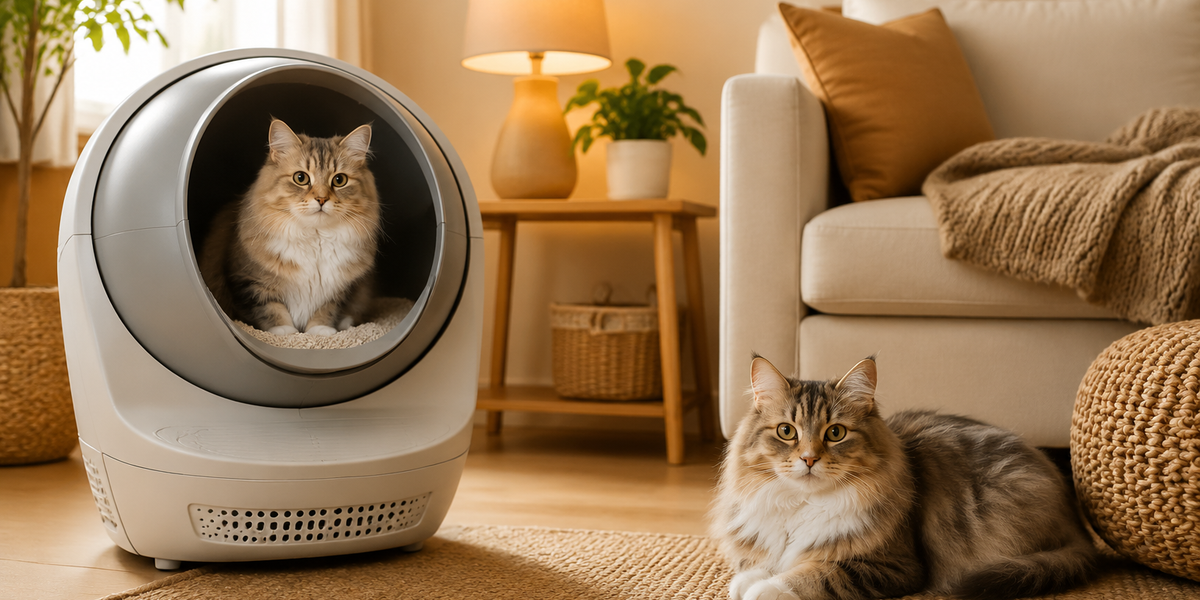
The Litter-Robot 4 represents the current gold standard in automatic litter boxes, and for good reason. Its rotating globe design sifts waste into a carbon-filtered drawer that genuinely holds 7+ days of waste for a single cat (3–4 days for a two-cat household). The WiFi app tracks every litter box visit with timestamps, sends waste drawer full alerts, and even monitors weight trends that can flag health issues before you notice symptoms.
Buyer reviews consistently praise its reliability—the rotating drum mechanism has fewer fail points than rake systems, and the 18-month warranty covers the most common issues (sensor glitches, motor failures). The trade-off is size and cost. At 29.5 inches tall and $649.99, it's a significant investment and space commitment. But based on verified buyer data, most multi-cat owners report the time savings and odor control justify the price within the first year.
The 2026 model added a quieter motor and improved litter level sensors that reduce tracking. It works with any clumping litter, which keeps ongoing costs reasonable ($15–20/month for quality litter versus $25–30 for proprietary options).
✅ Pros:
- WiFi app with detailed health tracking and usage logs
- Multi-cat capable—handles up to 4 cats reliably
- Large waste drawer genuinely lasts a week between empties
- 18-month warranty and proven 5+ year lifespan in buyer reviews
❌ Cons:
- $650 upfront cost is prohibitive for many households
- Large footprint requires dedicated floor space (24" W × 27" D × 29.5" H)
- Heavy unit (24 lbs) makes moving for cleaning awkward
PetSafe ScoopFree Ultra: Budget Entry Point
| Criteria | Score |
|----------|-------|
| Upfront Cost | 9/10 |
| Odor Control | 8/10 |
| Waste Capacity | 7/10 |
| Long-Term Value | 5/10 |
The ScoopFree Ultra uses disposable crystal litter trays and a rake mechanism to pull waste into a covered compartment. At $199.99, it's the most accessible entry into automatic litter boxes, and the crystal litter absorbs urine exceptionally well—many single-cat owners report going 2–3 weeks between tray changes with minimal odor.
The catch: those disposable trays cost $20–25 each, and you'll use 12–18 per year for one cat. Over three years, you'll spend $600–800 on trays alone, erasing the upfront savings compared to Litter-Robot (which uses standard $15 bags of clumping litter). The rake mechanism also has a higher failure rate in buyer reviews—jams from clumps sticking to the rake or crystal litter dust gumming up the motor.
That said, for single-cat households who prioritize low entry cost and don't mind ongoing tray expenses, the ScoopFree Ultra delivers reliable odor control and genuinely eliminates daily scooping.
✅ Pros:
- $199 entry price—lowest among automatic litter boxes
- Crystal litter controls ammonia odor for weeks
- Disposable trays mean you never touch waste
- Covered waste trap contains odor effectively
❌ Cons:
- Ongoing tray costs ($240+/year) make it expensive long-term
- Rake mechanism prone to jams with oversized clumps
- Not ideal for cats over 15 lbs—cramped interior space
Litter-Robot 3 Connect: Previous-Gen Value
| Criteria | Score |
|----------|-------|
| Reliability | 9/10 |
| Feature Set | 8/10 |
| Value vs LR4 | 8/10 |
| Noise Level | 6/10 |
The Litter-Robot 3 Connect is the previous-generation model that's still widely available in 2026 at $549.99—$100 less than the LR4. It uses the same rotating globe design, holds the same waste capacity, and includes WiFi app connectivity with health tracking. The primary differences: a louder motor (most noticeable at night) and older sensor technology that occasionally miscounts cycles.
For budget-conscious buyers who want Litter-Robot reliability without paying for the latest model, the LR3 Connect offers 90% of the LR4's functionality at 85% of the price. Buyer reviews from 2021–2025 confirm 5+ year lifespans with minimal maintenance, and the 18-month warranty matches the LR4.
If you're a light sleeper or your litter box sits near a bedroom, the quieter LR4 motor is worth the $100 premium. Otherwise, the LR3 Connect remains an excellent value in 2026.
✅ Pros:
- Proven 5-year reliability track record in buyer reviews
- WiFi app with usage tracking and waste alerts
- $100 cheaper than LR4 with nearly identical features
- Works with any clumping litter
❌ Cons:
- Louder motor than 2026 LR4 model (noticeable in quiet homes)
- Older sensors occasionally miscount cycles
- Being phased out—replacement parts may become scarce in 3–4 years
CatGenie A.I.: The Litter-Free Option
| Criteria | Score |
|----------|-------|
| Waste Handling | 10/10 |
| Installation Complexity | 4/10 |
| Ongoing Costs | 7/10 |
| Cat Acceptance | 6/10 |
The CatGenie A.I. takes a radically different approach: instead of sifting litter, it washes reusable granules and flushes solid waste down a drain. You never buy litter again, and you never touch waste—the system is genuinely hands-off once installed. It cycles after each use, washing the granules with a cat-safe cleaning solution, and can connect to a toilet, laundry drain, or sink.
The installation requirement is the dealbreaker for many households. You need a cold water hookup and drain access within 6 feet of the unit. Renters rarely have this flexibility, and even homeowners may need a plumber for proper installation ($100–200). The granules feel different from traditional litter—some cats adapt immediately, others refuse to use it. Buyer reviews are polarized: users who successfully transition their cats rave about never buying litter again, while frustrated owners report their cats boycotted the CatGenie entirely.
At $529.99 with $10–15/month in cleaning solution costs, the CatGenie A.I. makes financial sense for multi-cat households with plumbing access, assuming your cats accept the granules. It's higher risk than Litter-Robot but offers the closest thing to "install and forget" if it works for your cats.
✅ Pros:
- Flushes waste—truly zero litter handling or disposal
- Washable granules eliminate ongoing litter costs
- Cat-safe cleaning solution (SaniSolution) breaks down waste
- Ideal for allergies—no dust or litter tracking
❌ Cons:
- Requires water hookup and drain—not feasible for most renters
- Installation complexity intimidates many buyers
- Some cats refuse the granule texture—30-day return essential
The Real Cost-Benefit Math
Let's break down the true three-year cost of ownership for each model, including upfront price, litter, maintenance, and time saved:
Litter-Robot 4 (1 cat):
- Upfront: $649.99
- Litter: $20/month × 36 months = $720
- Waste bags: $5/month × 36 months = $180
- Total 3-year cost: $1,549.99
- Time saved: ~110 hours/year × 3 years = 330 hours
- Cost per hour saved: $4.70/hour
PetSafe ScoopFree Ultra (1 cat):
- Upfront: $199.99
- Disposable trays: $22/month × 36 months = $792
- Total 3-year cost: $991.99
- Time saved: ~110 hours/year × 3 years = 330 hours
- Cost per hour saved: $3.00/hour
CatGenie A.I. (1 cat):
- Upfront: $529.99
- Cleaning solution: $12/month × 36 months = $432
- Installation (one-time): $150 average
- Total 3-year cost: $1,111.99
- Time saved: ~120 hours/year × 3 years = 360 hours (includes litter box cleaning)
- Cost per hour saved: $3.09/hour
💡 Pro Tip: For multi-cat households, the time savings multiply dramatically. Two cats = 220 hours saved annually. At that scale, even the $650 Litter-Robot 4 pays for itself in under 18 months if you value your time at $10/hour.
When Self-Cleaning Boxes Make Sense
Based on the cost-benefit analysis and buyer review data, automatic litter boxes deliver the best ROI in these scenarios:
Multi-cat households (2+ cats): The time savings scale linearly with cat count. Scooping for three cats = 30+ minutes daily. A Litter-Robot 4 pays for itself in 12–15 months purely on time value.
Households valuing convenience over cost: If you earn $50+/hour professionally, spending $650 to reclaim 110+ hours annually is a no-brainer. The cost-per-hour-saved is far below your earning rate.
Seniors or people with mobility issues: Bending to scoop litter twice daily strains backs and knees. Automatic boxes reduce physical demands to emptying a drawer weekly.
Odor-sensitive living situations: Studio apartments or open floor plans benefit from superior odor control. Covered waste drawers and frequent cycling prevent ammonia buildup that traditional boxes can't match.
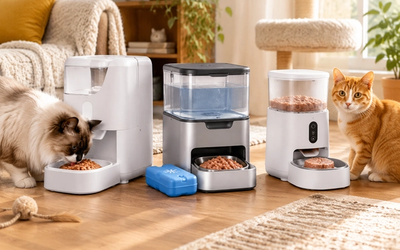
Frequent travelers: A Litter-Robot with a 7-day waste capacity means you can leave town for a long weekend without hiring a pet sitter (assuming you have an auto-feeder and water fountain).
When to Skip the Automatic Box
Automatic litter boxes are a poor investment in these situations:
Tight budgets: If $200–650 upfront is financially stressful, stick with a $15 traditional box. The time savings don't justify straining your budget.
Single cat + remote work: If you're home all day and don't mind scooping, the convenience gain is minimal. Save the money.
Elderly or skittish cats: Senior cats often refuse to adapt to motorized boxes. Same with nervous cats who startle easily. The 30-day return policy is critical here—don't assume your cat will accept it.
Renters without space: Most automatic boxes are large and heavy. If you're moving annually or living in a small apartment, the logistics may not work.
DIY preference: If you genuinely don't mind the scooping routine (some people find it meditative), there's no shame in saving the money. Automatic boxes solve a problem you may not actually have.
Frequently Asked Questions
Do self-cleaning litter boxes actually save time?
Yes, but the savings vary by model. High-capacity boxes like Litter-Robot 4 reduce litter box maintenance to 5–10 minutes weekly (emptying the waste drawer) versus 15–20 minutes daily with manual scooping. Over a year, that's 100+ hours saved for a single-cat household, 200+ hours for multi-cat homes. Budget models with smaller waste bins or frequent maintenance needs save less time—sometimes only 50–60 hours annually.
What happens if the power goes out?
Most automatic litter boxes have backup modes. Litter-Robot models can be manually cycled using a button on the unit. Rake-style boxes (like ScoopFree) simply stop raking—your cat can still use the box normally, and it will resume cleaning when power returns. CatGenie stores enough battery power for 2–3 flush cycles. None require constant power to function as a usable litter box.
Will my cat actually use an automatic litter box?
Most cats (80%+, based on aggregate buyer reviews) adapt within 3–7 days. Gradual transition helps—place the automatic box next to the old box, let your cat explore it unplugged for a few days, then activate it. Kittens and young cats adapt fastest. Elderly cats (12+ years) have the highest rejection rate. Always buy from retailers with 30–60 day return policies (Amazon, Chewy) so you can return it if your cat refuses.
Are automatic litter boxes quieter than I expect?
Newer models (2024–2026) are significantly quieter than early-generation automatic boxes. Litter-Robot 4 operates at ~45 decibels (comparable to a quiet refrigerator). Older models and rake-style boxes can hit 60+ decibels, noticeable in bedrooms at night. If noise is a concern, check buyer reviews for specific "quiet" or "loud motor" mentions—this varies widely by model and manufacturing year.
Do I still need to clean the box itself?
Yes, but far less frequently. With manual scooping, you deep-clean the entire box monthly to remove stuck-on waste and urine residue. Automatic boxes still need quarterly deep cleans (removing the globe/tray, washing with pet-safe cleaner), but the automated cycling prevents buildup. CatGenie is the exception—it self-washes the bowl with every cycle, requiring virtually zero manual cleaning beyond wiping the exterior.
Final Thoughts
The honest answer to "are self-cleaning litter boxes worth it?" is: it depends on your specific household economics and priorities. For multi-cat homes, busy professionals, or anyone who values reclaiming 100+ hours per year, the math clearly favors investing in a quality automatic box like the Litter-Robot 4—even at $650.
For single-cat households on tighter budgets, the ScoopFree Ultra offers a lower entry point, though ongoing tray costs erode the savings over 2–3 years. And for renters with plumbing access willing to gamble on cat acceptance, the CatGenie A.I. delivers the closest thing to "set and forget" maintenance.
What's not worth it: buying a cheap $150 automatic box from an unknown brand. Buyer reviews consistently show these fail within 6–12 months, leaving you with neither the convenience nor the money saved. Stick with proven models from established brands (Whisker, PetSafe, CatGenie) that have multi-year reliability data.
If you're still unsure, start with the PetSafe ScoopFree Ultra for under $200—it's low-risk enough to test whether automatic litter boxes fit your household before committing to a premium model.
Editor's Choice
After comparing specs, costs, and thousands of verified buyer reviews, these are our top recommendations for 2026:
🏆 Best Overall: Litter-Robot 4 ($649.99) — The most reliable automatic litter box with WiFi health tracking, multi-cat capability, and a proven 5+ year lifespan. Worth the premium for households with 2+ cats or anyone prioritizing long-term value.
💰 Best Budget: PetSafe ScoopFree Ultra ($199.99) — Lowest entry cost with disposable crystal trays that control odor for weeks. Ideal for single-cat households testing whether automatic boxes are worth the investment.
🔧 Most Innovative: CatGenie A.I. ($529.99) — Self-washing system that flushes waste and eliminates litter costs entirely. Best for multi-cat homes with plumbing access who want true hands-off maintenance.