Introduction
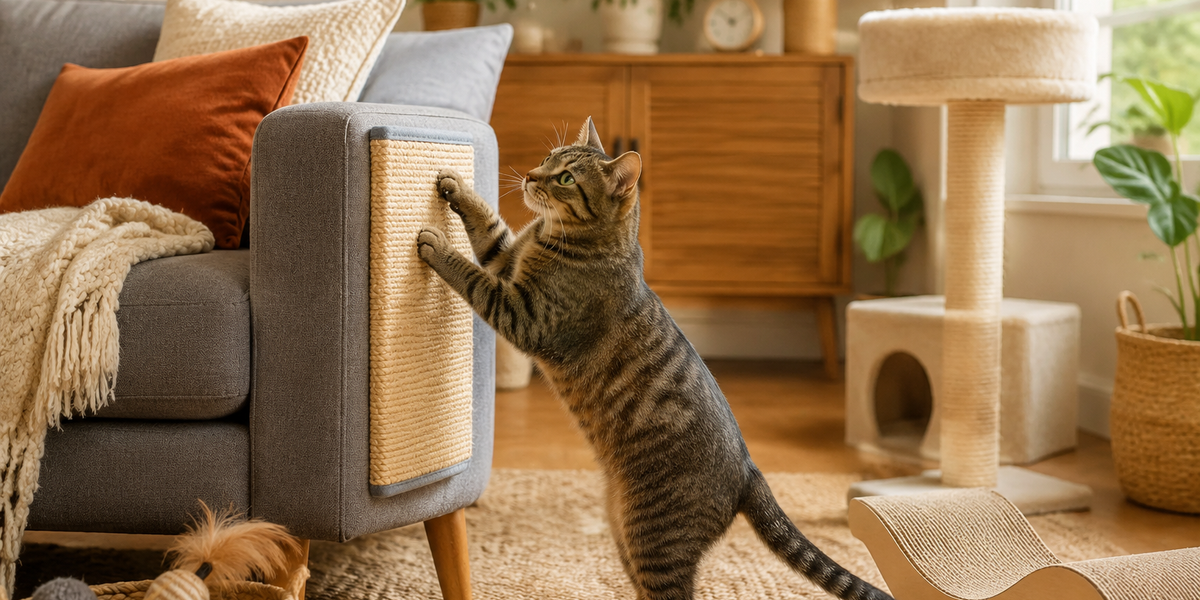
If you've ever walked into your living room to find your favorite sofa looking like it lost a fight with a cheese grater, you're not alone. Furniture scratching is one of the top complaints among cat owners — and one of the leading reasons cats are surrendered to shelters. The good news: you don't have to choose between your couch and your cat.
Declawing might seem like an easy fix, but it's actually an amputation of the last bone in each toe. It's been banned or restricted in many countries and cities, and for good reason — it causes lasting physical and psychological harm. In 2026, we have better tools and a deeper understanding of feline behavior than ever before.
In this guide, we'll walk you through exactly why cats scratch, how to redirect that behavior humanely, and which products and techniques actually work. By the end, you'll have a practical game plan to protect your furniture without harming your cat.
Why Cats Scratch (And Why You Can't Just Make Them Stop)
Scratchingisn't misbehavior — it's a biological need. Understanding the "why" is the first step to solving the problem.
The Four Real Reasons Cats Scratch
- Nail maintenance: Scratching strips away the outer sheath of the claw, keeping nails sharp and healthy.
- Stretching: A long scratch session gives cats a full-body stretch, especially after napping.
- Scent marking: Cats have scent glands in their paw pads. Scratching deposits their unique scent on surfaces.
- Stress relief and communication: Scratching is a visual and olfactory signal to other animals — and sometimes to you.
💡 Pro Tip: Cats often scratch most intensely right after waking up. Place a scratching post directly next to where your cat sleeps for instant redirection.
Because scratching meets multiple primal needs, punishment alone will never work. You need to give your cat a better option — not just take away the bad one.
How to Redirect Scratching to Appropriate Surfaces
Redirection is the cornerstone of any successful anti-scratching strategy. Here's a step-by-step approach we recommend.
Step 1: Identify What Your Cat Prefers
Pay attention to what your cat scratches and how:
- Vertical vs. horizontal? Some cats love tall scratching posts; others prefer flat cardboard pads.
- Texture? Sisal rope, carpet, cardboard, and wood all have fans. Most cats lean toward sisal.
- Location? Cats scratch in socially prominent spots — near sleeping areas, by doorways, and where the family gathers.
Step 2: Introduce the Right Scratching Posts
- Choose posts that are tall enough for a full stretch (at least 28–32 inches for most cats).
- The base must be stable — a wobbly post gets ignored fast.
- Place posts near the furniture they currently scratch, then gradually move them to better spots over several weeks.
Step 3: Use Positive Reinforcement
- Sprinkle a little catnip on new posts to attract your cat.
- Reward with treats and praise the moment your cat uses the post.
- Never physically push your cat's paws onto a post — it backfires and creates negative associations.
Step 4: Make the Furniture Less Appealing
- Apply double-sided tape or furniture-specific deterrent strips to targeted areas. Cats hate sticky textures.
- Use a citrus-scented spray along couch edges — most cats find citrus repellent.
- Cover corners with loosely fitted plastic corner guards while your cat learns the new rules.
Common Mistakes and Pro Tips
Even well-intentioned owners can accidentally make the problem worse. Here's what to avoid.
Mistakes to Avoid
- Buying a tiny, unstable post: If it wobbles, your cat won't use it. Quality matters.
- Placing posts in low-traffic areas: Cats scratch where they'll be noticed. A post hidden in the laundry room will be ignored.
- Giving up too soon: Behavior change takes 2–4 weeks of consistent reinforcement. Stick with it.
- Using punishment: Spraying water or yelling creates anxiety, which can increase stress-scratching.
Advanced Tips
- Trim nails every 2–3 weeks. Shorter nails do less damage and reduce the urge for intensive scratching sessions. Use proper cat nail clippers and reward generously afterward.
- Try Soft Paws nail caps — vinyl caps glued over claws that are completely humane and last 4–6 weeks. They're especially useful during the training transition period.
- Feliway diffusers release synthetic feline pheromones that reduce stress-related scratching in multi-cat households or after moves.
💡 Pro Tip: If your cat keeps returning to one specific spot on the sofa, try placing their scratching post in front of that exact spot. Block access to the fabric while the post becomes the preferred target.
Frequently Asked Questions
How long does it take to redirect a cat's scratching behavior?
Most cats show noticeable improvement within 2–4 weeks when you apply redirection and deterrents consistently. Some cats adapt faster; a deeply ingrained habit in an older cat may take 6–8 weeks.
Do cat deterrent sprays actually work?
They work as part of a broader strategy — not on their own. Sprays make furniture less appealing, but if you don't simultaneously offer a better alternative, your cat will just find a different piece of furniture to scratch.
What's the best type of scratching post for most cats?
In our experience, a tall (32"+), sisal-wrapped, stable vertical post satisfies the majority of cats. A supplemental flat cardboard scratcher is a great second option for cats that also like horizontal scratching.
Is declawing ever acceptable?
The overwhelming consensus among veterinary organizations — including the AVMA — is that declawing should not be performed for the owner's convenience. It causes chronic pain and behavioral changes. The humane alternatives covered in this guide are highly effective.
My cat only scratches when I'm away. What can I do?
This is often anxiety-related. Try a Feliway plug-in diffuser, ensure your cat has enough enrichment (toys, window perches, puzzle feeders), and make sure scratching posts are available in every room where scratching occurs.
Final Thoughts
Living with a cat who scratches furniture isn't a life sentence — it's a training opportunity. When we understand that scratching is natural and necessary, we stop fighting our cats and start working with their instincts instead.
With the right combination of appealing scratching posts, consistent positive reinforcement, and a few smart deterrents, most cats can be redirected in just a few weeks. Your sofa will thank you, and more importantly, your cat will be healthier and happier for it.
Start with one good post placed right next to the furniture your cat loves most. That single step makes a bigger difference than anything else. You've got this — and so does your cat.