We may earn a commission when you purchase through links on our site, at no extra cost to you.
⭐ Our Top Pick
🏆 Best Overall: SmartCat Ultimate Scratching Post — The 32-inch height and rock-solid sisal construction satisfy even the most aggressive scratchers while saving your sofa.
💰 Best Value: Frisco 21-Inch Sisal Cat Scratching Post — Under $20 and built with quality sisal, this compact post is perfect for kittens and smaller cats.
Introduction
You love your cat, but the shredded armrests and tattered couch corners? Not so much. Furniture scratching is one of the most frustrating behaviors cat owners face, and it's the reason thousands of cats end up rehomed every year. The good news: scratching isn't spite or bad behavior—it's hardwired instinct. Cats scratch to shed claw sheaths, mark territory, stretch muscles, and relieve stress.
We researched the latest veterinary guidance, analyzed buyer reviews on hundreds of scratching solutions, and compiled 10 proven methods to redirect your cat's scratching away from your furniture. Some are instant fixes; others require patience and consistency. All of them work when applied correctly.
Whether you're dealing with a kitten learning the ropes or an adult cat with years of bad habits, this guide will help you protect your furniture without resorting to declawing or punishment—both of which harm your cat and damage your bond.
What to Look For
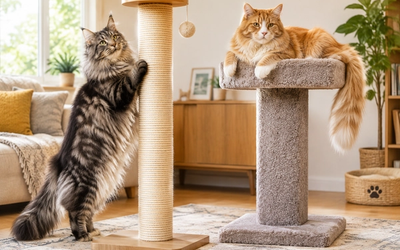
Height and Stability — Cats instinctively scratch vertical surfaces to stretch their spine and shoulders. A scratching post should be at least 30 inches tall (32+ is ideal) and have a heavy, wobble-free base. Flimsy or short posts get ignored because they don't satisfy the stretching urge.
Material Texture — Sisal rope or sisal fabric is the gold standard; it mimics tree bark and holds up to years of scratching. Carpet-covered posts often resemble your furniture too closely and send mixed signals. Cardboard is excellent for horizontal scratchers and budget-friendly, but requires replacement every 6–12 months.
Strategic Placement — Location matters more than the post itself. Place scratchers near where your cat already scratches, next to sleeping spots (cats love a post-nap stretch-and-scratch), and in high-traffic social areas. Hiding a scratcher in the basement guarantees it'll be ignored.
Deterrent Compatibility — The best strategies combine positive alternatives (appealing scratchers) with gentle deterrents (sticky tape, scent sprays, or furniture covers) on the items you want to protect. Look for non-toxic, residue-free options that won't damage upholstery.
Multi-Cat Households — If you have multiple cats, you need multiple scratching surfaces in different locations and orientations (vertical posts, horizontal pads, angled lounges). Cats are territorial, and sharing one scratcher creates stress and competition.
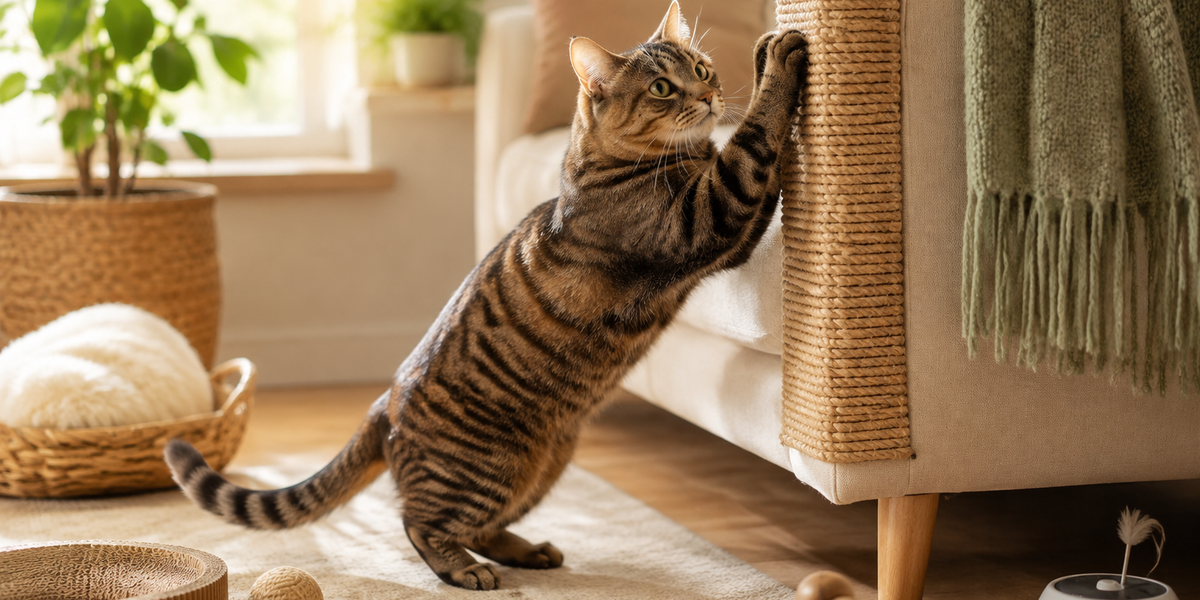
Your Cat's Preference — Observe whether your cat scratches vertically (couch arms, door frames) or horizontally (rugs, cushions). Some cats do both. Matching the scratcher style to your cat's natural preference is the single biggest factor in success.
Solution #1: Invest in a Tall, Sturdy Scratching Post
SmartCat Ultimate Scratching Post
| Criteria | Score |
|----------|-------|
| Height & Stretch Factor | 10/10 |
| Durability | 9/10 |
| Stability | 10/10 |
| Value | 8/10 |
This is the post veterinarians and cat behaviorists recommend most often, and for good reason. At 32 inches tall, it allows cats to fully extend their bodies—the way they would on a tree trunk in the wild. The entire post is wrapped in tightly-wound sisal fiber (not rope), which is more durable and has a satisfying texture cats instinctively seek out. The 16x16-inch base is heavy and wide enough that even a 15-pound cat launching at full speed won't tip it over.
Buyer reviews consistently mention that cats who ignored shorter posts immediately gravitated to the SmartCat. The sisal covering lasts years, even with daily use, and can be replaced if needed. It's not the cheapest option, but the durability and effectiveness make it a one-time investment that saves your furniture—and your sanity.
✅ Pros:
- Tall enough for full-body stretching, satisfying natural instinct
- Rock-solid construction eliminates wobble
- Sisal fiber lasts significantly longer than carpet or rope
❌ Cons:
- Footprint requires dedicated floor space
- Higher upfront cost than budget alternatives
💡 Pro Tip: Sprinkle a pinch of catnip on the base and gently guide your cat's paws in a scratching motion the first few times. Reward with treats immediately after they use it.
Solution #2: Offer Horizontal Scratching Surfaces
PetFusion Ultimate Cat Scratcher Lounge
| Criteria | Score |
|----------|-------|
| Appeal to Horizontal Scratchers | 10/10 |
| Durability | 7/10 |
| Dual Functionality | 9/10 |
| Value | 8/10 |
Not every cat is a vertical scratcher. If your cat targets rugs, flat cushions, or the carpet in front of the door, they likely prefer horizontal surfaces. The PetFusion Scratcher Lounge is a curved cardboard bed that serves double duty—cats scratch the textured cardboard surface and then curl up inside for naps. The ergonomic curve supports their body weight comfortably, making it a favorite lounging spot that naturally encourages scratching.
The corrugated cardboard is dense and lasts longer than flat scratch pads, though you'll eventually need to replace it (most owners report 6–12 months of heavy use). It comes with a bag of organic catnip to boost initial interest. The design is clean enough to sit in your living room without looking like an eyesore, and the recyclable cardboard makes disposal guilt-free.
✅ Pros:
- Perfect for cats who scratch carpets and flat surfaces
- Doubles as a comfortable napping spot
- Curved shape provides ergonomic support
❌ Cons:
- Cardboard shreds create cleanup mess
- Needs replacement every 6–12 months
Solution #3: Use Deterrent Sprays on Furniture
Nature's Miracle No-Scratch Deterrent Spray
| Criteria | Score |
|----------|-------|
| Effectiveness | 7/10 |
| Safety | 10/10 |
| Ease of Use | 8/10 |
| Value | 9/10 |
Deterrent sprays work by making your furniture smell or feel unappealing to cats. Nature's Miracle uses a blend of herbal essential oils (cinnamon, lemongrass, rosemary) that are safe for cats but unpleasant enough to discourage scratching. The formula is non-staining and won't damage upholstery, wood, or leather.
The catch: deterrent sprays aren't magic. They work for about 60–70% of cats, and only when paired with positive alternatives. You must reapply daily for the first two weeks to build the association, then taper to every few days. Some cats simply don't care about the scent. But for under $10, it's worth trying as part of a multi-pronged approach—spray the couch, then immediately show your cat the nearby scratching post.
✅ Pros:
- Safe herbal formula, no harsh chemicals
- Won't stain or damage furniture
- Inexpensive and easy to apply
❌ Cons:
- Only effective for 60–70% of cats
- Requires consistent daily reapplication initially
Solution #4: Apply Sticky Tape to Problem Areas
Sticky Paws Furniture Strips
| Criteria | Score |
|----------|-------|
| Immediate Deterrence | 9/10 |
| Ease of Application | 8/10 |
| Furniture Safety | 9/10 |
| Value | 7/10 |
Cats hate sticky textures on their paws. Sticky Paws are transparent, double-sided tape strips designed specifically for furniture. You apply them to the areas your cat targets—couch arms, chair legs, door frames—and the unpleasant sticky sensation trains your cat to avoid those spots. Unlike duct tape or packaging tape, Sticky Paws removes cleanly without leaving adhesive residue on fabric or wood.
This is one of the fastest-acting deterrents because the feedback is immediate and non-negotiable: cats try to scratch, feel the sticky tape, recoil, and look for another outlet. Most cats learn within a week. The downside: the strips collect dust and pet hair, so they look messy if left up long-term, and you'll need to replace them every 4–6 weeks.
✅ Pros:
- Immediate negative feedback teaches avoidance fast
- Transparent and removable without residue
- Works on all furniture surfaces
❌ Cons:
- Collects dust and looks unkempt over time
- Requires replacement every month or so
💡 Pro Tip: Use Sticky Paws for 4–6 weeks while simultaneously training your cat to use a proper scratcher. Once the habit is broken, you can remove the tape.
Solution #5: Add a Budget-Friendly Post for Small Spaces
Frisco 21-Inch Sisal Cat Scratching Post
| Criteria | Score |
|----------|-------|
| Height & Stretch Factor | 6/10 |
| Durability | 8/10 |
| Stability | 7/10 |
| Value | 10/10 |
If you're on a tight budget, have a kitten, or live in a small apartment where a 32-inch post feels overwhelming, the Frisco sisal post is a solid entry-level option. At 21 inches, it's too short for large cats to fully stretch, but it's perfect for kittens and cats under 10 pounds. The post is wrapped in natural sisal rope, and the base is carpeted for stability (though it can wobble slightly if a cat attacks it aggressively).
For under $20, this is the best value scratcher on the market. Buyer reviews highlight that it's well-constructed for the price—no fraying rope or loose base plates. It won't replace a premium tall post for adult cats, but it's a great starter or secondary scratcher to place near a favorite napping spot.
✅ Pros:
- Unbeatable price under $20
- Quality sisal rope covering
- Compact size fits small apartments
❌ Cons:
- Too short for adult cats to stretch fully
- Base wobbles under heavy scratching
Solution #6: Trim Your Cat's Claws Regularly
Regular nail trims reduce the damage your cat can inflict and dull the urge to scratch as frequently. Aim to trim every 2–3 weeks, cutting just the sharp tip of each claw. Use cat-specific clippers (guillotine or scissor style), never human nail clippers, which can split the claw.
If your cat hates nail trims, wrap them in a towel (the "purrito" method), trim one or two claws, then release them with a treat. Do a few claws per session until they tolerate it. Alternatively, many vet clinics and groomers offer nail trims for $10–15.
💡 Pro Tip: Press gently on your cat's paw pad to extend the claw. You'll see a pink "quick" inside—avoid cutting into it. Trim only the clear, sharp tip.
Solution #7: Use Nail Caps as a Temporary Solution
Soft vinyl nail caps (like Soft Claws) are small covers that glue onto your cat's claws, blunting them and preventing furniture damage. They last 4–6 weeks and fall off naturally as the claw grows. Most cats tolerate them after a brief adjustment period.
Nail caps are controversial—they don't address the underlying scratching need, and some cats find them uncomfortable. Use them as a temporary measure while you train your cat to use appropriate scratchers, not as a permanent fix. They're far more humane than declawing, which is painful, disabling, and banned in many regions.
Solution #8: Place Scratchers Strategically Throughout Your Home
Even the best scratching post won't work if it's in the wrong location. Cats scratch most often after waking up, so place a scratcher next to their favorite sleeping spot. They also scratch to mark territory in high-traffic areas—near doorways, windows, and wherever you spend time.
If your cat already has a favorite scratching spot (like the corner of the couch), place a scratcher directly in front of it or next to it. Gradually move the scratcher a few inches per day toward a more desirable location once your cat is using it consistently.
Solution #9: Redirect and Reward Positive Behavior
Whenever you catch your cat scratching furniture, don't yell or punish—it creates anxiety and damages trust. Instead, calmly interrupt with a gentle "no," then immediately carry your cat to the scratching post. Gently guide their paws in a scratching motion, then reward with praise, treats, or play.
Consistency is everything. Every family member must redirect the same way, every time. Within 2–4 weeks, most cats learn that the post gets rewards and the couch gets redirection. Positive reinforcement works; punishment does not.
💡 Pro Tip: Keep treats near the scratching post so you can reward your cat immediately when they use it on their own.
Solution #10: Increase Enrichment and Reduce Stress
Excessive scratching—especially destructive scratching that intensifies suddenly—can signal stress, boredom, or anxiety. Cats scratch more when they're under-stimulated or feeling insecure. Boost enrichment with daily interactive play (15–20 minutes with a wand toy), puzzle feeders, window perches, and vertical climbing spaces like cat trees.
If you've recently moved, brought home a new pet, or changed your routine, your cat may be scratching to self-soothe. Consider a Feliway diffuser (synthetic calming pheromones) to reduce stress while you work on behavior modification.
Frequently Asked Questions
Why is my cat suddenly scratching furniture when they never did before?
Sudden scratching behavior changes often signal stress, boredom, or a medical issue. Major life changes (moving, new pets, schedule shifts) trigger anxiety scratching. Alternatively, overgrown claws, arthritis, or skin irritation can cause excessive scratching. Rule out medical causes with a vet visit, then address environmental stressors and ensure your cat has appealing scratching outlets.
Will my cat stop scratching furniture if I declaw them?
Declawing is not a solution—it's amputation of the last bone in each toe, equivalent to cutting off a human fingertip at the last knuckle. It causes chronic pain, behavioral issues (litter box avoidance, aggression), and long-term joint problems. Declawing is banned in many countries and increasingly in U.S. cities. Focus on humane alternatives: proper scratchers, deterrents, nail trims, and training.
How long does it take to train a cat to stop scratching furniture?
With consistent redirection, most cats learn to prefer appropriate scratchers within 2–4 weeks. Kittens and young cats adapt faster. Older cats with years of ingrained habits may take 6–8 weeks. Success requires patience, multiple scratching options, strategic placement, and positive reinforcement every single time your cat uses the correct scratcher.
Can I train an older cat to stop scratching furniture?
Yes. While older cats take longer to change habits, they absolutely can learn. The key is making the new behavior more rewarding than the old one: provide tall, sturdy scratchers in the exact spots they currently target, use deterrents on furniture, and reward scratching-post use with high-value treats. Consistency and patience win.
Do scratching deterrent sprays actually work?
They work for 60–70% of cats, but only as part of a multi-step approach. Sprays alone won't solve the problem—you must also provide appealing alternatives and reward positive behavior. Some cats ignore scent deterrents entirely, which is why physical deterrents like Sticky Paws often work better. Experiment to find what your cat responds to.
Final Thoughts
Stopping furniture scratching isn't about fighting your cat's instincts—it's about redirecting them. Scratching is natural, necessary, and healthy; your job is to make the right outlets more appealing than your couch. Start with a tall, sturdy scratching post in a high-traffic area, add deterrents to furniture, and reward every correct scratch with treats and praise.
The cats who succeed are the ones whose owners stay consistent. It takes time, but the payoff—intact furniture and a happy, confident cat—is worth it. If you're struggling, consult a certified cat behaviorist or your vet for personalized guidance.
Editor's Choice
After comparing dozens of scratching solutions, we recommend starting with the SmartCat Ultimate Scratching Post for its height, durability, and proven effectiveness. Pair it with Sticky Paws Furniture Strips on your most-targeted furniture for fast results. If your cat prefers horizontal scratching, add the PetFusion Ultimate Cat Scratcher Lounge near their favorite napping spot. These three products, combined with consistent positive reinforcement, will transform your cat's scratching behavior and save your furniture.