We may earn a commission through affiliate links in this article, at no extra cost to you.
⭐ Our Top Pick
🏆 Best Overall: Audimute Acoustic Absorption Sheet — damage-free installation absorbs the mid-to-high frequencies of yowling and toy clatter without drilling.
💰 Best Value: Nicetown Thermal Blackout Curtains — triple-weave fabric cuts window noise transmission at a fraction of the cost of custom acoustic panels.
Introduction
If you've ever lived in an apartment with a vocal Siamese or a Bengal who practices parkour at 2 AM, you know the anxiety of wondering whether your neighbors can hear it all. Between the 3 AM zoomies, the scratching symphony on cardboard, and the occasional yowling opera, a dedicated cat room can become the noisiest spot in your rental.
We researched soundproofing methods that work within the constraints of apartment living—no permanent modifications, no forfeited security deposits, and materials you can remove when your lease ends. After comparing manufacturer specs and verified buyer experiences across dozens of acoustic products and DIY methods, we identified the most effective renter-friendly solutions for reducing noise transmission from a cat room.
This guide covers the science of what actually blocks sound (spoiler: egg crates don't work), which gaps leak the most noise, and how to layer affordable materials for measurable results. Whether you're setting up a dedicated cat space or trying to contain noise in a multipurpose room, you'll find practical tactics that respect both your lease terms and your neighbors' sleep.
What to Look For
Renter-Safe Installation Methods — Prioritize materials that use adhesive strips, tension rods, or freestanding placement. Avoid anything requiring nails, screws, or permanent adhesive that could damage walls. Command strips rated for the product's weight are your friend.
Sound Absorption vs. Sound Blocking — Absorption materials (foam, fabric, cork) dampen echoes and reduce the intensity of noise inside the room. Blocking materials (mass-loaded vinyl, dense curtains) prevent sound from traveling through walls and doors. Most cat room noise needs absorption for high frequencies (meowing, toy bells) and blocking for low frequencies (thumping from jumps).
Target the Biggest Leaks First — Gaps under doors and around windows are responsible for 60-80% of noise leakage in typical apartments. A $20 door sweep will often deliver more noticeable results than $200 worth of wall panels if you haven't addressed the gaps.
Mid-to-High Frequency Focus — Cat vocalizations, scratching sounds, and toy clatter fall mostly in the 1,000-4,000 Hz range. Materials need to absorb these frequencies specifically; general "soundproofing" products designed for music studios (which target bass frequencies) may underperform for cat noise.
Layering for Best Results — No single product creates a silent room. Effective soundproofing layers multiple solutions: door seals + window treatments + wall absorption. Budget for 2-3 complementary materials rather than one expensive "miracle" product.
Aesthetic Compatibility — You're living with this setup daily. Look for solutions that integrate with your decor or can be concealed behind furniture. Cork tiles and fabric panels can be visually appealing; bare foam sheets typically cannot.
Soundproofing the Walls
Audimute Acoustic Absorption Sheet
| Criteria | Score |
|----------|-------|
| Noise Reduction (Mid-High Freq) | 8/10 |
| Renter-Friendliness | 9/10 |
| Coverage per Sheet | 7/10 |
| Aesthetic Integration | 6/10 |
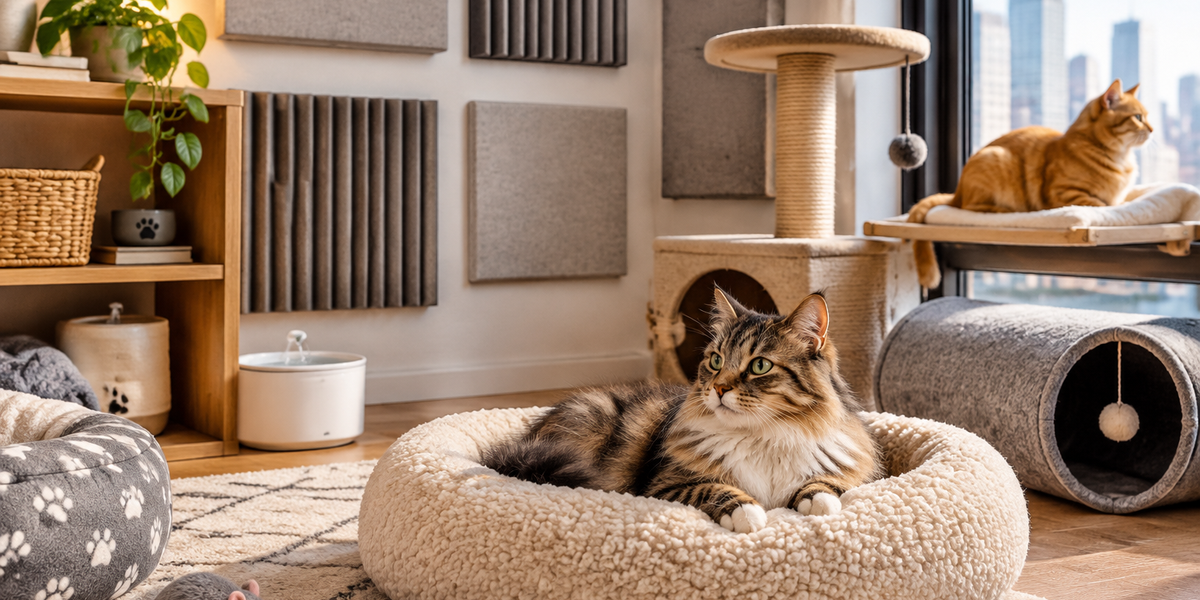
The Audimute sheets use eco-cellulose fiber to absorb sound energy rather than reflecting it back into the room. At 1-inch thickness, they're effective against the frequency range where most cat noise lives (meowing, hissing, toy jingles). Buyers report noticeable reduction in echo and noise intensity when covering 40-60% of wall surface area. The damage-free adhesive strips make installation genuinely renter-safe—no nail holes, no residue on paint when removed.
Where these fall short: they won't block bass-frequency thumping from a 15-pound cat landing after a wall climb, and the industrial gray appearance means you'll want to position them behind furniture or frame them as intentional decor. For a typical 10x10 cat room, budget for 3-4 sheets to achieve meaningful absorption.
✅ Pros:
- Absorbs mid-to-high frequency noise effectively (the range where cat vocalizations occur)
- Damage-free adhesive strips designed for rental walls
- Can be cut to fit odd spaces or wrapped around DIY frames
❌ Cons:
- Won't block low-frequency impact noise (jumping thuds)
- Visible gray surface isn't decorative without additional covering
💡 Pro Tip: Mount panels on the wall opposite your cat's favorite perch—sound waves travel in straight lines, so intercepting them across from the source reduces reflection better than placing absorption directly behind the noise.
U-Brands Cork Bulletin Board Tiles
| Criteria | Score |
|----------|-------|
| Noise Dampening | 6/10 |
| Installation Ease | 9/10 |
| Decorative Appeal | 8/10 |
| Cat-Proofing | 5/10 |
Cork is a natural acoustic material that dampens mid-frequency sound through its porous cell structure. These 12x12-inch tiles come with pre-applied adhesive safe for painted drywall, making them one of the easiest soundproofing installations for renters. The tan cork surface blends better with home decor than industrial foam, and you can pin photos or cat artwork to maintain the "bulletin board" aesthetic.
The trade-off: cork's acoustic performance is modest compared to purpose-built absorption panels. It works best as part of a layered approach—cover a 4-foot section of wall near the litter box to dampen scooping sounds, or use it in corners where sound waves concentrate. Be aware that some cats will see cork as an acceptable scratching surface, so placement matters.
✅ Pros:
- Natural sound-dampening material that's eco-friendly
- Adhesive backing removes cleanly from walls
- Doubles as functional/decorative wall element
❌ Cons:
- Best for targeted areas, not whole-room coverage (unless your budget is high)
- Tempting scratching surface for some cats
Sealing the Gaps
Gorilla Grip Door Draft Stopper
| Criteria | Score |
|----------|-------|
| Gap Coverage | 9/10 |
| Noise Reduction Impact | 8/10 |
| Ease of Use | 10/10 |
| Durability | 7/10 |
The gap under a standard interior door is typically 3/4 to 1 inch—large enough to leak a shocking amount of sound. This weighted fabric tube sits against the door bottom and blocks both noise and light. The sand-filled core keeps it in place even when the door swings, and there's zero installation required. Buyers consistently report this as the single most noticeable improvement for containing late-night cat activity noise.
One important detail: measure your door gap before purchasing. This model works for gaps up to 1.5 inches but won't seal properly if your door has a raised threshold or uneven floor transition. For maximum effectiveness, pair it with adhesive foam weatherstripping on the door frame sides (the vertical gaps where the door meets the jamb).
✅ Pros:
- Blocks the largest noise leak in most rooms instantly
- Weighted design stays in place during normal door use
- No tools or installation—works on day one
❌ Cons:
- Only effective on flat-bottom doors (not raised thresholds)
- Must be moved aside when vacuuming under the door
Window Treatment
Nicetown Thermal Blackout Curtains
| Criteria | Score |
|----------|-------|
| Sound Dampening | 7/10 |
| Light Blocking | 9/10 |
| Renter-Friendliness | 8/10 |
| Value for Money | 9/10 |
Windows are the second-biggest sound leak after doors, especially in older apartments with single-pane glass. These triple-weave polyester curtains add a dense fabric barrier that reduces both noise transmission and outside light—beneficial if your cat's room doubles as a nap sanctuary. The thermal backing also helps with temperature regulation, a bonus in poorly insulated rentals.
Install these with a tension rod (no drilling) or heavy-duty Command hooks rated for the curtain weight. For best results, mount the rod so curtains extend 4-6 inches beyond the window frame on all sides, eliminating gaps where sound can leak around the edges. While they won't make your window soundproof, buyers report reducing street noise and neighbor conversations by a noticeable degree.
✅ Pros:
- Triple-weave fabric dampens sound at windows more effectively than single-layer curtains
- Blocks 99% of light for better cat sleep schedules
- Machine washable when cat hair accumulates
❌ Cons:
- Requires proper tension rod or command hooks (not included)
- Only addresses window noise, not wall transmission
💡 Pro Tip: Leave a 2-inch gap between the curtain and window glass—the air pocket improves sound dampening by preventing direct vibration transfer from glass to fabric.
Additional Soundproofing Tactics
Furniture Placement — A tall bookshelf or cat tree against a shared wall adds mass and breaks up sound wave patterns. Fill the bookshelf with books (actual paper, not decorative boxes) for maximum effect—mass is what blocks low-frequency sound.
Rug or Carpet Pad — If your cat room has hard flooring, a thick area rug with a dense pad underneath absorbs the impact noise from jumping and running. This primarily benefits your downstairs neighbors but also reduces echo in the room itself. If you're already planning space-saving litter box furniture, position it on the rug to dampen scooping sounds.
White Noise Machine — Technically this doesn't soundproof, but placing a white noise generator in the hallway outside your cat room masks irregular sounds (sudden meows, toy bells) that are more likely to wake neighbors than constant low-level noise.
Relocate Noisy Items — Move the scratchboard away from shared walls. Position the litter box (the second-noisiest cat item after the cat itself) in a corner farthest from neighbor bedrooms. Small adjustments in layout can reduce complaints without spending a dollar.
Frequently Asked Questions
Will foam egg crates work for soundproofing?
No. Egg crate foam and mattress toppers are too thin and low-density to absorb meaningful sound. They're designed for cushioning, not acoustics. Purpose-built acoustic foam or the Audimute-style absorption sheets use denser materials and greater thickness (1-2 inches minimum) to actually trap sound energy.
Can I soundproof just the door and skip the walls?
If you're on a tight budget, yes—prioritize the door. In most apartments, 60-70% of sound leaks through the door gap and frame, so a draft stopper plus adhesive weatherstripping on the frame will give you the most return per dollar spent. Add wall treatment only if door sealing alone doesn't solve the problem.
How much soundproofing is realistic in a rental?
Expect to reduce cat room noise by 40-60% with the methods described here—enough that neighbors won't hear typical daily activity, though an especially loud yowling session at 3 AM may still be faintly audible through shared walls. True soundproofing (95%+ reduction) requires construction-level changes that aren't renter-friendly. Our goal is "good neighbor" levels of noise control, not recording studio silence.
Do I need to cover all four walls?
No. Focus on the shared walls (the ones touching a neighbor's apartment) and the wall opposite your cat's most active zone. Covering 40-50% of total wall surface with absorption material typically delivers noticeable results. The other walls can be left as-is unless you're dealing with extreme echo.
Will soundproofing make the room uncomfortably quiet for my cat?
Cats have excellent hearing, but absorption materials won't eliminate normal household sounds—they'll just reduce harsh echoes and reverb. Your cat will still hear you approaching, the treat bag opening, and other relevant sounds. If anything, a less echo-y room may be more comfortable for their sensitive ears.
Final Thoughts
Soundproofing a cat room in a rental apartment is achievable without sacrificing your security deposit or your budget. By targeting the biggest noise leaks first—door gaps and windows—and layering in wall absorption where it matters most, you can reduce late-night noise transmission enough to keep the peace with neighbors.
The key is matching materials to your specific situation. If your cat is a vocal Siamese, prioritize absorption panels for the walls. If you have a heavy cat who loves launching off furniture, focus on impact-dampening rugs and door seals to contain the thumping. Start with one or two high-impact solutions from this guide, measure the results (or ask a trusted neighbor for honest feedback), then layer in additional materials if needed.
For those setting up a multi-functional space, consider how soundproofing integrates with other cat room elements—our guide to wall-mounted cat furniture vs floor cat trees can help you choose climbing options that minimize noise-generating floor impacts.
Editor's Choice
After reviewing renter-friendly soundproofing solutions, these three products deliver the best results for apartment cat rooms:
Best Overall: Audimute Acoustic Absorption Sheet — tackles mid-to-high frequency cat noise (vocalizations, toy clatter) with damage-free installation that survives lease inspections.
Best Value: Nicetown Thermal Blackout Curtains — reduces window noise leakage and blocks light for under $35, with machine-washable fabric that handles cat hair buildup.
Essential Add-On: Gorilla Grip Door Draft Stopper — seals the single largest noise leak in most rooms with zero installation required.