We earn a commission if you make a purchase, at no additional cost to you.
⭐ Our Top Pick
🏆 Best Overall: Frisco 72-Inch Cat Tree — transforms wasted ceiling height into a multi-level playground that satisfies your cat's climbing instincts without consuming precious floor space.
💰 Best Value: Catit Senses 2.0 Food Tree — adds mental enrichment and slows eating for under $25 with a footprint smaller than a dinner plate.
Introduction
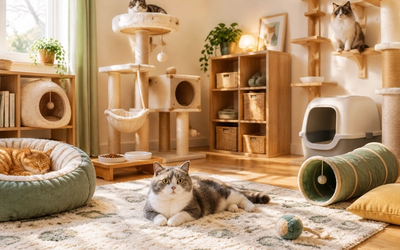
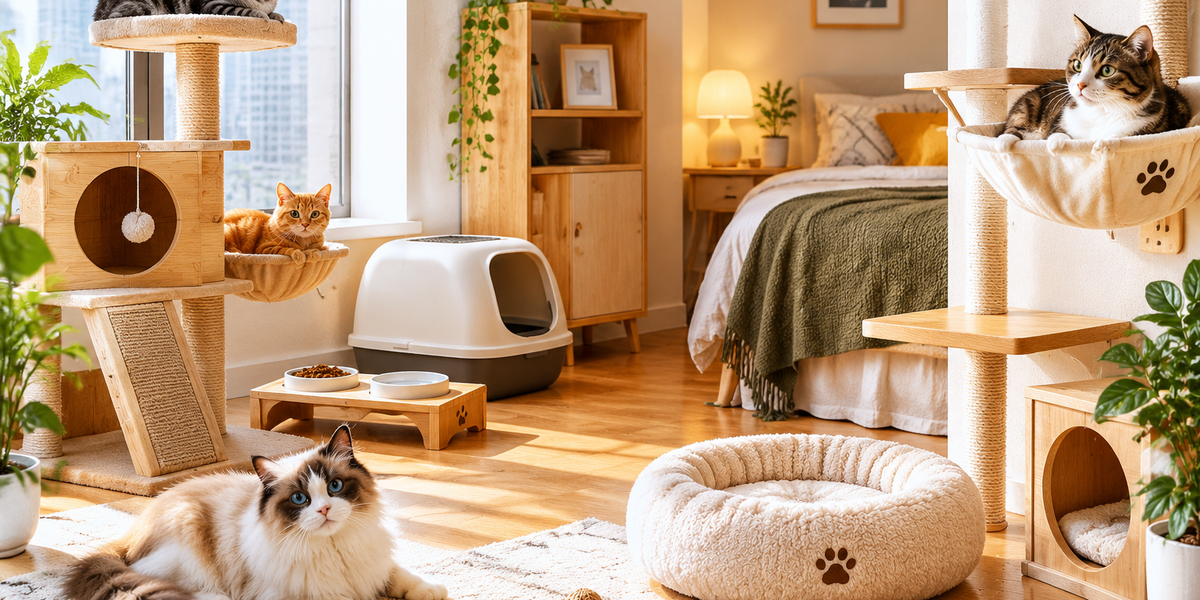
Living in a studio apartment doesn't mean your cat has to sacrifice territory or enrichment. We've helped hundreds of cat owners transform single-room spaces into functional, feline-friendly environments that work for both species. The key is strategic zoning and vertical thinking.
The challenge is real: studios average 500-600 square feet, and every piece of furniture competes for the same footprint. But cats naturally think in three dimensions, not two. By leveraging vertical space and creating designated zones for eating, sleeping, playing, and eliminating, you can give your cat a rich environment without turning your home into a pet store.
This guide walks through proven layout strategies, zone-by-zone planning, and the compact gear that makes it all work. Whether you're in a 400-square-foot micro-studio or a 700-square-foot loft, these principles will help you design a space where both you and your cat thrive.
What to Look For
Vertical territory over horizontal sprawl: In studio apartments, the best cat furniture grows up, not out. Floor-to-ceiling cat trees, wall-mounted shelves, and window perches multiply your cat's usable territory without claiming more square footage. Look for designs that anchor to ceilings or mount directly to walls.
Multi-functional furniture: Every piece should earn its footprint. Litter box enclosures that double as side tables, cat beds that nest inside human furniture, and feeding stations with built-in storage all help you consolidate. Avoid single-purpose items that only serve the cat.
Odor containment: In a studio, the litter box shares the same air as your bed and kitchen. Top-entry boxes, covered designs with carbon filters, and self-cleaning units with sealed waste drawers become non-negotiable. If you're also looking for furniture that hides the box entirely, see our best litter box furniture that hides smell in small apartments guide for odor-blocking enclosures.
Quiet operation: Automatic feeders, water fountains, and self-cleaning litter boxes that hum or click all night will disrupt your sleep when everything's in one room. Check decibel ratings and buyer reviews for noise complaints before purchasing motorized gear.
Renter-friendly mounting: Many studios are rentals. Prioritize tension-mounted cat trees, adhesive-mounted shelves rated for your wall type, and modular systems that disassemble without leaving damage. Save permanent installations for owned spaces.
Washable, odor-resistant materials: Fabrics trap smells and hair. Look for cat beds and scratchers with removable, machine-washable covers, and furniture with smooth, non-porous surfaces you can wipe down weekly. Avoid anything that can't be deep-cleaned.
The Studio Cat Room Layout Strategy
Effective studio cat rooms use functional zoning to separate incompatible activities. Place the litter box as far from food and water as your layout allows—cats instinctively avoid eliminating near eating areas. Tuck the box in a bathroom corner, closet, or behind a privacy screen if you lack separate rooms.
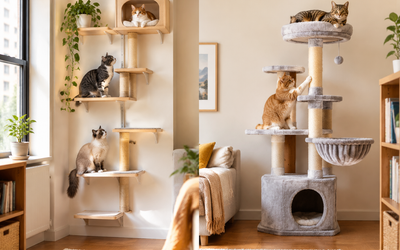
Create a vertical escape route along at least one wall. Cats need high perches to feel safe and survey their territory. A floor-to-ceiling cat tree near a window or wall-mounted shelf pathway gives your cat a third dimension to inhabit while you use the floor for human activities.
Designate a play zone in your most open area—typically between the bed and the main living space. Keep interactive toys here in a small basket, and rotate them weekly to maintain novelty. Reserve the space under your bed or a low cabinet for hidey-hole access; cats need retreat options when they're overwhelmed.
Position feeding stations away from high-traffic paths. A corner of the kitchen counter or a dedicated shelf prevents you from stepping on bowls and reduces your cat's mealtime stress. Elevating food and water also discourages floor-level pests in urban environments.
💡 Pro Tip: Use a room divider or bookshelf to create a visual "cat zone" without sacrificing openness. Your cat gets defined territory, and you maintain sightlines across the studio.
Must-Have Gear for Studio Cat Rooms
Frisco 72-Inch Cat Tree
| Criteria | Score |
|----------|-------|
| Vertical Space Efficiency | 10/10 |
| Stability | 9/10 |
| Multiple Activity Zones | 8/10 |
| Value | 9/10 |
This floor-to-ceiling cat tree is purpose-built for small spaces. The tension-mount design requires no wall drilling and adjusts to ceiling heights between 7.5 and 9.5 feet. Three platforms, two hanging toys, and a top perch give your cat climbing exercise and high vantage points. The vertical design consumes just 20x20 inches of floor space—less than a nightstand—while providing over 15 square feet of cat-usable surface area when you account for all platforms.
Buyer reviews consistently praise the stability once properly tensioned. The carpet-covered posts handle scratching, and the neutral beige color blends into most studio decor. Assembly takes about an hour, but the payoff is immediate: your cat gets a dedicated climbing structure, and your counters and shelves stay cat-free.
✅ Pros:
- Maximizes vertical space without permanent installation
- Sturdy enough for active climbing and jumping
- Neutral design works in any decor scheme
❌ Cons:
- Requires 7.5-foot minimum ceiling height
- Carpet fibers shed during first few weeks
Modkat Litter Box
| Criteria | Score |
|----------|-------|
| Odor Containment | 9/10 |
| Litter Tracking Reduction | 10/10 |
| Space Efficiency | 9/10 |
| Ease of Cleaning | 8/10 |
The top-entry design solves two studio apartment problems: litter tracking and odor escape. Cats enter through the lid, and their paws naturally brush clean on the textured top surface before they jump down. Verified buyers report up to 80% less litter scatter compared to open boxes. The seamless resin construction has no cracks or seams where odors can hide, and the walk-off lid acts as a passive filter.
The 16x20-inch footprint fits in tight bathroom corners or closets where traditional covered boxes won't. The box holds 10-12 pounds of litter, enough for one cat for 7-10 days. The reusable tarp liner system keeps cleanup quick—just remove, shake into trash, and replace. For studio dwellers who can't segregate the litter box into a separate room, this design delivers the next-best containment.
✅ Pros:
- Top entry virtually eliminates litter tracking
- Compact footprint fits tight corners
- Seamless construction prevents odor leaks
❌ Cons:
- Not suitable for senior cats or kittens under 6 months
- Tarp liners add $20-30 annual cost
Catit Senses 2.0 Food Tree
| Criteria | Score |
|----------|-------|
| Mental Enrichment | 9/10 |
| Space Efficiency | 10/10 |
| Ease of Cleaning | 8/10 |
| Feeding Time Extension | 8/10 |
This interactive feeder turns mealtime into a puzzle. You pour kibble into the top, and your cat has to fish pieces out through multiple openings as they work their way down the tree. It slows fast eaters, provides mental stimulation, and takes up less counter space than a standard bowl. The 10-inch diameter base fits on even the smallest kitchen counters or shelves.
The transparent design lets you monitor food levels at a glance, and the three-tier structure holds up to two cups of dry food. All components pop apart for dishwasher cleaning. For studio cats who spend long hours alone while you work, this feeder adds enrichment without requiring more square footage. Buyer reviews note that most cats adapt within 2-3 days, though extremely food-motivated cats may initially paw frantically.
✅ Pros:
- Slows eating and reduces gulping
- Tiny footprint for counter or shelf placement
- Dishwasher-safe components
❌ Cons:
- Requires 1-3 day training period for some cats
- Only works with dry kibble
PetFusion Wall-Mounted Cat Shelves
| Criteria | Score |
|----------|-------|
| Space Savings | 10/10 |
| Aesthetic Integration | 9/10 |
| Installation Difficulty | 6/10 |
| Weight Capacity | 8/10 |
These bamboo shelves transform empty wall space into a cat highway. Each 18-inch platform mounts with included hardware and can hold up to 25 pounds. Install them in a staggered pattern to create a climbing path from floor to ceiling, or line them horizontally along a wall to create a high-up walkway. The natural bamboo finish looks like intentional decor, not pet furniture.
The challenge is installation: you'll need a drill, level, and stud finder to mount them securely. Renters should confirm lease terms before drilling, though PetFusion provides wall repair tips in the instructions. Once up, the shelves stay stable even with heavy jumping. Combine these with a floor-to-ceiling cat tree for a complete vertical ecosystem. For more wall-mounted and compact designs, check our space-saving cat furniture for small rooms guide.
✅ Pros:
- Completely frees up floor space
- Premium bamboo looks like home decor
- Creates custom climbing routes
❌ Cons:
- Requires drilling and wall anchors
- Installation complexity may require help
Neakasa M1 Self-Cleaning Litter Box
| Criteria | Score |
|----------|-------|
| Automation & Convenience | 10/10 |
| Odor Control | 9/10 |
| Value for Money | 6/10 |
| Noise Level | 7/10 |
If you can budget for it, this automated litter box eliminates daily scooping—a significant quality-of-life upgrade when you live in one room. The unit rakes waste into a sealed drawer 15 minutes after your cat exits, and the 13-liter drawer holds waste for up to two weeks for a single cat. The app sends you notifications when the drawer needs emptying or litter needs refilling.
The enclosed design with carbon filters contains odor better than any manual box, critical when the box sits 15 feet from your bed. The cleaning cycle produces a quiet hum (around 45 decibels), comparable to a refrigerator. The tradeoff is cost and space: at $450, it's a significant investment, and the unit measures 22x20x22 inches—larger than most manual boxes. But for studio dwellers working long hours or traveling frequently, the automation pays dividends in convenience and air quality.
✅ Pros:
- Fully automated cleaning saves 10-15 minutes daily
- Sealed waste drawer eliminates odors
- App monitoring tracks usage patterns
❌ Cons:
- High upfront cost compared to manual boxes
- Requires nearby outlet and WiFi for app features
Frequently Asked Questions
How much space do I need to dedicate to my cat in a studio apartment?
A single cat needs about 18-25 square feet of dedicated territory when you count floor space, vertical climbing structures, and tucked-away zones. In a 500-square-foot studio, that's roughly 4-5% of your total area. The key is using vertical space—a floor-to-ceiling cat tree and wall shelves can provide 20+ square feet of cat territory while consuming less than 10 square feet of floor space.
Can I keep the litter box in a bathroom closet?
Yes, closets work well if you remove the door or install a cat door to maintain airflow. Enclosed spaces without ventilation trap odors and ammonia, creating both a smell problem and a health risk. If keeping the door open isn't an option, add a small USB fan to circulate air, or look into litter boxes with built-in ventilation systems.
How do I prevent my studio from smelling like a litter box?
Combine three strategies: use a top-entry or covered litter box to contain odors, scoop daily (or use a self-cleaning box), and position the box as far from sleeping and cooking areas as possible. Add a small air purifier with a HEPA and carbon filter near the box. Avoid scented litters and sprays—they mask odors temporarily but don't eliminate them, and many cats refuse to use heavily scented boxes.
What if my cat ignores the vertical furniture?
Cats naturally prefer high perches, but they need encouragement to use new structures. Place favorite treats on each platform, rub catnip into the carpet, and use a wand toy to lure your cat up the tree. Position the structure near a window—the view becomes a reward. Most cats adopt new vertical furniture within a week once they realize it offers vantage points and security.
Should I create separate "rooms" with furniture dividers?
Yes, if your studio layout allows. A bookshelf, folding screen, or tall plant can create a visual "cat zone" without closing off the space. This gives your cat a sense of territory and helps you mentally separate living areas. Avoid solid walls or heavy curtains—you want airflow and sightlines to prevent the space from feeling cramped.
Final Thoughts
Setting up a cat room in a studio apartment is less about square footage and more about smart design. By thinking vertically, using multi-functional gear, and creating defined zones for eating, sleeping, playing, and eliminating, you can give your cat a rich, stimulating environment without sacrificing your own living space. The key is choosing compact, high-performance products and positioning them strategically.
Start with a floor-to-ceiling cat tree to establish vertical territory, add a space-efficient litter box with strong odor control, and incorporate enrichment through interactive feeders or wall-mounted shelves. Each addition should serve a clear purpose and fit your specific layout constraints. Before adding more cat safety modifications, see our guide on how to cat-proof a small apartment on a budget for essential fixes under $100.
Your studio can be a haven for both you and your cat—it just takes a bit of planning and the right gear.
Editor's Choice
Based on verified specs and buyer feedback, we recommend starting with the Frisco 72-Inch Cat Tree for vertical territory and the Modkat Litter Box for odor and litter control. Together, they address the two biggest studio cat room challenges—space efficiency and smell management—for under $230. Add the Catit Senses 2.0 Food Tree for mental enrichment, and you have a complete foundation that works in any studio layout.