Introduction
Few debates in the cat world spark as much passion as this one: should your cat live indoors, roam freely outside, or somewhere in between? It's a question we hear constantly from new cat owners and seasoned feline enthusiasts alike, and the honest answer is — it depends.
At MeowPod, we've spent years researching cat behavior, consulting veterinary guidance, and listening to the real-world experiences of thousands of cat owners. What we've found is that neither lifestyle is universally "better." The right choice hinges on your cat's personality, your environment, and how willing you are to meet your cat's needs creatively.
In this guide, we'll walk through the key differences between indoor and outdoor lifestyles, the health and safety trade-offs, how to enrich your cat's life regardless of which path you choose, and the most common mistakes owners make. By the end, you'll have a clear picture of what's right for your cat.
The Case for Indoor Cats: Safety, Longevity, and Control
The numbers are striking. Indoor cats live an average of 12–18 years, while outdoor cats average just 2–5 years, according to multiple veterinary studies. That gap alone gives many owners pause.
Why Indoor Living Extends Life
- No traffic exposure — vehicles are among the leading causes of cat death outdoors
- Reduced predator risk — dogs, coyotes, and birds of prey are real threats in many areas
- No toxic plant or chemical ingestion — antifreeze, pesticides, and certain garden plants are deadly
- Lower disease risk — FIV, FeLV, and upper respiratory infections spread through contact with other cats
- No parasites picked up outside — fleas, ticks, and intestinal worms are far less common in indoor cats
The Indoor Challenge: Boredom and Enrichment
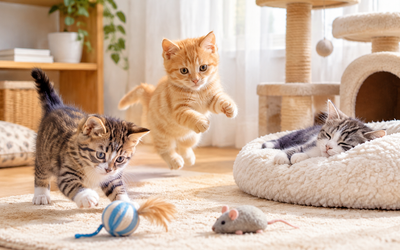
The biggest knock against indoor living is environmental poverty. A cat confined to a small, unstimulating space will develop behavioral problems — anxiety, aggression, over-grooming, and obesity.
The solution isn't to let them outside; it's to bring the outdoors in.
- Rotate interactive toys regularly (feather wands are a perennial favorite)
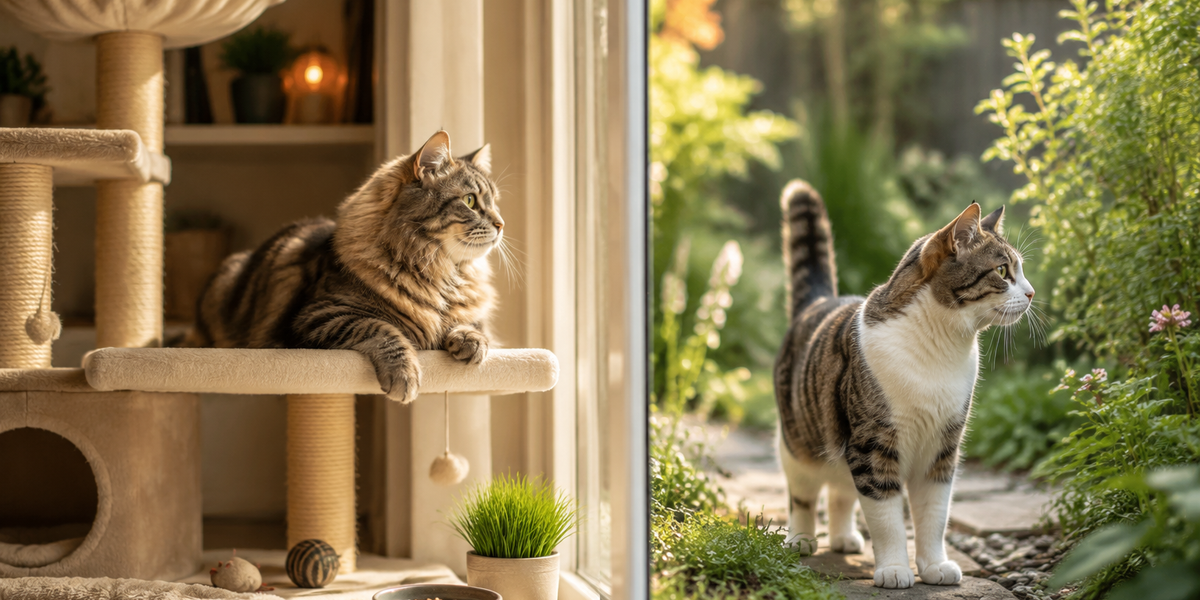
- Install window perches so cats can watch birds and squirrels
- Grow a small indoor cat garden with wheatgrass or catnip
- Use puzzle feeders to engage their hunting instincts at mealtime
💡 Pro Tip: A bird feeder placed just outside a window is essentially free entertainment for an indoor cat — and it costs you about $15 to set up.
The Case for Outdoor Cats: Freedom, Stimulation, and Natural Behavior
Cats are natural hunters. They evolved to patrol territories, stalk prey, climb, and explore. For some cats — particularly those raised outdoors or with high prey drives — confinement genuinely causes distress.
What Outdoor Access Offers
- Rich sensory stimulation — smells, sounds, textures, and sights that no indoor environment fully replicates
- Natural exercise — outdoor cats tend to be leaner and more muscular
- Outlet for predatory instincts — reduces pent-up energy and frustration
- Mental well-being for cats that are genuinely distressed by indoor living
The Real Risks You Can't Ignore
We'd be doing you a disservice to list the benefits without being direct about the dangers:
- Cars remain the #1 killer of outdoor cats
- Fights with other cats cause abscesses and spread disease
- Lost or stolen cats — even microchipped cats don't always make it home
- Ecological impact — outdoor cats kill an estimated 1–4 billion birds annually in the US alone
💡 Pro Tip: If outdoor access is important to you, a catio (an enclosed outdoor cat enclosure) gives your cat fresh air, sunshine, and stimulation with almost none of the risk. They range from DIY window boxes to large walk-in structures.
Common Mistakes and How to Get It Right
Mistake 1: Going Cold Turkey Either Way
Moving an outdoor cat indoors overnight — or releasing a lifelong indoor cat outside — is stressful and potentially dangerous. Any transition should be gradual and supervised.
Mistake 2: Assuming Indoors = Safe Without Enrichment
An under-stimulated indoor cat isn't "safe" — it's suffering quietly. Commit to at least two 10-minute interactive play sessions per day minimum.
Mistake 3: Skipping Vet Care for Outdoor Cats
Outdoor cats need more frequent vet visits — at minimum annually, ideally twice a year. Keep vaccinations (especially FVRCP and rabies) and parasite prevention fully up to date.
Mistake 4: Ignoring the Leash Option
Leash training is underrated. Many cats — especially when started young — adapt well to harness walks. It's one of the best middle-ground solutions available.
Frequently Asked Questions
Can an outdoor cat become an indoor cat?
Yes, with patience. Start by keeping them in for short periods, gradually extending inside time while adding enrichment. Most cats adapt within a few weeks to months.
Is it cruel to keep a cat indoors?
Not if their physical and mental needs are met. An enriched indoor environment with play, climbing structures, and social interaction is far from cruel — it's often a longer, healthier life.
What age is best to transition a cat indoors?
Earlier is easier. Kittens adopted at 8–12 weeks old and raised indoors typically never miss the outdoors. Adult transitions are possible but require more patience and enrichment.
Do indoor cats get enough exercise?
Only if you provide it. Scheduled play sessions, climbing towers, and puzzle feeders are essential. Without them, indoor cats frequently become overweight.
What is a catio and is it worth it?
A catio is an enclosed outdoor enclosure that lets cats experience the outdoors safely. In our experience, they're absolutely worth the investment for cats that crave outdoor stimulation — it's the best of both worlds.
Final Thoughts
There's no single right answer to the indoor vs. outdoor debate — but there are clearer answers for your cat, your neighborhood, and your lifestyle. If safety and longevity are your priorities, a well-enriched indoor life wins decisively. If your cat is genuinely distressed by confinement and you live in a safe, low-traffic area, managed outdoor access with a catio or leash walks is a reasonable middle path.
What matters most is that you're asking the question at all. Thoughtful, informed cat ownership — not a rigid rule — is what makes the difference. Take what you've learned here, observe your cat, talk to your vet, and make the choice that honors the animal you share your life with.