Introduction
If your cat has a water fountain, you already know the benefits — cats drink more when water is flowing, which supports kidney health and reduces the risk of urinary issues. But that fountain only works in your cat's favor if it's properly maintained. A dirty filter can harbor bacteria, slime, and mineral deposits that make the water less appealing — or worse, unsafe.
We've tested and maintained dozens of cat water fountains over the years, and the single most common reason cats stop drinking from their fountain is a neglected filter. The good news? Cleaning it is straightforward once you know the routine.
In this guide, we'll walk you through exactly how to clean a cat water fountain filter, how often to do it, and the mistakes most cat owners make — so your cat always has access to clean, fresh water.
What You Need Before You Start
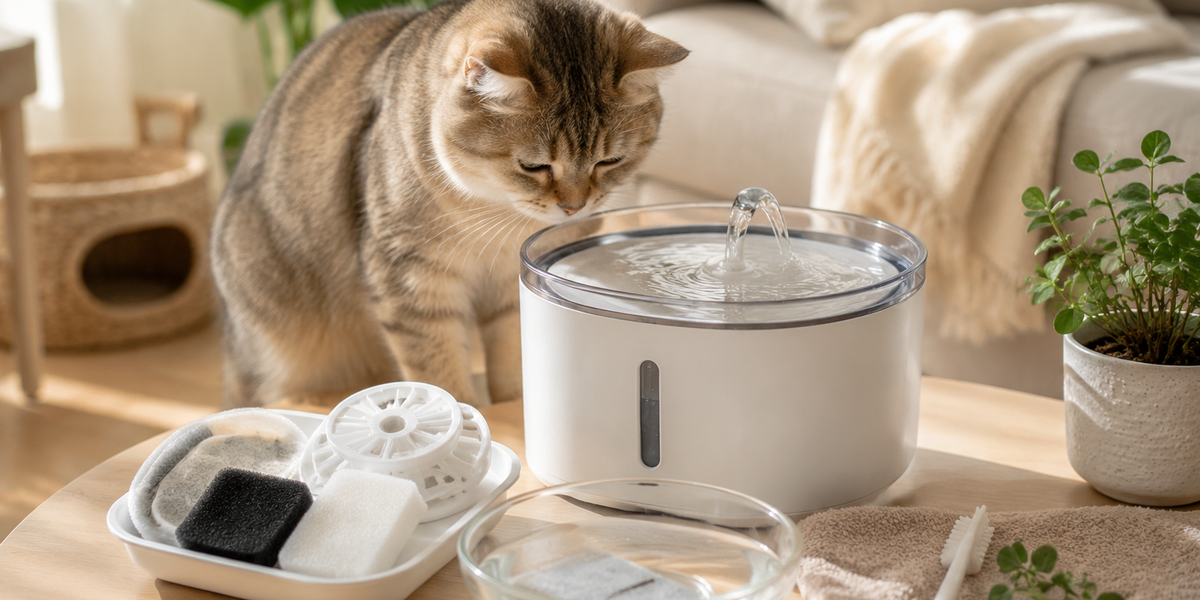
Gather these supplies before disassembling anything:
- Fresh replacement filter (have one ready)
- Soft bottle brush or small cleaning brush
- White vinegar or pet-safe fountain cleaner
- Mild, unscented dish soap
- Clean towels or paper towels
- A bowl or basin for soaking parts
💡 Pro Tip: Always unplug the fountain before cleaning. Water and electricity don't mix, and it only takes a second.
Understanding Your Filter Type
Most cat water fountains use one of three filter types:
- Foam/sponge pre-filters — catch hair, debris, and large particles
- Carbon/charcoal filters — remove odors, chlorine, and impurities from the water
- Ion-exchange resin filters — soften water and reduce mineral buildup
Many fountains combine a foam pre-filter with a carbon cartridge. Check your fountain's manual to confirm what you're working with — it affects both cleaning frequency and whether a part can be reused or must be replaced.
Step-by-Step: How to Clean a Cat Water Fountain Filter
Follow these steps every 2–4 weeks for best results.
- Unplug the fountain and move it to a sink or work surface.
- Disassemble the fountain — remove the top, pump, and any trays. Most fountains pull apart without tools.
- Remove the filter. If it's a carbon cartridge that's more than 4 weeks old, set it aside for replacement rather than cleaning.
- Rinse the foam pre-filter under warm running water, gently squeezing until the water runs clear. Do not use soap on the foam — it's hard to rinse fully and residue can harm cats.
- Soak stubborn buildup. If the foam has pink or orange slime (biofilm) or hard white mineral deposits, soak it in a 1:1 solution of white vinegar and water for 15–20 minutes, then rinse thoroughly.
- Scrub the fountain bowl and pump with a soft brush and a small amount of unscented dish soap. Pay special attention to corners, grooves, and the pump intake where slime accumulates.
- Rinse everything at least twice — soap residue is a real concern for cats, who are sensitive to chemical tastes and smells.
- Soak a new carbon filter in cold water for 10–15 minutes before installing it. This activates the carbon and prevents black carbon dust from entering the water.
- Reassemble, refill with fresh water, and plug back in.
💡 Pro Tip: If your tap water is hard (high in minerals), consider using filtered or distilled water in the fountain. It dramatically reduces white scale buildup on both the bowl and the filter.
Common Mistakes and Pro-Level Maintenance Tips
Mistakes to Avoid
- Cleaning too infrequently. Waiting more than four weeks allows biofilm to set in, making cleaning much harder and potentially exposing your cat to harmful bacteria.
- Putting parts in the dishwasher without checking. Many fountain components are not dishwasher-safe. High heat can warp plastic and degrade seals.
- Reusing a carbon filter too long. Carbon filters are not washable — once the carbon is saturated, cleaning doesn't restore its function. Replace them every 3–4 weeks.
- Forgetting the pump. The pump is often the slimiest part. Disassemble it and clean the impeller every cleaning cycle.
Advanced Tips
- Deep clean monthly with citric acid. Dissolve 1 teaspoon of food-grade citric acid in 2 cups of water and soak mineral-scaled parts for 30 minutes. It's more effective than vinegar on heavy scale.
- Keep a spare filter on hand. Subscription ordering through Amazon means you're never caught without a replacement.
- Inspect the pump cord at each cleaning for cracks or damage.
Frequently Asked Questions
How often should I clean my cat water fountain filter?
We recommend rinsing the foam pre-filter every 1–2 weeks and doing a full deep clean of the entire fountain every 2–4 weeks. Replace carbon filter cartridges every 3–4 weeks regardless of how clean they look.
Can I use bleach to clean a cat water fountain?
No. Bleach is toxic to cats, and even trace residue can be harmful. Stick to white vinegar, citric acid, or cleaners specifically labeled as pet-safe and fountain-safe.
Why is there pink slime in my cat's water fountain?
Pink or orange slime is a biofilm caused by airborne bacteria (Serratia marcescens). It's harmless to humans but unpleasant and a sign the fountain needs more frequent cleaning. Increase your cleaning schedule and ensure the fountain is kept away from food bowls and litter boxes.
My cat stopped drinking from the fountain after I cleaned it. Why?
Cats are sensitive to scent. If soap or vinegar residue remains, your cat may refuse the fountain. Rinse all parts thoroughly — at least two full rinse cycles — and let parts air dry before reassembling.
Do all cat fountain filters need to be replaced, or can they be washed?
Foam pre-filters can be washed and reused many times before replacement. Carbon/charcoal cartridges must be replaced — washing does not restore their filtering capability.
Final Thoughts
Cleaning your cat's water fountain filter is one of the highest-impact, lowest-effort things you can do for your cat's long-term health. A clean fountain means fresher water, a more motivated drinker, and a lower risk of the urinary and kidney issues that plague so many cats.
Once you build it into a regular routine — a quick rinse every week or two and a full clean once a month — it takes less than ten minutes. Your cat can't tell you the water tastes off, but with clean filters and a well-maintained fountain, they won't need to. Here's to happy, hydrated cats! 🐾