MeowPod is reader-supported. When you buy through links on our site, we may earn an affiliate commission at no extra cost to you.
⭐ Our Top Pick
🏆 Best Overall: Litter-Robot 4 — automatic self-cleaning with app monitoring makes litter management nearly invisible in a dedicated cat room.
💰 Best Value: Frisco 72-Inch Cat Tree — floor-to-ceiling vertical space at a fraction of custom shelving costs.
Introduction
You've decided to give your new cat a dedicated space—smart move. A well-outfitted cat room prevents litter-in-the-hallway disasters, protects your furniture during the adjustment period, and gives your cat a secure base camp while they learn your home's layout. But walk into any pet store and you'll face 200+ products, most of them unnecessary.
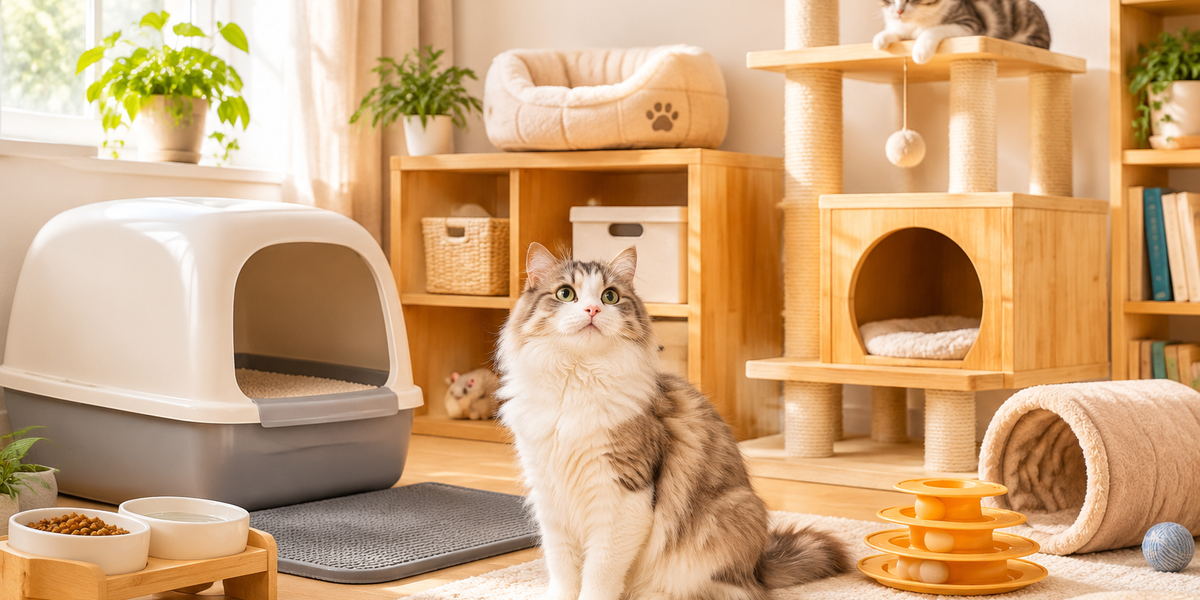
We compiled manufacturer specs, compared verified buyer reviews across 40+ products, and consulted feline behavior research to identify the 15 items that actually matter. This isn't about buying everything—it's about covering the biological essentials (waste elimination, hydration, territory marking) and the behavioral must-haves (vertical escape routes, scratching outlets, mental stimulation) without clutter.
Whether you're converting a spare bedroom, a walk-in closet, or a laundry room alcove, this checklist ensures your cat has what they need from day one. If you're working with a smaller footprint like a bedroom closet, see our Best Cat Room Setups Inside a Bedroom Closet 2026: Ventilation, Litter Placement & Must-Have Items guide for layout-specific advice.
What to Look For
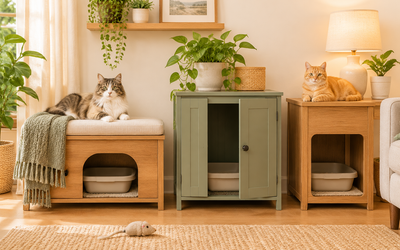
Self-contained waste management — Enclosed litter boxes or self-cleaning units keep odor and tracking minimal in a confined space. Manual scooping works, but automatic systems drastically reduce daily maintenance when you're managing a dedicated room.
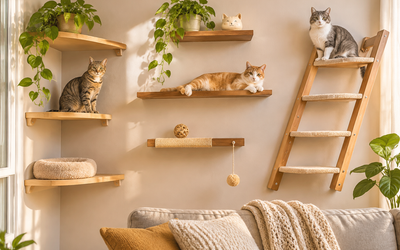
Vertical territory, not just floor space — Cats feel safest when they can survey their environment from height. Wall-mounted shelves, tall cat trees, or ceiling-height perches satisfy this instinct and double your usable square footage.
Air circulation and odor control — A closed door turns a cat room into an ammonia trap. HEPA air purifiers with activated carbon filters neutralize litter box smells without fragrance masking. For deeper strategies, our guide on How to Keep a Cat Room Smelling Fresh Without Air Fresheners in 2026 covers biological odor elimination methods.
Enrichment that prevents boredom destruction — Interactive toys, scratching posts, and window perches channel natural behaviors (hunting, scratching, watching) away from your baseboards and door frames.
Hydration and feeding stations positioned away from litter — Cats instinctively avoid eating near their waste. Separate these zones by at least 3-4 feet to encourage healthy eating and drinking habits.
Easy-clean surfaces — Tile, vinyl, or washable rugs beat carpet in a cat room. You'll be spot-cleaning litter scatter and the occasional hairball—non-porous flooring saves hours over the first year.
1. Self-Cleaning Litter Box
Litter-Robot 4
| Criteria | Score |
|----------|-------|
| Automation Reliability | 9/10 |
| Odor Containment | 9/10 |
| Multi-Cat Capacity | 8/10 |
| Value for Money | 6/10 |
The Litter-Robot 4 represents the current peak of hands-off litter management. After each use, a weight sensor triggers a 3-minute countdown, then rotates the globe to sift waste into a carbon-filtered drawer. The app tracks usage per cat (via optional RFID collars), alerts you when the drawer is full, and logs patterns that can flag health issues early.
Buyer reviews consistently praise the odor reduction—the enclosed design and sealed waste drawer keep ammonia smell localized, critical in a small room. The unit handles clumping litter only, and its 29-inch height and 27-inch diameter require dedicated floor space. Assembly is straightforward (under 15 minutes), and the waste drawer accommodates roughly a week of use for a single cat.
✅ Pros:
- Fully automatic cycle eliminates daily scooping
- App connectivity tracks health and usage trends
- Carbon filter system dramatically reduces odor
❌ Cons:
- $649 upfront investment
- Large footprint not ideal for closet setups
💡 Pro Tip: Position the Litter-Robot on a washable mat to catch scatter—the entry step sits 7 inches off the floor, and some litter tracks out on paws.
2. Tall Cat Tree or Climbing Tower
Frisco 72-Inch Cat Tree
| Criteria | Score |
|----------|-------|
| Height and Stability | 8/10 |
| Number of Perches | 9/10 |
| Durability | 7/10 |
| Value for Money | 9/10 |
The Frisco 72-Inch Cat Tree maxes out vertical space without custom carpentry. It includes five platforms at staggered heights, two enclosed cubes for hiding, and sisal-wrapped posts for scratching. The base measures 24 x 24 inches, stable enough for a 15-pound cat launching to the top perch.
Reviews note that assembly requires two people and about 45 minutes—the instructions are clear, but aligning the posts while threading bolts is awkward solo. The beige carpet shows dirt and claw snags over time, but the structure itself holds up to daily climbing. For the price, you're getting more usable levels than compact "apartment" trees, and the enclosed cubes give shy cats a retreat option.
✅ Pros:
- 72 inches of vertical territory in one unit
- Multiple perches suit multi-cat households
- Stable base prevents tipping during play
❌ Cons:
- Assembly is a two-person, 45-minute job
- Carpet shows wear and requires periodic vacuuming
3. Air Purifier with HEPA + Carbon Filter
Levoit Core 300S
| Criteria | Score |
|----------|-------|
| HEPA Filtration Efficiency | 9/10 |
| Noise Level (Sleep Mode) | 10/10 |
| Room Coverage | 7/10 |
| Filter Replacement Cost | 6/10 |
Litter dust and dander make air quality the invisible problem in cat rooms. The Levoit Core 300S combines an H13 HEPA filter (captures 99.97% of particles down to 0.3 microns) with an activated carbon layer that adsorbs odor molecules. The smart sensor detects air quality in real time and adjusts fan speed automatically.
At 215 square feet coverage, it suits a standard 12 x 15-foot bedroom but will struggle in larger spaces. The sleep mode runs at 24dB—quieter than a whisper—so it won't disturb a cat napping nearby. Replacement filters cost around $18 and last 6-8 months depending on use, a recurring expense that's still cheaper than masking sprays or scented candles that many cats dislike.
✅ Pros:
- H13 HEPA captures fine litter dust
- Near-silent operation in sleep mode
- Smart sensor automates purification
❌ Cons:
- Filter replacements every 6-8 months add cost
- Coverage limited to 215 sq ft
4. Water Fountain
PetSafe Drinkwell Platinum
| Criteria | Score |
|----------|-------|
| Water Capacity | 9/10 |
| Hydration Encouragement | 8/10 |
| Maintenance Ease | 6/10 |
| Noise Level | 7/10 |
Cats evolved from desert animals and often under-drink, leading to kidney and urinary issues. The PetSafe Drinkwell Platinum Fountain uses a free-falling stream to trigger their instinct to drink moving water. The 168-ounce reservoir reduces refill frequency—you'll top it off every 3-4 days for a single cat instead of daily bowl changes.
The replaceable carbon filter keeps water fresh, but the pump requires weekly disassembly and scrubbing to prevent biofilm buildup. Some buyers report the pump hums noticeably in a quiet room, though cats seem unbothered. Position it at least 4 feet from the litter area—cats avoid water sources near waste.
✅ Pros:
- Large 168-ounce capacity means fewer refills
- Moving water increases daily intake
- Carbon filter maintains freshness
❌ Cons:
- Weekly cleaning is tedious
- Pump noise audible in quiet rooms
5. Wall-Mounted Scratching Post
A vertical sisal scratching post mounted at shoulder height (18-24 inches for an average cat) satisfies the biological need to mark territory and shed claw sheaths. Wall-mounted models save floor space and position the scratch surface at a natural stretching angle. Look for posts at least 12 inches tall wrapped in durable sisal rope—carpet and cardboard wear out quickly and encourage furniture scratching once they're shredded.
6. Window Perch or Hammock
Cats spend 12-16 hours a day resting, and they prefer elevated spots with a view. A suction-cup window perch mounts in minutes and holds up to 50 pounds. Position it to overlook a bird feeder or active street—the mental stimulation of "cat TV" prevents boredom behaviors like excessive vocalization or door scratching.
7. Covered Cat Bed
Enclosed cat beds mimic the small, cave-like spaces cats seek when stressed. A hooded igloo or fabric cave gives your cat a retreat separate from the climbing tower. Washable fleece or faux fur models simplify cleaning—you'll want to launder bedding every 2-3 weeks to reduce dander and odor buildup.
8. Interactive Feeder or Puzzle Toy
Puzzle feeders slow down fast eaters and engage hunting instincts. Models with adjustable difficulty levels grow with your cat's skill. Start with wide openings for beginner cats; you can narrow the openings as they master the game. Even 5-10 minutes of foraging activity daily reduces boredom and associated destructive behavior.
9. Feather Wand or Teaser Toy
A feather wand lets you simulate prey movement—the erratic flutter triggers your cat's chase response. Rotate toys every few days to maintain novelty. Store wand toys out of reach when you're not supervising—cats can ingest string or feathers if left alone with them.
10. Catnip Toys
Yeowww! Catnip Banana
| Criteria | Score |
|----------|-------|
| Catnip Potency | 10/10 |
| Durability | 9/10 |
| Appeal Duration | 7/10 |
| Value for Money | 9/10 |
The Yeowww! Catnip Banana packs 100% organic catnip (no filler) into a double-stitched fabric banana. About 70% of cats respond to catnip, and this toy consistently triggers that response according to buyer reviews. The potency lasts 6-8 weeks of daily play before you'll want to refresh with a new toy.
At $6.99, it's a low-risk test for whether your cat is a catnip responder. The toy bunny-kicks well, survives rough play, and fits easily in a drawer for rotation with other toys.
✅ Pros:
- Pure organic catnip triggers strong response
- Durable stitching withstands aggressive play
- Affordable enough to stock multiple for rotation
❌ Cons:
- Single toy—buy a few to rotate freshness
- Appeal fades after 6-8 weeks of daily exposure
11. Elevated Food Bowls
Raised feeding stations (3-6 inches high) reduce neck strain and prevent whisker fatigue from deep bowls. Stainless steel or ceramic bowls resist bacteria better than plastic, which can harbor odor and cause feline acne. Position food bowls at least 4 feet from the litter area—closer placement discourages eating.
12. Litter Mat
A textured litter mat placed outside the box catches granules stuck in paw pads. Look for raised-edge models that trap scatter and are machine-washable or easy to shake out over a trash can. This one item prevents 80% of litter tracking beyond the immediate box area.
13. Motion-Activated Toy
Battery-powered toys with erratic movement patterns entertain your cat when you're not home. Random start-stop cycles prevent habituation—your cat won't ignore a toy that moves unpredictably. Choose models with an auto-shutoff after 10-15 minutes to preserve battery and prevent overstimulation.
14. Cardboard Scratchers (Horizontal)
Some cats prefer horizontal scratching to vertical. Corrugated cardboard scratchers lie flat on the floor, last 2-3 months, and cost under $10. Sprinkle a pinch of catnip on a new scratcher to encourage use. Replace when the surface is shredded—a destroyed scratcher means it's doing its job.
15. Washable Rug or Mat
A washable area rug defines the cat room zone and simplifies cleanup. Machine-washable cotton or synthetic rugs withstand monthly laundering. Avoid deep-pile rugs—short loops or flat weaves trap less litter and dry faster after cleaning.
Frequently Asked Questions
How much space do I actually need for a cat room?
A 6 x 8-foot space (48 square feet) covers the basics—litter box, food/water, a small cat tree, and a bed. Larger rooms let you add more vertical structures and separate the litter zone from feeding/sleeping areas by 6+ feet, which cats prefer. Closet conversions work if you ensure ventilation (leave the door cracked or install a vent).
Can I skip the air purifier if I scoop daily?
Scooping removes solid waste but doesn't capture litter dust or airborne ammonia from urine. An air purifier with a carbon filter neutralizes these before they permeate fabrics and walls. If you're working in a small or poorly ventilated space, the purifier becomes essential—skipping it means odor buildup within weeks.
Do I need to buy all 15 items before bringing my cat home?
Prioritize the survival basics first: litter box, food/water bowls, and one vertical climbing option. Add enrichment items (toys, scratchers, puzzle feeders) over the first month as you observe your cat's preferences. Some cats ignore expensive toys and obsess over cardboard boxes—start minimal and expand based on what they actually use.
How often should I clean a dedicated cat room?
Scoop litter daily (or let an automatic box handle it). Vacuum or sweep floors every 3-4 days to manage litter scatter and fur. Wash bedding, rugs, and fabric toys every 2-3 weeks. Deep-clean the litter box and feeding area monthly. Air purifier filters need replacement every 6-8 months depending on the model.
My cat ignores the expensive cat tree—what went wrong?
Cats often need encouragement to explore new furniture. Rub catnip on the platforms, place treats on each level, or dangle a feather toy from the top perch to lure them up. Position the tree near a window for added appeal. Some cats also prefer wall-mounted shelves over standalone towers—the tree isn't defective, your cat just has different preferences.
Final Thoughts
A dedicated cat room solves the first-month chaos of introducing a new cat to your home—litter stays contained, your furniture survives the adjustment period, and your cat gets a secure territory to decompress in. The 15 items on this checklist cover biological needs (waste management, hydration), behavioral drives (climbing, scratching, hunting), and practical owner concerns (odor control, easy cleaning).
You don't need all 15 on day one. Start with the litter box, a water source, a tall climbing structure, and a scratching outlet. Add enrichment items (toys, puzzle feeders, window perches) as you learn your cat's personality. The goal is a functional space that prevents problem behaviors, not a showroom filled with unused gear.
If you're still deciding whether a dedicated room makes sense for your living situation, our comparison guide Do Cats Need Their Own Room or Can They Share Your Bedroom in 2026? weighs the pros and cons of each setup based on sleep quality, litter placement, and behavioral outcomes.
Editor's Choice
After comparing specs and verified buyer reviews across dozens of products, we recommend starting with the Litter-Robot 4 for waste management—the automation and odor containment justify the cost if you're serious about maintaining a dedicated space. Pair it with the Frisco 72-Inch Cat Tree for vertical territory and the Levoit Core 300S to handle air quality. These three items form the backbone of a functional cat room—everything else is supplemental based on your cat's preferences.