We earn a commission if you make a purchase, at no additional cost to you.
⭐ Our Top Pick
🏆 Best Overall: Safety 1st Adhesive Magnetic Child Safety Locks — renter-friendly magnetic locks that keep clever cats out of cabinets containing toxic cleaners, medications, and human foods.
💰 Best Value: Window Alert Bird Strike Prevention Decals — under $10 protection against window collision injuries when your cat's prey drive kicks in.
Introduction
Small apartments present unique cat-proofing challenges. Every square foot matters, and the same confined space that makes your studio cozy also concentrates potential hazards—dangling cords, accessible cabinets, and tempting vertical surfaces your cat will absolutely try to scale. In 2026, with more people adopting cats into compact urban living situations, understanding how to balance safety with livability has never been more critical.
We've researched dozens of cat-proofing strategies and compared product specifications, verified buyer reviews, and veterinary safety guidelines to create this comprehensive checklist. Whether you're bringing home your first kitten or moving into a new apartment with a resident feline, this room-by-room guide addresses the most common dangers and provides actionable solutions that work within the constraints of rental agreements and limited storage.
From securing cabinets containing toxic substances to managing window safety and creating appropriate climbing outlets, we'll walk you through every consideration to transform your small apartment into a safe, enriching environment your cat can explore without risk.
What to Look For
Before diving into specific products and room-by-room tactics, understand these core cat-proofing principles that apply to any small apartment:
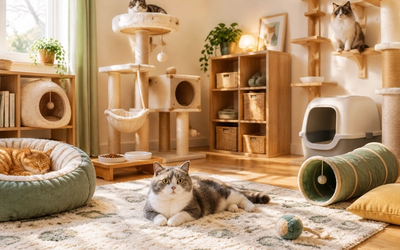
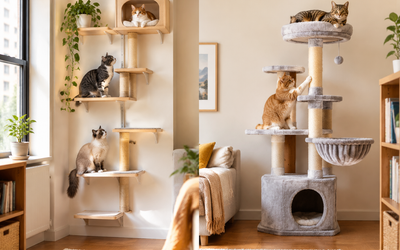
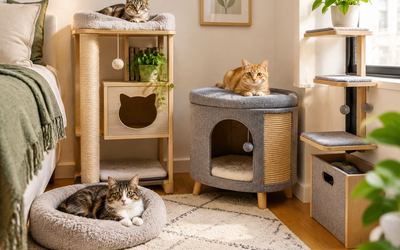
Vertical territory management — Cats instinctively seek high ground for security and observation. In small spaces, they'll use whatever's available: countertops, bookshelves, refrigerator tops. Provide appropriate vertical options (cat trees, wall-mounted perches) to redirect this natural behavior away from hazardous surfaces where they might knock over items or access dangerous areas.
Toxic substance security — Household cleaners, medications, essential oils, certain houseplants (lilies, pothos, philodendrons), and human foods (onions, garlic, chocolate, xylitol) pose serious poisoning risks. In compact apartments where storage options are limited, securing cabinets and choosing pet-safe alternatives becomes non-negotiable, not optional.
Escape prevention — Small apartments often mean increased foot traffic through single entry points, balcony access, or windows opened for ventilation. One moment of inattention can result in a lost cat. Evaluate every potential exit point and implement barriers, screens, or behavioral protocols to prevent door-dashing.
Cord and small object management — Phone chargers, laptop cords, hair ties, and small decorative items become choking hazards or cause intestinal blockages when ingested. Cats are attracted to dangling cords for play, and many will chew through them. Cable management isn't just for aesthetics in cat households—it's a medical necessity.
Window and blind cord safety — Window blind cords pose strangulation risks, and unsecured windows or damaged screens allow falls from height. Even ground-floor apartments present dangers if cats escape through windows. Cordless blinds and reinforced screens are essential safety upgrades.
Appliance and furniture stability — Unstable bookshelves, unsecured TVs, and accessible appliances (stovetops, ovens, washers) present crushing, burning, or trapping hazards. In small spaces where furniture must serve multiple functions and is often moved or reconfigured, anchoring and securing become especially important.
💡 Pro Tip: Walk through your apartment at cat eye level (literally get on your hands and knees). You'll spot hazards from their perspective—accessible cords behind furniture, gaps they can squeeze into, or small objects that rolled under the couch.
Safety 1st Adhesive Magnetic Child Safety Locks
| Criteria | Score |
|----------|-------|
| Installation Ease | 8/10 |
| Security Strength | 9/10 |
| Renter-Friendliness | 10/10 |
| Longevity | 7/10 |
For small apartment dwellers, especially renters who can't drill into cabinets, these adhesive magnetic locks solve the biggest cat-proofing challenge: securing cabinets containing toxic cleaners, medications, and hazardous human foods. The system uses a magnetic key to unlock a catch mechanism inside the cabinet, and the adhesive installation means no damage to surfaces. Based on verified buyer reviews, these locks consistently defeat even the most determined paw-opening attempts.
The locks work on standard cabinet doors, drawers, and even some appliances. In a small apartment where under-sink storage contains concentrated cleaners and the medicine cabinet holds prescriptions, a single cat ingesting these substances can mean emergency vet visits costing thousands. The strong magnetic mechanism requires the specific key to open, which cats cannot replicate through pawing or persistence.
✅ Pros:
- No drilling required—perfect for renters who need security deposit protection
- Strong magnetic mechanism consistently defeats cats who've learned to open traditional cabinets
- Works on multiple cabinet types including drawers and appliances
❌ Cons:
- Requires careful alignment during installation for optimal adhesion
- Adhesive may weaken in humid environments like under-sink areas; periodic checks recommended
Frisco 52-Inch Cat Tree
| Criteria | Score |
|----------|-------|
| Space Efficiency | 9/10 |
| Stability | 7/10 |
| Enrichment Value | 8/10 |
| Scratch Surface Quality | 8/10 |
Small apartments require vertical thinking for cat enrichment, and this compact cat tree delivers multiple levels without consuming precious floor space. The 52-inch height provides elevated perches that satisfy your cat's instinct to survey their territory from above, while sisal-wrapped posts offer appropriate scratching surfaces that protect your furniture and security deposit.
The tree's footprint measures just 20 x 20 inches at the base—small enough for studio corners or beside furniture. Based on manufacturer specs and buyer feedback, the structure supports cats up to 15 pounds on the top perch, though larger cats may experience slight wobbling. The multiple levels create "rooms" within the tree where cats can retreat, which is especially valuable in small apartments where they have limited escape options from household activity.
✅ Pros:
- Compact 20 x 20 inch base fits into tight corners and small rooms
- Multiple perches satisfy climbing instincts and provide elevated observation points
- Sisal scratching posts redirect destructive scratching away from furniture and walls
❌ Cons:
- May wobble slightly with larger cats over 15 pounds; consider wall-anchoring in multi-cat homes
- Assembly requires two people to hold sections steady while securing bolts
Window Alert Bird Strike Prevention Decals
| Criteria | Score |
|----------|-------|
| Visibility to Cats | 9/10 |
| Installation Ease | 10/10 |
| Durability | 6/10 |
| Value for Money | 9/10 |
Window collision injuries occur when cats experience high prey drive—spotting birds, insects, or movement outside and launching themselves at the glass. In small apartments with limited entertainment options, windows become primary enrichment sources, increasing collision risk. These UV-reflective decals create a visual barrier cats can perceive, preventing full-speed impacts that cause head trauma, broken teeth, or worse.
The decals use a coating visible to cats but nearly invisible to humans from inside, maintaining your view while adding safety. At under $10 for a multi-pack, they're the most cost-effective cat-proofing investment you can make. Based on buyer reviews, they work best when placed at cat eye level (12-24 inches from the floor for ground-level windows, or at the height of window perches) and spaced no more than 4 inches apart.
✅ Pros:
- Prevents window collision injuries during prey-drive moments
- Nearly invisible from inside—doesn't obstruct human views
- Simple peel-and-stick application requires no tools or expertise
❌ Cons:
- UV coating degrades over 6-12 months; requires periodic replacement
- Won't prevent screen damage from scratching; combine with screen reinforcement for balconies
Invisible Pet Screen Door by PetSafe
| Criteria | Score |
|----------|-------|
| Escape Prevention | 10/10 |
| Airflow Quality | 9/10 |
| Installation Difficulty | 6/10 |
| Claw Resistance | 8/10 |
For apartments with balcony access or where you want to open windows for ventilation, this pet screen door provides airflow without escape risk. The heavy-duty mesh is specifically engineered to resist cat claws—unlike standard window screens that cats tear through in seconds. The adjustable frame fits most standard door openings (up to 82 inches tall), and the mesh panel includes a magnetic closure that snaps shut automatically.
This solution particularly benefits small apartments where opening balcony doors for cross-ventilation is essential for livability, but leaving them unprotected means risking a lost cat. The screen maintains visibility while creating a physical barrier, and the claw-resistant mesh withstands typical scratching and climbing attempts. Based on manufacturer specifications, the mesh is rated for cats up to 20 pounds attempting to climb or scratch.
✅ Pros:
- Maintains fresh airflow and natural light without escape risk
- Claw-resistant mesh significantly more durable than standard window screens
- Adjustable frame adapts to most standard door sizes without custom ordering
❌ Cons:
- Higher upfront cost than simple mesh alternatives ($140 vs. $20-30 for basic screens)
- Installation requires minor modifications to door frame; may need landlord approval
Room-by-Room Cat-Proofing Checklist
Kitchen Safety
The kitchen concentrates multiple hazards in small apartments: hot surfaces, toxic foods, cleaning chemicals, and trash cans containing dangerous items. Start by securing under-sink cabinets with magnetic locks—this is where most people store concentrated cleaners, dishwasher pods, and garbage bags containing chocolate wrappers, onion scraps, and other toxic food residues.
Store all human foods in sealed containers or secure cabinets. Cats are attracted to the smell of certain foods (cheese, fish, deli meats) and will knock over open containers or tear through packaging. Onions, garlic, grapes, and xylitol-containing products cause severe toxicity, and in a small apartment kitchen where counter space is limited, these items often end up within cat reach.
Never leave stovetops unattended while in use, and consider stove knob covers to prevent cats from accidentally turning on burners while exploring counters at night. Keep the trash can inside a locked cabinet or use a heavy, lidded model cats cannot tip over. In compact kitchens where the trash can often sits in the open due to lack of cabinet space, this becomes especially critical.
Living Room and Bedroom
Secure all bookshelves and tall furniture to walls using L-brackets or furniture straps. In small apartments, bookshelves often serve multiple purposes—as room dividers, storage, and display surfaces—and cats will absolutely climb them. A toppling bookshelf can crush or trap a cat beneath.
Manage cords ruthlessly. Bundle charging cables, lamp cords, and electronics cables inside cord concealers or cable management boxes. Cats chew through cords both during play and when teething (for kittens), risking electrocution and creating fire hazards. Remove or secure blind cords completely—opt for cordless blinds or wrap-up systems that keep cords out of reach.
Remove toxic houseplants entirely. In small apartments where greenery provides visual interest, it's tempting to pack in plants, but many common varieties are deadly to cats: lilies (even pollen causes kidney failure), pothos, philodendrons, aloe, and snake plants. Replace with confirmed cat-safe options like spider plants, Boston ferns, or cat grass.
Bathroom Hazards
Keep toilet lids closed always—cats can fall in and drown, and toilet bowl cleaners contain toxic chemicals. In small bathrooms where counter space is minimal, medications, cosmetics, and grooming products often sit on open surfaces. Store all medications (human and pet) in a secured cabinet; pain relievers like acetaminophen and ibuprofen are fatal to cats in tiny doses.
Secure bathroom cabinets containing cleaning products using the same magnetic locks as kitchen cabinets. Hair ties, dental floss, razors, and cotton swabs are choking and intestinal blockage hazards—keep them in closed drawers. Check that bathroom vent fans are securely covered; cats are attracted to the airflow and have become trapped in vent systems.
Entry and Exit Points
Small apartments typically have one primary door, making door-dashing a concentrated risk every time someone enters or exits. Train household members to check for cats before opening the door, and consider creating a "cat airlock"—a secondary barrier (baby gate, folding screen) set back from the main door that catches escape attempts.
If your apartment has a balcony, never leave the door open unsupervised, even with a standard screen. Cats can and will tear through standard mesh. Install the reinforced pet screen door mentioned earlier, or keep the balcony door closed except when you're actively supervising. For ground-floor apartments, secure all windows with locks or stops that prevent opening wider than 4-5 inches—enough for ventilation, not enough for a cat to squeeze through.
💡 Pro Tip: Place a small bell on your entry door handle. The sound alerts you when someone is opening the door, giving you a second to check for cats near the entrance.
Frequently Asked Questions
How do I cat-proof windows in a small apartment without blocking light?
Use a combination approach: install window stops that limit opening to 4-5 inches maximum, apply Window Alert decals at cat eye level to prevent collision injuries, and if you have window perches, ensure screens are reinforced with pet-grade mesh or replaced with claw-resistant alternatives. For windows you want to open fully, install adjustable window screens specifically rated for pet resistance. This maintains natural light and ventilation while preventing escapes and injuries.
What are the most toxic household items I need to secure first?
Prioritize in this order: medications (especially pain relievers and antidepressants), household cleaners (bleach, ammonia, toilet bowl cleaners), human foods (onions, garlic, chocolate, xylitol), essential oils and diffusers, lilies and other toxic plants, and antifreeze. In small apartments, these items often share limited storage space, so securing under-sink and medicine cabinets with magnetic locks addresses multiple hazards simultaneously. Replace toxic plants entirely rather than trying to keep them out of reach—cats will find a way.
Can I cat-proof a small apartment without damaging walls (for renting)?
Absolutely. Use adhesive magnetic cabinet locks instead of drilling, opt for free-standing cat trees rather than wall-mounted shelving, secure furniture with removable adhesive strips or tension systems, and use cable management boxes that don't require mounting. For window security, tension-mounted screens and window stops that insert without screws work well. Always photograph existing damage before moving in and document your cat-proofing installations so you can demonstrate no additional damage occurred during your tenancy.
How high should I place toxic items to keep them away from cats?
Don't rely on height alone—cats can jump 5-6 feet vertically and climb significantly higher using furniture as launching points. In small apartments where storage is limited, vertical space often gets maximized, which means cats have more climbing opportunities. Instead of height-based storage, use secured cabinets with magnetic locks. If you must store items on high shelves, ensure the shelf itself is stable and secured to the wall, and never place toxic items on surfaces cats use as pathways to reach windows or other destinations.
What should I do if my cat ingests something toxic?
Call your veterinarian or the ASPCA Animal Poison Control Center (888-426-4435) immediately—do not wait for symptoms. Have the product packaging available to read ingredients. Do not induce vomiting unless explicitly instructed by a veterinary professional; some substances cause more damage coming back up. Time is critical with most toxins—the faster you act, the better the outcome. Keep this number and your emergency vet's after-hours contact saved in your phone before an emergency occurs.
Final Thoughts
Cat-proofing a small apartment requires methodical attention to concentrated hazards, but the effort protects your cat from preventable injuries and illnesses while preserving your security deposit. Focus first on high-risk areas: secure cabinets containing toxins, manage window safety, eliminate toxic plants, and create appropriate outlets for natural behaviors like climbing and scratching.
The compact nature of small apartments actually works in your favor once you complete initial cat-proofing—there's less square footage to monitor, fewer rooms to secure, and behavioral issues become apparent quickly rather than hidden across a large house. Combined with proper enrichment like cat trees and window perches, your small apartment can provide everything your cat needs for a safe, stimulating life.
Start with the room-by-room checklist above, invest in the essential products that address your specific apartment's layout, and remember that cat-proofing is an ongoing process. As your cat's behavior evolves and you acquire new items, reassess periodically to maintain a safe environment.
Editor's Choice
Based on our research comparing specifications and verified buyer reviews, these products offer the best combination of effectiveness, apartment-friendliness, and value:
🏆 Best Overall: Safety 1st Adhesive Magnetic Child Safety Locks — The single most effective investment for small apartment cat-proofing. These renter-friendly locks secure cabinets containing the most dangerous household items without drilling, and cats cannot defeat the magnetic mechanism. At $25 for multiple locks, they prevent thousands in emergency vet bills.
💰 Best Value: Window Alert Bird Strike Prevention Decals — For under $10, these decals prevent window collision injuries that commonly occur when cats spot prey outside. In small apartments where windows provide primary enrichment, this is essential protection that doesn't obstruct your view.
🌟 Best Space-Saving Enrichment: Frisco 52-Inch Cat Tree — Provides vertical territory in a compact footprint, redirecting climbing and scratching behaviors away from furniture and walls. The multiple levels create safe retreat spaces that reduce stress in close quarters.