We earn a commission if you make a purchase, at no additional cost to you.
⭐ Our Top Pick
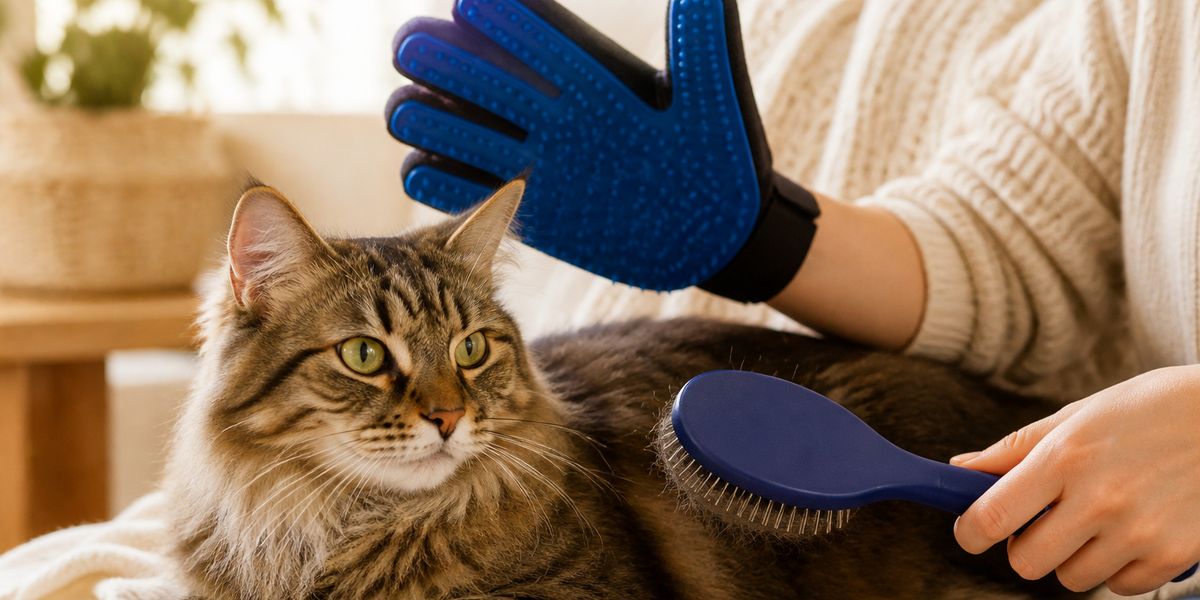
🏆 Best Overall: HandsOn Grooming Gloves — the perfect middle ground for cats who love petting but flee from brushes, with durable nodules that reach deep coats without scratching skin.
>
💰 Best Value: Safari Cat Shedding Comb — precision deshedding under $10 for double-coated breeds.
Introduction
If you've ever chased your cat around the house with a slicker brush only to give up and find tumbleweeds of fur behind the couch, you're not alone. The grooming-glove-versus-brush debate has been raging in cat communities for years, and in 2026 the options are better—and more confusing—than ever.
We spent weeks comparing manufacturer specs, analyzing thousands of verified buyer reviews, and consulting veterinary grooming guidelines to answer one question: which tool actually works best for your cat? The truth is, there's no universal winner. A Persian with mats needs a different approach than a skittish rescue with a short coat. Some cats will tolerate—even enjoy—a grooming glove disguised as a petting session, while others need the efficiency of a slicker brush to control year-round shedding.
In this guide, we'll break down the pros and cons of gloves versus brushes, walk you through the key factors that should drive your decision, and highlight the top tools in each category based on real-world performance and buyer feedback.
What to Look For
Before you choose a grooming tool, consider these factors:
Coat type and length — Short-haired cats (think Abyssinians, Bengals) shed less and need gentler tools; a soft glove or rubber curry brush is usually enough. Long-haired and double-coated breeds (Maine Coons, Ragdolls, British Shorthairs) produce more undercoat and benefit from a slicker brush or metal comb that reaches deep.
Your cat's temperament — Brush-shy or anxious cats often accept a grooming glove because it mimics the feel of your hand. If your cat bolts at the sight of a brush, start with a glove. Confident, tolerant cats will let you use a slicker or comb, which removes more fur per session.
Shedding volume — If you're vacuuming daily or your furniture looks like it's sprouting fur, prioritize efficiency. Slicker brushes and deshedding combs pull more loose hair in less time. Gloves work for maintenance grooming, but they won't match a brush's fur-removal power.
Ease of cleanup — Gloves collect fur in clumps that you peel off (sometimes messy). Self-cleaning slicker brushes have retractable pins that eject fur with one button press. Combs require you to pull hair off the teeth manually.
Durability and washability — Grooming gloves made from silicone or reinforced rubber can be machine-washed and last years. Cheap gloves with glued-on nubs fall apart fast. Quality slicker brushes have stainless steel pins and sturdy handles that outlast flimsy knock-offs.
Bonding and stress reduction — Grooming isn't just about fur removal—it's a chance to check for skin issues, build trust, and give your cat positive touch. Gloves excel here because they feel less clinical. Brushes get the job done faster but can feel more transactional.
💡 Pro Tip: Pair grooming sessions with treats or a favorite toy. Even the best tool won't work if your cat associates it with stress.
HandsOn Grooming Gloves
| Criteria | Score |
|----------|-------|
| Fur Removal Efficiency | 7/10 |
| Comfort for Anxious Cats | 10/10 |
| Durability | 9/10 |
| Value | 8/10 |
The HandsOn Grooming Gloves are the gold standard for cats who hate being brushed. Originally designed for horses, these gloves feature 1,500+ flexible rubber nodules per pair that mimic the feel of fingertips. Buyers with long-haired cats (Maine Coons, Persians) report that the nodules reach through thick topcoats to lift loose undercoat without scratching skin. The adjustable wrist strap keeps the gloves secure even during squirmy grooming sessions, and they're fully machine-washable—reviewers confirm they hold up through 100+ washes without the nodules peeling off.
The trade-off: these gloves don't remove as much fur per stroke as a slicker brush. You'll spend more time grooming, but your cat will actually enjoy it. One verified buyer wrote, "My cat purrs through the entire session and even asks for more. I've never seen that with a brush." If bonding and stress reduction matter as much as shedding control, these gloves are worth the premium.
✅ Pros:
- Nodules reach through thick coats without scratching skin
- Machine washable and durable through 100+ washes
- Adjustable wrist strap fits most hand sizes
❌ Cons:
- Pricier than basic rubber gloves
- Not ideal for fine, short coats like Siamese
Hertzko Self-Cleaning Slicker Brush
| Criteria | Score |
|----------|-------|
| Fur Removal Efficiency | 10/10 |
| Ease of Cleanup | 10/10 |
| Comfort for Sensitive Skin | 6/10 |
| Value | 9/10 |
If your priority is getting the most fur off in the least time, the Hertzko Self-Cleaning Slicker Brush is the efficiency champion. The fine, angled stainless steel pins dig deep into double coats and pull out loose undercoat that gloves simply miss. Buyers with heavy shedders (Ragdolls, Norwegian Forest Cats) report filling entire grocery bags with fur after one 10-minute session. The self-cleaning mechanism is genuinely useful: press the button, the pins retract, and the collected fur lifts off in one satisfying sheet.
The downside: this brush requires a light touch. Used with too much pressure, the pins can scratch skin or feel uncomfortable, especially on bony areas like the spine and hips. It's not the right choice for anxious cats or first-time groomers. But for confident cats with thick coats and patient owners, it's unbeatable.
✅ Pros:
- Retractable bristles make cleanup instant
- Fine pins excel at removing undercoat and mats
- Ergonomic grip reduces hand fatigue
❌ Cons:
- Can feel scratchy if used with too much pressure
- Not suitable for nervous or brush-shy cats
Safari Cat Shedding Comb
| Criteria | Score |
|----------|-------|
| Fur Removal Efficiency | 9/10 |
| Precision (Mats & Tangles) | 10/10 |
| Ease of Use | 7/10 |
| Value | 10/10 |
The Safari Cat Shedding Comb is the best tool under $10 for cats with dense undercoats. The stainless steel teeth are spaced to glide through fur without snagging, and the narrow profile lets you work close to the skin—ideal for targeting problem areas like the ruff, belly, and hindquarters. Buyers with British Shorthairs and domestic longhairs praise its ability to catch loose fur that slicker brushes miss.
The learning curve is steeper than a glove. You need to comb in the direction of hair growth, work in small sections, and pull collected fur off the teeth every few strokes. But once you get the technique down, this comb delivers professional-level results at a budget price. It's also compact and lightweight, so it's easy to stash in a drawer or take on trips.
✅ Pros:
- Stainless steel teeth glide through without snagging
- Reaches deep into double coats
- Unbeatable value under $10
❌ Cons:
- Requires more technique than a glove
- Loose fur collects on the comb and must be pulled off manually
DELOMO Pet Grooming Glove
| Criteria | Score |
|----------|-------|
| Gentleness | 10/10 |
| Fur Removal Efficiency | 5/10 |
| Durability | 6/10 |
| Value | 8/10 |
The DELOMO Pet Grooming Glove is the best entry point for cats who barely tolerate grooming. The soft silicone tips are gentler than rubber nodules, and the breathable mesh back keeps your hand cool during longer sessions. Buyers with short-haired cats (American Shorthairs, Siamese) and kittens report that it works well for light, daily maintenance—just enough to reduce shedding without stressing the cat.
The trade-off: it doesn't collect nearly as much fur as structured gloves or brushes. You'll need to groom more frequently to keep up with shedding. The Velcro wrist strap also wears out faster than snap or buckle closures. But at this price, it's a low-risk way to test whether your cat will accept glove grooming before you invest in a premium pair.
✅ Pros:
- Soft silicone tips won't irritate sensitive skin
- Breathable mesh back keeps hands cool
- Works well for gentle daily grooming
❌ Cons:
- Collects less fur than structured brushes
- Velcro wrist strap wears out after extended use
💡 Pro Tip: Use a grooming glove and a slicker brush in rotation. Start with the glove to build trust and lift surface fur, then follow up with a brush once or twice a week for deeper deshedding.
Frequently Asked Questions
Can I use a grooming glove on a long-haired cat?
Yes, but choose a glove with longer, firmer nodules like the HandsOn Gloves. Short, soft silicone tips (like the DELOMO) won't reach through thick coats. For heavy shedders and cats with mats, pair the glove with a metal comb or slicker brush for best results.
How often should I groom my cat with a glove vs a brush?
Short-haired cats: once or twice a week with either tool. Long-haired and double-coated cats: 3-4 times a week during shedding season (spring and fall), and daily if they mat easily. Gloves are gentle enough for daily use; slicker brushes are more intense, so limit them to 2-3 times a week unless your cat has a high tolerance.
My cat hates grooming. Will a glove help?
Often, yes. Start by petting your cat with the glove off your hand so they can sniff it. Then wear it and pet them without grooming motions—just slow strokes along their back and cheeks. Pair it with treats. Once they're comfortable, start grooming in short sessions (30 seconds to 1 minute). Many brush-phobic cats accept gloves because they feel like regular petting.
Do grooming gloves work on cats with sensitive skin?
Yes, as long as you choose soft silicone or flexible rubber (not stiff plastic nubs). Avoid gloves with hard, rigid tips that can scratch. If your cat has skin allergies or dermatitis, check with your vet before introducing any new grooming tool.
Which tool is better for reducing allergens and dander?
Both help, but slicker brushes and deshedding combs remove more loose fur (and the dander attached to it) per session. Grooming gloves are better for cats who won't sit still for a brush—some fur removal is better than none. For maximum allergen control, groom outdoors or in a bathroom, and wipe your cat with a damp cloth after brushing to capture residual dander.
Final Thoughts
The grooming-glove-versus-brush debate isn't about finding a universal winner—it's about matching the tool to your cat's coat, temperament, and your own grooming goals. If your cat is anxious, brush-shy, or has a short, low-maintenance coat, a grooming glove like the HandsOn Grooming Gloves will make sessions feel like bonding time instead of a wrestling match. If you're dealing with a heavy shedder, long-haired breed, or a cat with a thick undercoat, a slicker brush like the Hertzko Self-Cleaning Slicker Brush will save you time and get better results.
The best strategy for most cat owners: keep both in your toolkit. Use the glove for daily maintenance and trust-building, and bring out the brush or comb once or twice a week for deeper deshedding. Your cat (and your vacuum cleaner) will thank you.
Editor's Choice
After comparing specs and buyer reviews across dozens of grooming tools, these are our top picks for 2026:
- Best Overall Glove: HandsOn Grooming Gloves — durable, effective, and loved by cats who hate brushes.
- Best Overall Brush: Hertzko Self-Cleaning Slicker Brush — unmatched efficiency for heavy shedders and long coats.
- Best Value: Safari Cat Shedding Comb — precision deshedding under $10.