Introduction
If you've ever tried to brush your cat's teeth and lived to tell the tale, you know the struggle is real. Cat dental health is one of the most overlooked aspects of feline care — yet studies show that by age three, over 70% of cats already show signs of dental disease. Bad breath, inflamed gums, and tooth resorption aren't just cosmetic problems; they can lead to serious systemic issues affecting the heart, kidneys, and liver.
The good news? Keeping your cat's teeth clean doesn't have to mean a full wrestling match. In our experience working with cat owners, the secret is a gradual, low-pressure approach that builds trust over time. Whether your cat is a kitten or a senior, it's never too late to start.
In this guide, we'll walk you through why cat dental care matters, how to actually brush (or skip brushing) without losing a finger, and the best vet-approved alternatives available in 2026.
Why Cat Dental Health Matters More Than You Think
Dental disease in cats isn't just about yellow teeth or bad breath — it's a gateway to systemic illness.
The Hidden Dangers of Neglected Cat Teeth
- Plaque and tartar buildup create a breeding ground for bacteria along the gumline
- Gingivitis progresses to periodontitis, which can cause tooth loss and severe pain
- Tooth resorption — a condition unique to cats — affects up to 60% of adult cats and is extremely painful
- Bacteria from infected gums can enter the bloodstream and damage the kidneys, heart valves, and liver
Signs Your Cat May Have Dental Problems
- Persistent bad breath (beyond normal "cat breath")
- Dropping food while eating or chewing on one side
- Pawing at the mouth or face
- Red, swollen, or bleeding gums
- Drooling more than usual
- Reduced appetite or weight loss
💡 Pro Tip: Lift your cat's lip and take a quick look at their gums every month. Healthy gums are pink and firm — not red, puffy, or pale.
If you spot any of these signs, schedule a vet visit before starting a home care routine. Brushing over infected or painful teeth can make things worse.
How to Clean Your Cat's Teeth Without a Battle
The key to stress-free cat dental care is desensitization — introducing each step slowly over days or weeks until your cat accepts it as routine.
Step-by-Step: Introducing Tooth Brushing
- Start with your finger. Rub a small amount of pet-safe toothpaste on your fingertip and let your cat lick it. Do this daily for a week.
- Massage the gums. Once your cat tolerates your finger in their mouth, gently rub the outer surface of the gums in small circles for 30 seconds.
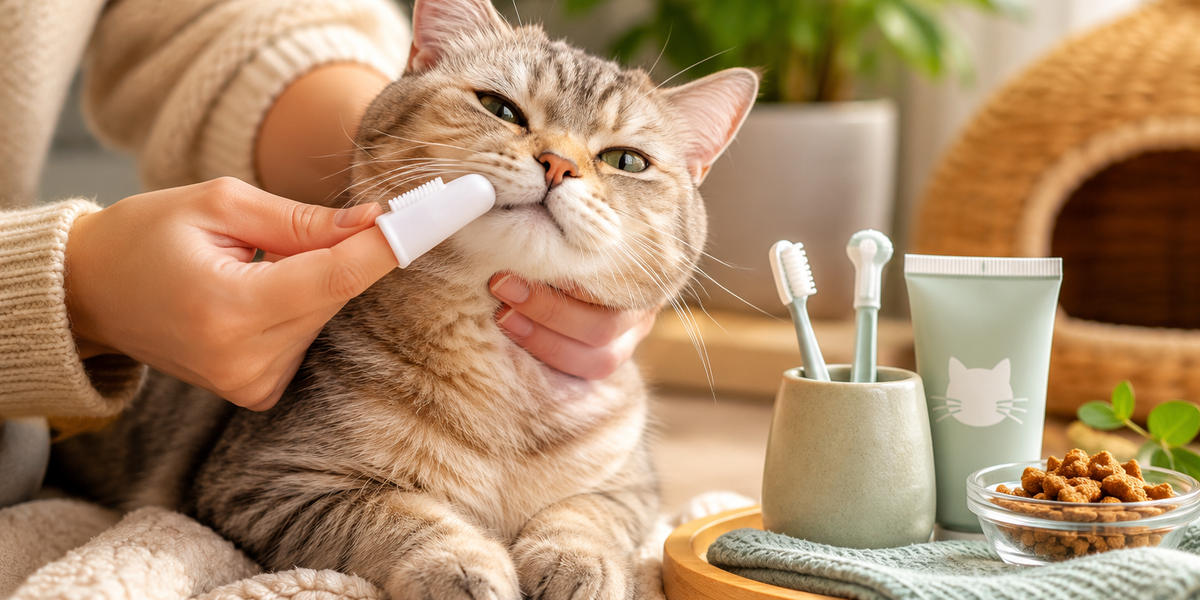
- Introduce the toothbrush. Use a soft-bristled finger brush or angled cat toothbrush. Let your cat sniff and lick it before using it.
- Brush the outer surfaces. Cats accumulate the most plaque on the outer (cheek-facing) side of the upper back teeth. Focus there first.
- Keep sessions short. Thirty seconds of actual brushing is a win, especially at the start. Reward with play or a treat immediately after.
Toothpaste Rules
- Never use human toothpaste — fluoride and xylitol are toxic to cats
- Look for enzymatic cat toothpastes with flavors like chicken or seafood that cats actually enjoy
- The enzymes in quality pet toothpastes continue working after brushing, which gives you extra benefit even with short sessions
Brushing Alternatives That Actually Work
Not every cat will tolerate a toothbrush — and that's okay. These vet-recommended alternatives help reduce plaque and tartar buildup:
- Dental gels and water additives — added to your cat's drinking bowl daily with no effort required
- Dental treats and chews — look for the Veterinary Oral Health Council (VOHC) seal to ensure they're clinically proven
- Dental diets — prescription kibbles with a larger, fibrous structure that mechanically scrubs teeth as cats chew
- Dental wipes — a middle ground between brushing and doing nothing, great for cats who hate brushes
💡 Pro Tip: The VOHC seal is your best friend when shopping for dental products. It means the product has passed independent clinical trials — unlike most pet dental products on the market.
Common Mistakes Cat Owners Make (And How to Avoid Them)
Skipping the Vet Cleaning
Home care is maintenance, not a cure. Professional dental cleanings under anesthesia are the only way to remove hardened tartar below the gumline. Most cats need one every 1–3 years depending on their dental health.
Giving Up After One Bad Session
One hissing, clawing session doesn't mean your cat will never accept brushing. Go back a step in the desensitization process and slow down. Consistency over weeks matters more than perfection in any single session.
Starting Too Late — Or Thinking It's Too Late
Kittens accept new routines most easily, but senior cats can learn too. It just takes more patience. Even partial plaque reduction from imperfect brushing is better than no dental care at all.
Using the Wrong Products
Avoid products with alcohol, chlorhexidine gluconate above 0.12%, or artificial sweeteners. Stick to VOHC-approved or vet-recommended products only.
Frequently Asked Questions
How often should I brush my cat's teeth?
Daily brushing is the gold standard, but even 3–4 times per week provides significant plaque reduction. Something is always better than nothing.
My cat absolutely won't let me brush their teeth. What are my options?
Start with water additives and dental treats with the VOHC seal. These won't replace brushing entirely, but they meaningfully slow plaque accumulation. Dental diets are another solid option your vet can recommend.
At what age should I start cat dental care?
As early as possible — ideally when your kitten gets their adult teeth around 6 months. But cats of any age can benefit from starting a dental routine.
Are anesthesia-free dental cleanings safe and effective?
In our view, no. Anesthesia-free cleanings only address visible surfaces and cause significant stress to cats. They can mask underlying disease without treating it. The American Veterinary Dental College does not recommend them.
How do I know if my cat needs a professional dental cleaning?
If you see visible yellow-brown tartar buildup, red or receding gums, or your cat is showing any signs of mouth pain, book a vet appointment. Annual wellness exams typically include a dental check.
Final Thoughts
Cat dental health doesn't have to be a source of dread for you or your cat. With a little patience, the right tools, and a consistent routine, most cats can learn to tolerate — and some even enjoy — dental care. Start slow, celebrate small wins, and lean on vet-approved alternatives when brushing isn't on the table.
Your cat can't tell you their teeth hurt, so we have to advocate for them. A few minutes of dental care each week can add years of comfortable, healthy life. You've got this — and so does your cat.