We earn a commission if you make a purchase, at no additional cost to you.
⭐ Our Top Pick
🏆 Best Overall: SureFlap Microchip Pet Door Connect — reads your cat's existing microchip for seamless selective entry with app control and curfew scheduling.
💰 Best Value: Cat Mate Electromagnetic Cat Flap — affordable automatic door that keeps intruder animals out without batteries or smartphone complexity.
Introduction
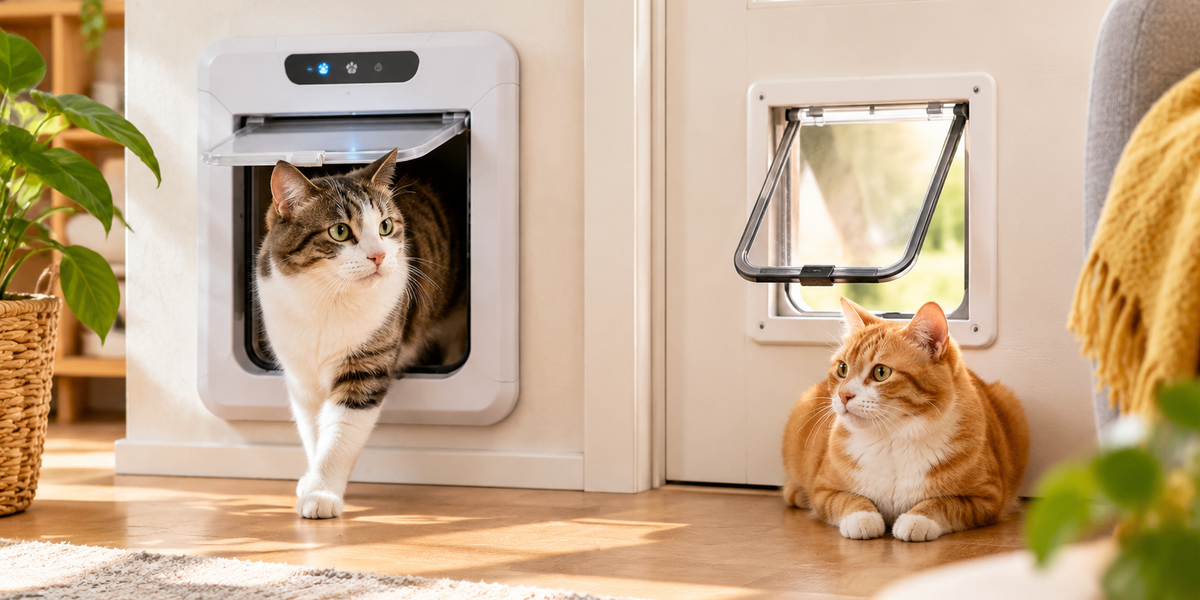
Choosing between an automatic cat door and a manual cat flap comes down to three factors: how many cats you have, whether neighborhood animals wander into your yard, and your budget. Automatic doors use microchip, RFID, or magnetic sensors to grant selective entry—only your cat gets in, blocking strays, raccoons, and the neighbor's overly friendly tabby. Manual flaps cost a fraction of the price but let any animal push through, which works fine for indoor-only setups or single-cat homes without intruder concerns.
We researched over a dozen models across both categories, comparing manufacturer specs, buyer reviews, and real-world performance data to identify which doors deliver the best combination of security, convenience, and value in 2026. Automatic doors have improved dramatically—many now sync with smartphone apps for remote locking and activity tracking—but manual flaps remain the practical choice when selective entry isn't a priority.
This guide breaks down the core differences, reviews our top picks in each category, and helps you decide which door type fits your home and your cat's routine. If you're also upgrading other parts of your cat's environment, see our Best Smart Litter Boxes for Small Apartments 2026 guide for space-saving self-cleaning options.
What to Look For
Selective Entry Mechanism: Automatic doors use microchip (reads your cat's existing ID chip), RFID collar tags, or magnetic collar keys. Microchip is the most convenient—no extra collar hardware—but costs more. RFID and magnetic systems require your cat to wear a special collar attachment, which some cats tolerate better than others. Manual flaps have no selective entry at all.
Installation Flexibility: Most cat doors fit standard doors, walls, or sliding glass door panels. Automatic models are bulkier and may require cutting a larger opening or using a mounting adapter. Check the tunnel depth if installing in a thick wall—some doors include extension tunnels, others sell them separately.
Weatherproofing and Draft Prevention: Automatic doors typically have superior seals—the locking mechanism creates a tighter fit than a manual flap's flexible panel. Look for brush seals or magnetic closures if you live in a cold climate. Drafty doors waste energy and let insects in.
4-Way Lock Controls: Both automatic and manual doors should offer in/out, in-only, out-only, and fully locked modes. Automatic doors add programmable curfews (lock the door at night) and app-based remote locking. Manual doors rely on a physical slide switch.
Power Source: Automatic doors run on batteries (4-6 AA cells lasting 6-12 months) or AC adapters. Battery-powered models keep working during power outages. Magnetic flaps use no power at all—the magnet on your cat's collar triggers the mechanical latch.
Size and Cat Fit: Measure your cat's shoulders and weight. Most doors list maximum pet dimensions. Larger cats (over 15 lbs) may need a dog-sized door or a model with a wider opening. Test the flap tension if possible—stiff flaps frustrate timid cats.
💡 Pro Tip: If you have multiple cats, verify the door can store multiple microchip or RFID IDs. Most automatic models support 20-40 pets, but budget options max out at 5-10.
SureFlap Microchip Pet Door Connect
| Criteria | Score |
|----------|-------|
| Selective Entry | 10/10 |
| Smart Features | 9/10 |
| Weatherproofing | 8/10 |
| Value | 7/10 |
The SureFlap Microchip Pet Door Connect reads the 15-digit microchip already implanted in most cats, eliminating the need for collar tags. It stores up to 32 pet IDs and features dual-scan technology—the door checks your cat's chip on both entry and exit, preventing intruder animals from sneaking in behind your cat. The Connect model adds Wi-Fi via a separate hub (sold separately for $75), enabling app-based curfew scheduling, activity tracking, and remote locking. The app logs each cat's comings and goings, which helps monitor outdoor time or detect health changes (a cat that suddenly stops going outside may be ill).
Installation requires cutting a 212mm diameter hole, which is larger than most manual flaps. The door fits doors, walls, or glass with the appropriate mounting adapter. The battery compartment holds 4 AA cells that last 6-12 months depending on usage. Weatherproofing is good but not exceptional—the brush seal reduces drafts, though some buyers in very cold climates report minor air leakage. The door accommodates cats up to 7kg (15.4 lbs) and 70mm (2.75 in) shoulder width, which excludes some larger breeds like Maine Coons.
✅ Pros:
- Reads existing microchip—no collar tag needed
- App control with curfew scheduling and activity logs
- Dual-scan prevents intruder animals from tailgating
- Stores up to 32 pet IDs for multi-cat homes
❌ Cons:
- Requires separate hub ($75) for smart features
- Larger cats or wide-shouldered breeds may find opening tight
- Higher upfront cost compared to RFID alternatives
PetSafe Electronic SmartDoor
| Criteria | Score |
|----------|-------|
| Selective Entry | 8/10 |
| Weatherproofing | 9/10 |
| Smart Features | 5/10 |
| Value | 8/10 |
The PetSafe Electronic SmartDoor uses programmable RFID collar keys instead of microchip reading. Your cat wears a lightweight SmartKey on their collar, and the door unlocks when the key comes within 3 inches of the sensor. It stores up to 5 pet IDs and includes a 4-way manual lock override. The standout feature is its weatherproof seal—PetSafe's triple-seal design (magnetic, brush, and compression) blocks drafts more effectively than most competitors, making this a strong choice for cold climates or homes with high heating costs.
The door runs on 4 D-cell batteries (included) that last up to 6 months, with an optional AC adapter for hardwired installation. Battery backup keeps the door functional during power outages. It fits openings up to 1.75 inches thick without extension tunnels and accommodates cats up to 25 lbs. There's no app connectivity or remote locking—all settings are controlled via buttons on the door itself. The SmartKey collar attachment is lightweight (0.3 oz) but is one more thing your cat needs to wear, and replacement keys cost $15 each.
✅ Pros:
- Weatherproof triple-seal design reduces drafts significantly
- Programmable RFID keys for up to 5 pets
- Battery backup ensures operation during power outages
- Fits cats up to 25 lbs
❌ Cons:
- Requires proprietary collar key (extra cost for replacements)
- No app connectivity or remote control features
- RFID range is short—cat must be within 3 inches to unlock
Cat Mate Electromagnetic Cat Flap
| Criteria | Score |
|----------|-------|
| Selective Entry | 7/10 |
| Value | 9/10 |
| Ease of Use | 8/10 |
| Weatherproofing | 6/10 |
The Cat Mate Electromagnetic Cat Flap offers automatic selective entry at a fraction of the cost of microchip or RFID doors. It uses a small magnet attached to your cat's collar to unlock the door—when the magnet approaches, the latch releases and allows entry. The door includes a 4-way manual lock and fits standard door or wall installations. Because it operates mechanically with no batteries or electronics, there's nothing to recharge or replace, making ongoing costs zero.
The selective entry is less secure than microchip or RFID systems. Strong magnets or metal objects near the door can trigger false unlocks, and savvy intruder animals occasionally figure out how to push through if the latch isn't perfectly aligned. The collar magnet weighs 0.5 oz, which is heavier than RFID tags and may bother lightweight or collar-averse cats. Weatherproofing is basic—a simple brush seal that reduces but doesn't eliminate drafts. The door accommodates cats up to 15 lbs and fits openings in doors up to 2 inches thick.
This door works best for single-cat homes in suburban or rural areas where neighbor pets are occasional visitors rather than daily intruders. If you live in a dense neighborhood with aggressive strays, consider upgrading to a microchip or RFID model.
✅ Pros:
- Affordable automatic door under $70
- No batteries or electronics to maintain
- 4-way lock with in/out control options
- Simple mechanical system is reliable
❌ Cons:
- Collar magnet adds weight (0.5 oz)
- Less secure than microchip/RFID—can be triggered by other magnets
- Basic weather seal allows some draft
PetSafe Manual 4-Way Locking Cat Door
| Criteria | Score |
|----------|-------|
| Value | 10/10 |
| Installation | 9/10 |
| Durability | 8/10 |
| Security | 5/10 |
The PetSafe Manual 4-Way Locking Cat Door is the workhorse of manual cat flaps—simple, reliable, and dirt cheap. The transparent flexible flap lets your cat see through before committing to push, which helps timid cats gain confidence. A sliding panel on the interior controls the 4-way lock: in/out, in-only, out-only, or fully locked. Installation is straightforward—trace the template, cut the opening, and secure with screws. It fits doors, walls, and windows with appropriate mounting kits.
This door has no selective entry, so any animal that can push the flap gets in. That makes it ideal for indoor-only scenarios (like allowing access between rooms) or single-cat homes in areas without stray animals. The weather seal is functional but minimal—a magnetic closure keeps the flap shut, but you'll feel a draft on windy days. The door accommodates cats up to 15 lbs and comes in small, medium, and large sizes. Build quality is solid for the price, with a rigid plastic frame that holds up to years of daily use.
At under $20, this is the best choice when you need a cat door but don't need smart features or selective entry. It also serves as a good temporary solution while you evaluate whether upgrading to an automatic door is worth the investment.
✅ Pros:
- Simple installation in doors, walls, or windows
- Reliable mechanical 4-way lock
- Transparent flap helps timid cats adjust
- Unbeatable price under $20
❌ Cons:
- No selective entry—any cat or small animal can use it
- Basic weather seal allows drafts
- Magnetic closure can weaken over time with heavy use
Frequently Asked Questions
Can automatic cat doors be hacked or bypassed by other animals?
Microchip and RFID doors are extremely difficult for animals to bypass—they require a matching chip or tag to unlock. Electromagnetic (magnet-based) doors are less secure because strong magnets or metal objects can occasionally trigger the latch. Raccoons and clever neighborhood cats have been known to wait near the door and slip in behind an authorized pet (called "tailgating"), though dual-scan models like the SureFlap Connect detect and prevent this. Manual flaps have no security—anything that can push the flexible panel gets through.
Do I need to train my cat to use an automatic door?
Most cats adapt within a few days. Start by propping the door open and rewarding your cat with treats for walking through. Once they're comfortable, let the flap close (but don't activate the lock yet) so they learn to push through. Finally, activate the automatic lock and let them trigger it naturally. Timid cats may need 1-2 weeks of gradual training. Microchip doors have a learning mode that unlocks on approach to help cats build confidence.
Can I install a cat door in glass or sliding doors?
Yes, but it requires a mounting adapter or professional installation. Most manufacturers sell glass-fitting kits that replace a pane with a panel pre-cut for the door. For sliding doors, you can install the cat door in a side panel insert (like a dog door panel) rather than cutting the glass itself. Check the door's tunnel depth—sliding glass doors are thin, so you'll need a low-profile model or one with an adjustable tunnel.
How do I stop drafts from a cat door?
Automatic doors with brush seals and magnetic closures dramatically reduce drafts compared to manual flaps. Look for models with weatherproof ratings or triple-seal designs like the PetSafe SmartDoor. You can also add a draft excluder strip around the door frame or install a secondary interior flap for double-layer insulation. In extreme cold, some owners install the cat door in a garage or mudroom rather than an exterior wall to create an airlock effect.
Are smart cat doors worth the extra cost?
If you have multiple cats, want to monitor outdoor activity, or need remote locking (e.g., keeping your cat in at night while you're traveling), yes—the $200 investment pays off in convenience and peace of mind. If you have one cat and no intruder animals, a $70 electromagnetic door or $20 manual flap does the job just as well. Smart features shine when you need selective entry, curfew automation, or health tracking via activity logs, as outlined in our How to Set Up Two-Way Audio Cat Cameras for Separation Anxiety guide for other tech-enabled monitoring options.
Final Thoughts
Automatic cat doors deliver unmatched convenience and security for multi-cat homes or neighborhoods with persistent intruder animals. Microchip models like the SureFlap Connect eliminate collar bulk and sync with your smartphone for remote control, while RFID and electromagnetic doors offer reliable selective entry at lower price points. Manual flaps remain the practical choice for indoor-only access, single-cat households, or temporary installations where selective entry isn't required.
If you're deciding between the two, start by evaluating your security needs. Do neighbor pets or wildlife regularly enter your yard? Do you have multiple cats that need different curfew schedules? If yes, invest in an automatic door with microchip or RFID technology. If your cat is the only animal around and you don't need remote control, save the money and go manual. Either way, proper installation and weatherproofing will make a bigger difference in day-to-day satisfaction than any smart feature.
Editor's Choice
For the best combination of security, convenience, and smart features, we recommend the SureFlap Microchip Pet Door Connect. It reads your cat's existing microchip, supports app-based curfew scheduling, and prevents intruder animals with dual-scan verification. If you're on a tighter budget, the Cat Mate Electromagnetic Cat Flap delivers automatic selective entry for under $70 without ongoing battery costs. For single-cat homes where selective entry isn't a concern, the PetSafe Manual 4-Way Locking Cat Door offers unbeatable value and reliability at just $20.